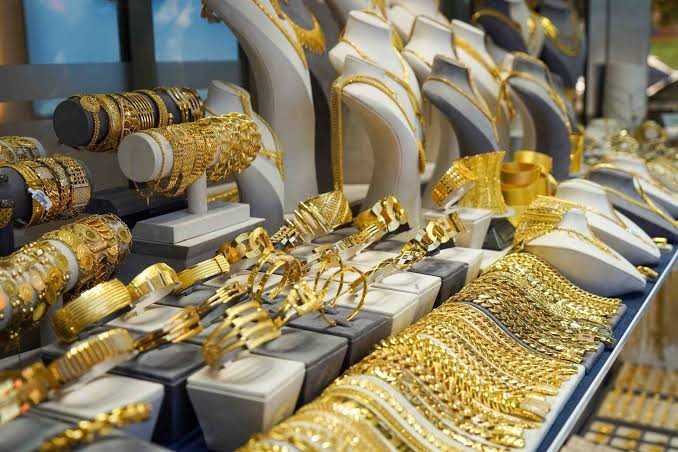
Gold prices in Azerbaijan have risen again after a brief decline, forcing families preparing for weddings and engagements to reassess the cost of jewelry gifts.
As of Nov. 6, locally made 585-fineness gold jewelry was selling for about 158 manats per gram, or approximately $93, according to market participants. Comparable Turkish-made pieces were priced at 163 to 165 manats per gram, or about $96 to $97, while Italian 750-fineness gold was selling for 220 to 240 manats, roughly $129 to $141.
The retail figures include workmanship, design and dealer margins. The official metal value published for Nov. 6 was lower: 129.35 manats per gram for 585-fineness gold and 165.84 manats for 750-fineness gold. Jewelry prices vary according to origin, craftsmanship and the seller’s markup.
Vendors said 585-fineness jewelry had fallen to about 150 to 155 manats per gram several days earlier before climbing back toward 165 manats over the past two days.
Market participants said gold has become considerably more expensive over the past five months. Some categories of scrap gold that were valued at about 120 manats per gram, or $71, are now quoted at 150 to 160 manats, or roughly $88 to $94. Traders put the purchase price of unprocessed gold at about 125 to 130 manats per gram.
Wedding Gifts Become Less Affordable
The increase is particularly difficult for families buying jewelry for weddings, engagements and other celebrations. Buyers said 1,000 manats, about $588, could once purchase a substantial gift. At a retail price of 165 manats per gram, that amount now buys only about six grams before any additional premium for design or workmanship.
Some customers favor heavier pieces because they view gold as both jewelry and a way to preserve savings. But vendors caution that workmanship charges are generally not recovered when jewelry is resold, and the buyback price can be substantially below the original retail price.
Customers Delay Purchases
Sellers said customers are comparing prices more carefully and often postponing purchases in hopes that gold will become cheaper. The uncertainty has already reduced sales volumes, they said.
International bullion prices remain the main driver, although local retail prices also depend on the fineness and origin of each item. Interest rates, investor demand, financial-market conditions and geopolitical risks can all move global gold prices, making short-term forecasts unreliable.
Some vendors expect another increase in the coming days. For now, families face a choice between buying at current prices or waiting for a decline that may not come.
Sources: Vesti Baku; Nov. 6 official gold-price reference.