AZE.US
As the conflict around Iran escalates, a new front may be opening-one that could destabilize the entire region and directly affect Turkey, Azerbaijan, and the wider Middle East.
The latest developments in the Middle East suggest that the conflict surrounding Iran is entering a far more dangerous phase. What began as a confrontation defined by air strikes, missile exchanges, and proxy warfare now appears to be expanding into a broader and potentially uncontrollable regional crisis.
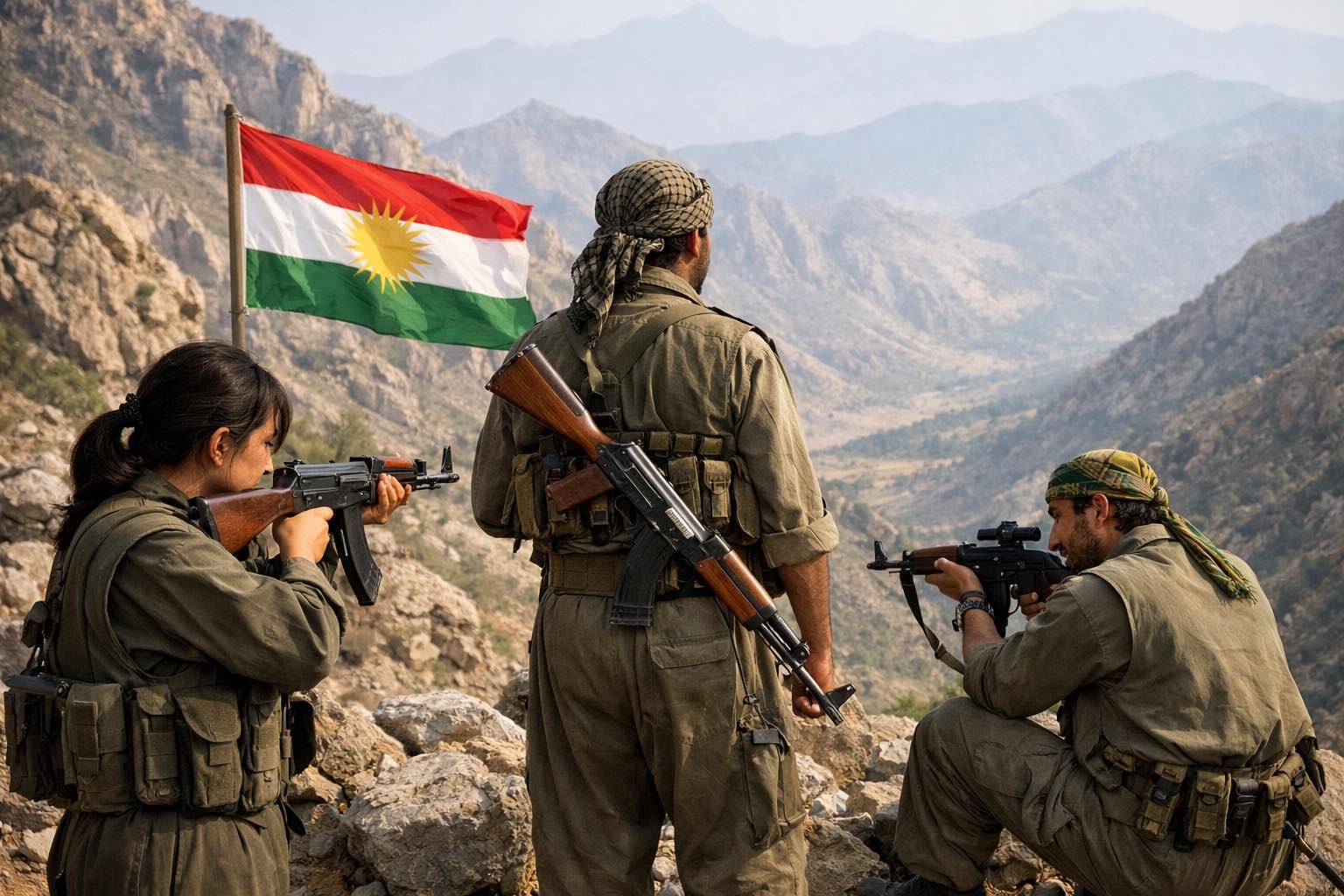
Reports that thousands of Iraqi Kurdish fighters have launched a ground offensive into Iranian territory signal a possible turning point. If confirmed, this would represent the opening of a new front in the war—and a shift toward internal destabilization inside Iran itself.
History shows that such dynamics rarely remain contained.
A New Phase of the Conflict
Until now, the confrontation has largely unfolded through airpower, missile strikes, and coordinated attacks by regional proxy forces. But a ground incursion fundamentally changes the strategic landscape.
A Kurdish offensive inside Iran could trigger several destabilizing dynamics at once:
-
escalation of ethnic tensions
-
the emergence of new armed factions
-
expansion of fighting across multiple borders
Particularly concerning are reports of attempts to create corridors for armed groups to move into northwestern Iran, including areas around Urmia.
This region is not just strategically important-it is also home to millions of ethnic Azerbaijanis.
Why the Caucasus Cannot Ignore This
For Azerbaijan and Turkey, instability in northwestern Iran is not a distant geopolitical issue. It is a direct security concern.
Any serious destabilization could lead to:
-
refugee flows toward neighboring states
-
cross-border militant activity
-
threats to key energy and transport corridors
The South Caucasus sits at the intersection of several major strategic routes linking Europe and Asia. Prolonged instability inside Iran could jeopardize these critical economic lifelines.
At the same time, Turkey’s position as a NATO member adds another layer of risk. Any escalation near Turkish borders could draw international actors deeper into the conflict.
The Illusion of a Quick Outcome
Some policymakers may hope that pressure-military, economic, and internal-will quickly weaken the Iranian regime.
Recent history suggests otherwise.
Afghanistan, Iraq, and Libya demonstrated how rapidly state structures can collapse-and how difficult it is to rebuild stability afterward.
Iran is a nation of more than 90 million people, with complex ethnic dynamics and deeply entrenched security institutions. Attempts to destabilize such a state rarely produce quick political transformations.
More often, they produce prolonged instability.
Global Consequences Already Emerging
The ripple effects are already being felt beyond the battlefield.
Shipping through the Strait of Hormuz has slowed dramatically, energy markets are reacting to rising geopolitical risk, and several countries have begun evacuating citizens from parts of the region.
If the conflict expands further, it could trigger not only a regional security crisis but also a major shock to global energy markets.
A Dangerous Moment
The most dangerous stage of any war is the moment when escalation becomes self-sustaining.
Iran cannot afford to appear weak. The United States and Israel cannot easily step back from military pressure. Regional actors are maneuvering to protect their own interests.
As a result, the conflict risks developing a momentum of its own.
The Need for De-Escalation
The opening of new fronts-especially inside Iran-dramatically increases the stakes.
What might once have been contained as a regional confrontation could evolve into a broader geopolitical crisis with far-reaching consequences.
The critical question now is not simply who might win this conflict. The real question is whether it can still be contained before it triggers a wider regional explosion. For the Middle East-and for the countries surrounding Iran-that window may be closing fast.