AZE.US
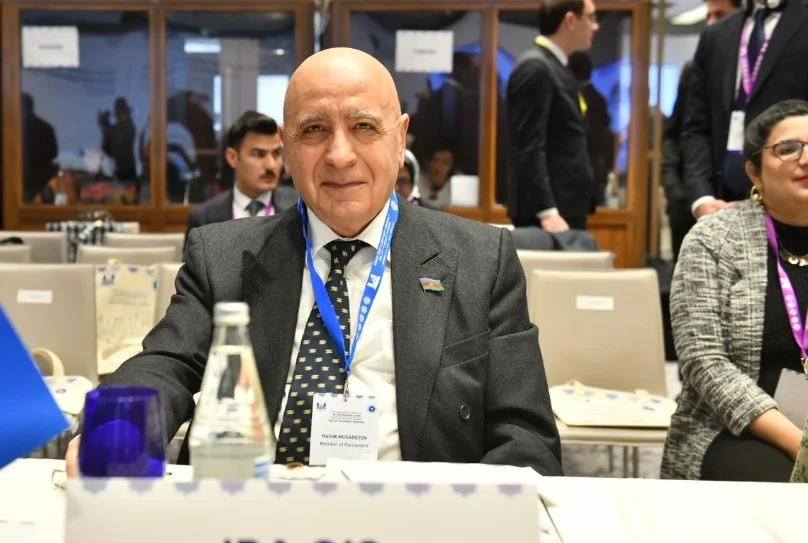
Armenia’s elections have turned into more than a domestic political contest, Azerbaijani lawmaker Rasim Musabekov said, describing them as a test of whether Moscow can keep Armenia in the role of a Russian foothold in the South Caucasus.
Speaking on the YouTube channel Novosti Kavkaza, Musabekov said the struggle in Armenia should be viewed through a regional lens because its outcome affects Azerbaijan, Georgia and the broader balance of power in the South Caucasus.
He said the Armenian opposition’s call for a “dignified peace” effectively means a peace deal backed and guaranteed by Russia.
“They want peace from Russian hands,” Musabekov said.
According to him, Prime Minister Nikol Pashinyan is not saying that Armenia should cut ties with Russia or leave the Eurasian Economic Union. Instead, Musabekov said, Yerevan is trying to secure room for a more balanced foreign policy and move away from the status of a Russian outpost.
That, he argued, is what irritates Moscow.
Musabekov said Russia now appears to see the Armenian vote as a test of whether it can preserve its dominant influence in the post-Soviet space. After setbacks in Ukraine and Moldova, he said, another failure in Armenia would be a serious blow to Moscow’s regional standing.
The Azerbaijani lawmaker also pushed back against Russian warnings over energy dependence. He said Moscow’s threats involving gas supplies, fuel prices or the servicing of Armenia’s Metsamor nuclear power plant do not look as decisive as they may appear.
Musabekov recalled that Russia once tried to use energy pressure against Georgia, including gas and electricity disruptions. At that moment, he said, Azerbaijan helped Georgia with gas and electricity supplies and prevented the country from being broken by energy blackmail.
He added that Armenia also has options if it stops acting as Russia’s regional foothold.
“If Armenia stops being Russia’s outpost, I think it will also receive support from Turkey and Azerbaijan,” Musabekov said.
He also referred to an earlier episode when Azerbaijani gas was supplied to Armenia through Georgia during repair work on the Russian route, under arrangements involving Gazprom. Musabekov said this showed that alternative mechanisms are possible when there is political will.
The more serious vulnerability for Armenia, he said, lies in its financial sector. Musabekov argued that the sector’s large weight in Armenia’s economy reflects the use of Armenian financial channels by Russian structures after the war in Ukraine and Western sanctions.
He said Moscow’s pressure campaign may ultimately backfire.
In his view, blunt interference from Russia could provoke the opposite reaction among Armenian voters, especially if they see outside pressure as an attempt to dictate their political choice.
For Azerbaijan, Musabekov said, the Armenian election matters because Baku and Yerevan have already moved through a significant part of the path toward peace and normalization under the current Armenian government.
He said Pashinyan’s government is a more acceptable negotiating partner for Azerbaijan than the opposition, though he added that even a change of power in Yerevan would not necessarily destroy the peace process.
It could, however, slow it down.
“We have passed a very large part of the road to peace and normalization of bilateral relations with this government,” Musabekov said.
A new Armenian government, he said, would need time to enter the process and would likely try to revise some positions before eventually running into the same regional realities. That could cost time and weaken the limited trust built between the sides.
Musabekov also said transport links remain one of the key practical issues. Azerbaijan expects unimpeded movement between its western regions and Nakhchivan, while Armenia could gain routes through Azerbaijan toward Russia, Central Asia and Iran.
The restoration of communications, he said, would create mutual dependence. In his view, that is not a threat, but a stabilizing factor if both sides respect each other’s interests.
He cited Azerbaijan’s cooperation with Georgia on energy and transport as an example of how neighboring countries can find workable arrangements even when their commercial interests differ.
Musabekov said the wider South Caucasus is gradually forcing outside powers to recognize its political agency. Azerbaijan, he said, achieved that earlier, Georgia continues to defend its room for maneuver, and Armenia is now facing its own test.
The region’s future, he argued, will depend less on old imperial habits and more on whether Armenia, Azerbaijan and Georgia can build pragmatic relations based on national interests and mutual respect.
AZE.US