AZE.US
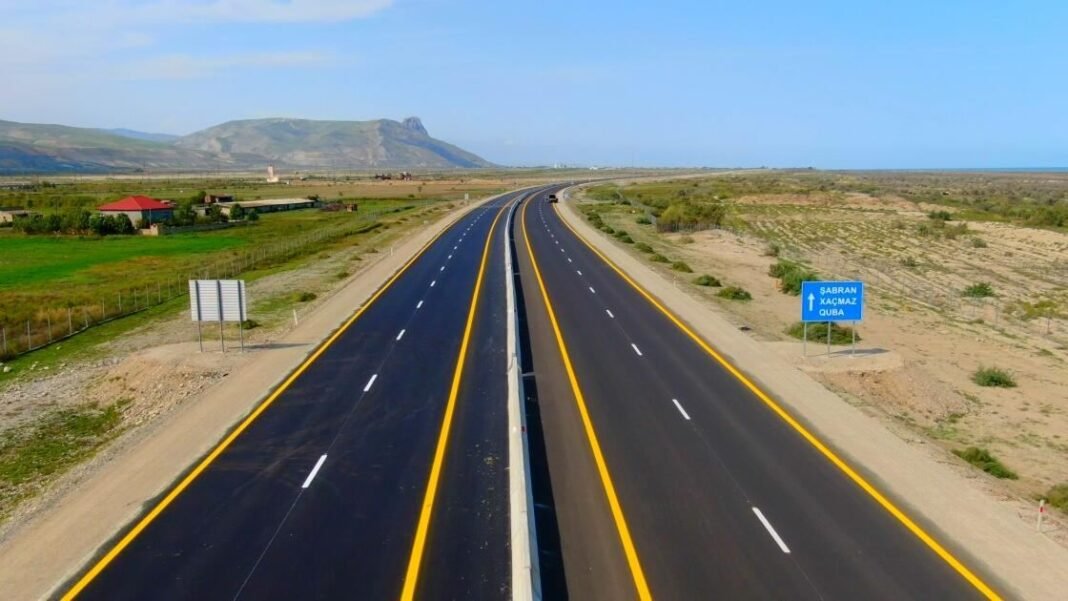
Azerbaijan’s network of toll roads is expanding, with the Ahmadbayli-Fuzuli-Shusha highway now put into operation as a toll road.
The Azerbaijan State Agency of Automobile Roads said drivers will still have a free alternative. They can use the toll highway or take Victory Road, the existing route to Shusha.
The first toll road in Azerbaijan was the Baku-Guba-Russian Border highway.
Transport expert Elmaddin Muradli told AZXEBER.COM that toll roads are widely used around the world, but said the model only works fairly when the free alternative remains in decent condition.
“Paid roads exist everywhere in the world. But when such a system is introduced, attention must also be paid to the condition of the free alternative road. The free road should not be significantly worse in quality than the paid one,” Muradli said.
He said the main advantage of toll roads is usually a shorter route and a higher speed limit. Under changes to Azerbaijani legislation, the maximum speed on toll roads can reach 130 km/h, while on other roads it usually ranges from 90 to 110 km/h.
Muradli said the current tariffs appear acceptable.
“In the current conditions, the prices applied on toll roads are normal. We are not talking about any fantastic amounts,” he said. “When regulating these issues, the state takes into account the time saved by the driver and the fuel savings. Usually, the amount paid is close to that saving.”
But the issue has also drawn criticism from economist Natig Jafarli, who said the problem is not the existence of toll roads, but the way they are financed and managed in Azerbaijan.
Writing on Facebook, Jafarli said the opening of another road to Shusha was an emotional and positive development, noting that such news would have been almost unimaginable 7 to 8 years ago.
He then turned to the broader question of toll roads.
Jafarli said that in many countries, including in Europe and Turkey, toll roads are often built through public-private partnerships. A private investor puts money into the project, then recovers the investment through tolls while also taking responsibility for maintenance and repairs.
In Azerbaijan, he said, roads are built with state budget funds, meaning taxpayers have already paid for them through taxes. Their maintenance, road markings and repairs are also funded by the state budget.
That, Jafarli argued, raises a simple question: if citizens paid for the road once through taxes, why are drivers being asked to pay again?
He said the logic of toll roads would be clearer if they were transferred to private-sector management and if future maintenance and repair costs no longer came from the budget.
Jafarli called on official bodies to explain where toll revenues will go, how they will be spent, who will be responsible for management and whether budget funds will still be allocated for maintenance in the coming years.
The debate is not only about the size of the fee. For many drivers, a paid road may be worth it if it saves time, fuel and distance.
The larger issue is transparency. When a road is built with public money, citizens have a right to know why they are paying again, how the tariff is calculated and who is accountable for the money collected.
AZE.US