AZE.US
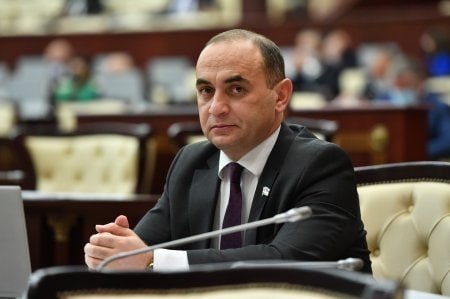
Azerbaijani schools need stronger support systems for children with behavioral problems, rather than relying on punishment alone, lawmaker Jeyhun Mammadov said as public debate grows over discipline, child rights and the role of teachers in classrooms.
Mammadov, a member of the Milli Majlis Committee on Science and Education, told Musavat.com that disruptive behavior among pupils is often linked to deeper problems, including family issues, psychological pressure, lack of attention or the environment in which a child is growing up.
According to Vesti Baku, the issue has become more sensitive as parents and educators complain about aggression, disruption of lessons and disrespect toward teachers and classmates. Some parents argue that such children should be identified early, while others have suggested special schools or separate classes inside regular schools.
Mammadov said punishment alone does not solve the problem.
“Very often, there are family problems, psychological tension, lack of attention or the child’s environment behind such behavior. This is not only a matter of discipline. The issue is deeper,” he said.
The lawmaker said child protection rules in schools have also changed in recent years. He noted that teachers are no longer allowed not only to hit a child, but also to insult, humiliate or embarrass a pupil in front of classmates.
“The goal is for school to be a safe place for the child,” Mammadov said.
He said both teachers and parents now carry responsibility under updated legislation. But society remains divided over how far a teacher’s authority should go. Some believe teachers should never use harsh methods, while others argue that schools cannot function if teachers have no tools to maintain discipline.
Mammadov said the answer lies in balance.
“The child’s rights must be protected, but the teacher must also be able to conduct the lesson normally. A pupil should be encouraged for good behavior, and when mistakes are made, he or she should be guided without violence, mainly through explanation and education,” he said.
The MP pointed to international practice, where teachers, psychologists and social workers begin working together when early signs of a behavioral problem appear. The goal, he said, is to address the issue before it grows.
In some countries, special classes or schools exist for such pupils. But Mammadov said the purpose is not to isolate children permanently, but to help them later return to a regular learning environment. In other models, children remain in ordinary classrooms while also taking part in additional support programs.
He said Azerbaijan could start with pilot projects in major cities, strengthen psychological support services in schools and create separate programs or classes where needed.
“This does not necessarily require building new schools. Teacher training is very important, because working with children with behavioral problems requires a special approach. Parents must also be active in this process. It is difficult to achieve results without cooperation between the family and the school,” Mammadov said.
At the same time, he warned that placing all children with behavioral problems together may not always produce good results. If such a system is poorly managed, children may negatively influence one another.
For that reason, he said, individual approaches may be more effective, including work with parents, psychological support, individual sessions and group activities.
“The solution is neither harsh punishment nor complete freedom. The right approach is balance. There must be rules, but the child must also see understanding and support,” Mammadov said. “School should not be a place a child fears. It should be an environment where the child feels comfortable and develops.”
He said new approaches to children with behavioral problems are no longer optional for the education system.
“The goal is not to punish the child, but to guide him or her in the right direction and help raise a person who will be useful to society in the future,” Mammadov said.
AZE.US