Aze.US
The sharp increase in housing prices in Baku is driven not only by construction costs but also by taxes, land prices, credit rates, and falling real incomes.
The rapid rise in apartment prices in Azerbaijan has become a major topic of public discussion.
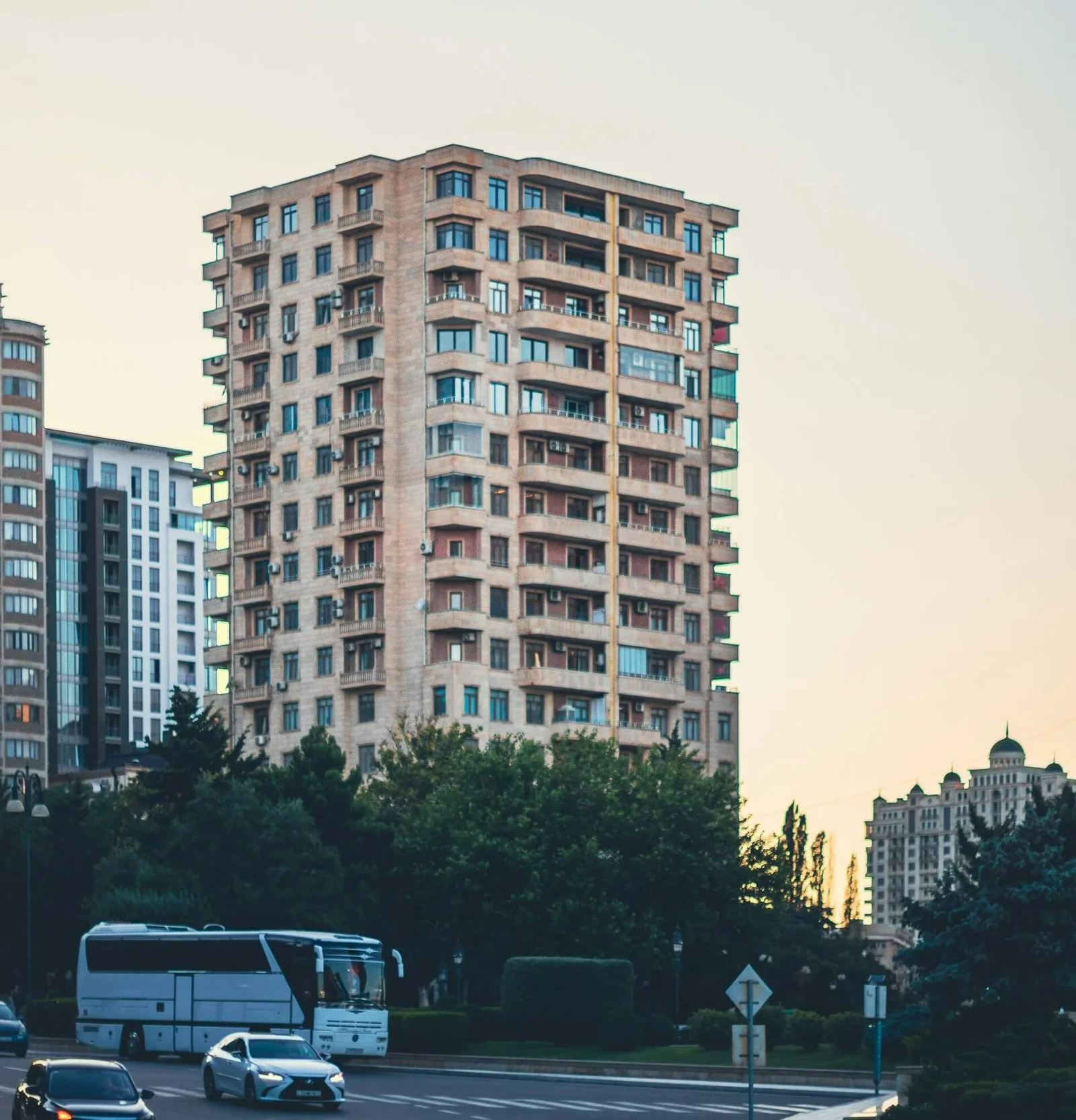
Most construction companies in Baku are currently implementing so-called “pilot projects,” demolishing old residential buildings and replacing them with high-rise complexes. Since developers do not pay additional costs for the land in these cases, a key question emerges: why are new apartments now two to three times more expensive than before?
Economist and director of Opera Group LLC, Firdovsi Khalilov, says that the main driver is not the direct cost of construction itself.
According to him, one of the central factors is the reduction of permitted construction density.
Where developers previously could build up to 80,000 square meters on one hectare, current regulations often limit projects to roughly 20,000–25,000 square meters, significantly lowering project efficiency.
At the same time, construction standards and transparency have increased.
Earlier projects relied on cheaper materials, informal labor, and lower tax exposure.
Today, developers use certified materials, modern façades, and branded elevator systems while operating fully within the tax system, pushing construction costs to around 700–750 manats per square meter.
However, this alone does not explain market prices reaching 3,000–4,000 manats per square meter.
The decisive pressures come from taxation, land costs, and financing.
Khalilov noted that the previous simplified tax regime has been replaced by a system that includes roughly 20% profit tax plus 18% VAT, sharply increasing the financial burden on developers.
Land prices have also surged – from tens of manats in the past to around 1,000 manats per square meter in some locations.
Another major factor is the cost of borrowing.
Business loans that once carried 10–11% interest now reach 19–20%, while construction permits can take two to four years to obtain, forcing developers to carry long-term expenses before sales begin.
In central districts of Baku, Khalilov estimates the true cost price of housing at 2,500–3,500 manats per square meter, while demand has weakened due to declining purchasing power.
He argues that the core issue is not simply rising real-estate prices but the fact that real household incomes have shown little growth since 2015–2016, widening the gap between housing affordability and consumer capacity.
Improving the investment climate and making tax policy more business-friendly would be key steps toward stabilizing the situation, the economist said.
“Property prices are a consequence, not the root cause,” Khalilov concluded.