Aze.US
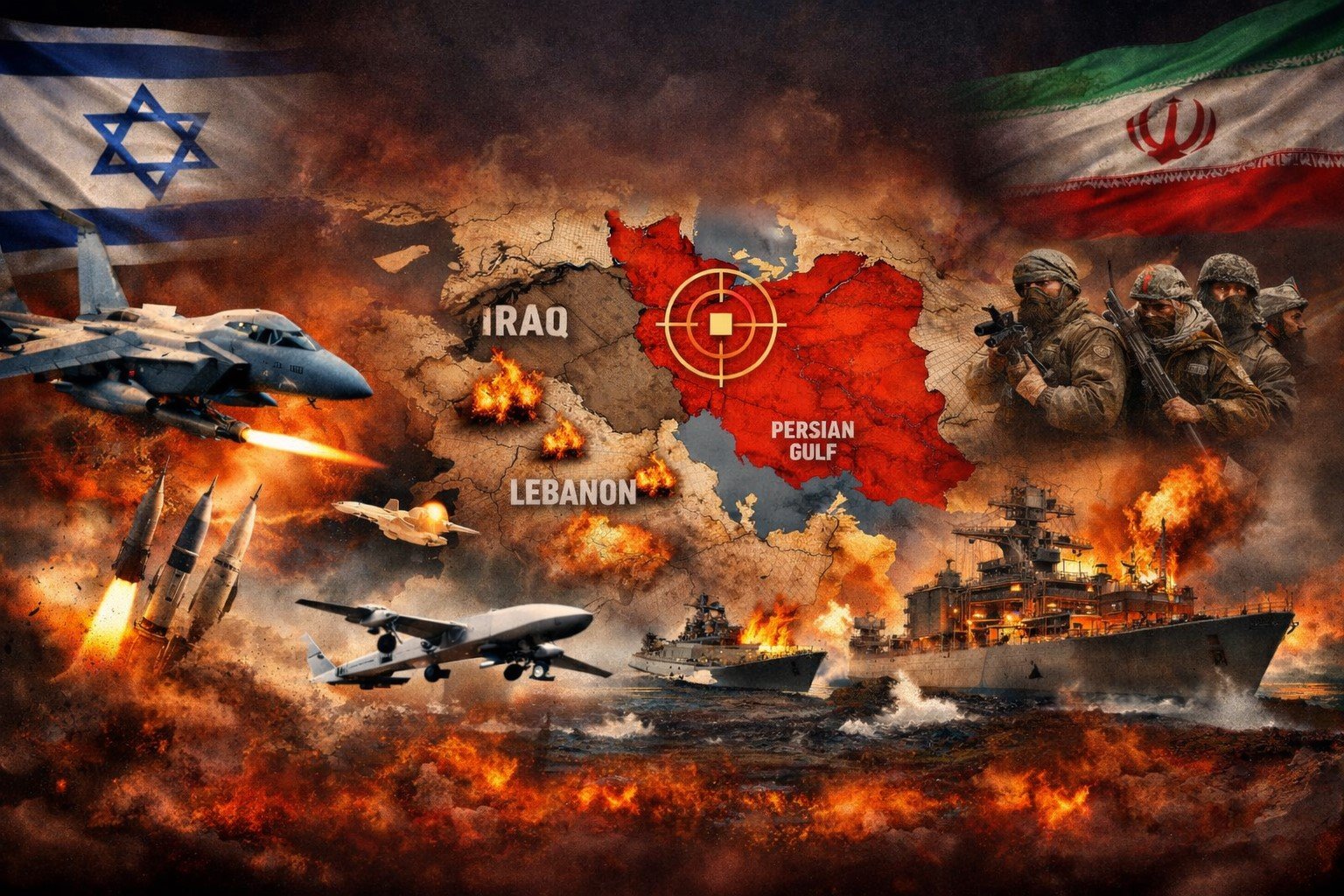
Rising tensions between Israel and Iran have once again pushed the Middle East toward a fragile strategic threshold. What began as a long-standing confrontation over nuclear ambitions and regional influence is now evolving into a broader geopolitical stress test affecting security, energy markets, and diplomatic alignments across several regions.
Recent rhetoric and military signaling from both sides suggest a period of managed escalation rather than immediate full-scale war. Yet even controlled confrontation carries consequences that extend well beyond the two principal actors.
Geography, Military Logic, and Regional Narratives
Claims circulating in political discourse about potential strikes on Iran launched from the South Caucasus – including Azerbaijan – remain unsupported by military logic or verifiable evidence.
Operational geography makes such scenarios unlikely.
Any Israeli or U.S. strike capability would rely on shorter and already contested Middle Eastern corridors, not politically costly and geographically indirect northern routes.
In an era of satellite monitoring, open-source intelligence, and real-time geolocation, the absence of credible visual or technical proof further weakens such narratives.
As a result, many analysts interpret these statements less as operational planning and more as political signaling or psychological pressure.
Diplomatic Signals and Strategic Messaging
Recent Iranian statements have delivered mixed signals:
-
On one hand, confidence that neighboring states will not allow their territory to be used against Iran.
-
On the other, demands for additional “security guarantees” from the same neighbors.
This contradiction highlights a broader regional dynamic:
deterrence messaging aimed simultaneously at domestic, regional, and global audiences.
Such rhetoric risks widening mistrust rather than preventing escalation.
Military Posture Without Open War
The current phase is defined by:
-
calibrated force positioning,
-
proxy-level confrontation risks,
-
and sustained diplomatic maneuvering.
This pattern mirrors previous Middle Eastern crises where visibility of power replaced immediate battlefield engagement, while economic and psychological pressure accumulated beneath the surface.
Economic Shockwaves Beyond the Battlefield
Even without direct war, tension between Israel and Iran already influences:
-
global energy price volatility,
-
insurance costs for regional transport and shipping,
-
air corridor adjustments across the Middle East,
-
investor confidence in adjacent regions.
For countries outside the immediate conflict zone, economic exposure may exceed military risk.
Implications for the South Caucasus
For Azerbaijan, Georgia, and Turkey, direct military involvement remains unlikely.
However, secondary risks are real:
-
diplomatic pressure from competing regional powers,
-
fluctuations in hydrocarbon markets,
-
shifting logistics and transit calculations,
-
heightened information warfare narratives.
In this context, the South Caucasus functions less as a battlefield and more as a sensitive geopolitical periphery.
Regional Risk Map
To better understand how far instability could spread, the situation can be viewed country-by-country – from direct conflict zones to outer rings of exposure.
| Country | Military Risk | Economic Risk | Political Pressure | Overall Assessment |
|---|---|---|---|---|
| Iran | Very high | Very high | Maximum | Critical zone |
| Israel | High | Medium | High | High risk |
| Iraq | High | Medium | High | Tension zone |
| Syria | High | Low | Medium | Chronic conflict |
| Lebanon | Very high | High | High | War threshold |
| Gulf States | Medium | Very high | Medium | Fragile stability |
| Turkey | Low | Medium | Medium | Managed risk |
| Azerbaijan | Low | Medium | Potential | Sensitive periphery |
| Georgia | Very low | Medium | Low | Limited exposure |
| Russia | Indirect | Medium | High | Strategic involvement |
| United States | Medium | Medium | Maximum | Key external actor |
Strategic Outlook
Three short-term trajectories appear plausible over the next six months:
1. Controlled de-escalation
Diplomacy limits confrontation, while tensions remain structurally unresolved.
2. Prolonged managed confrontation (most likely)
Proxy risks, military signaling, and economic pressure continue without open war.
3. Sudden regional flare-up
A miscalculation or proxy strike triggers rapid escalation affecting multiple states.
The Broader Meaning
The Israel–Iran confrontation is no longer a bilateral dispute.
It is a systemic regional stress point shaping:
-
military balances,
-
diplomatic alignments,
-
global energy stability,
-
and the strategic environment of neighboring regions, including the South Caucasus.
Whether escalation is contained or expanded will define not only Middle Eastern security – but also the geopolitical trajectory of the wider region in 2026.