Aze.US
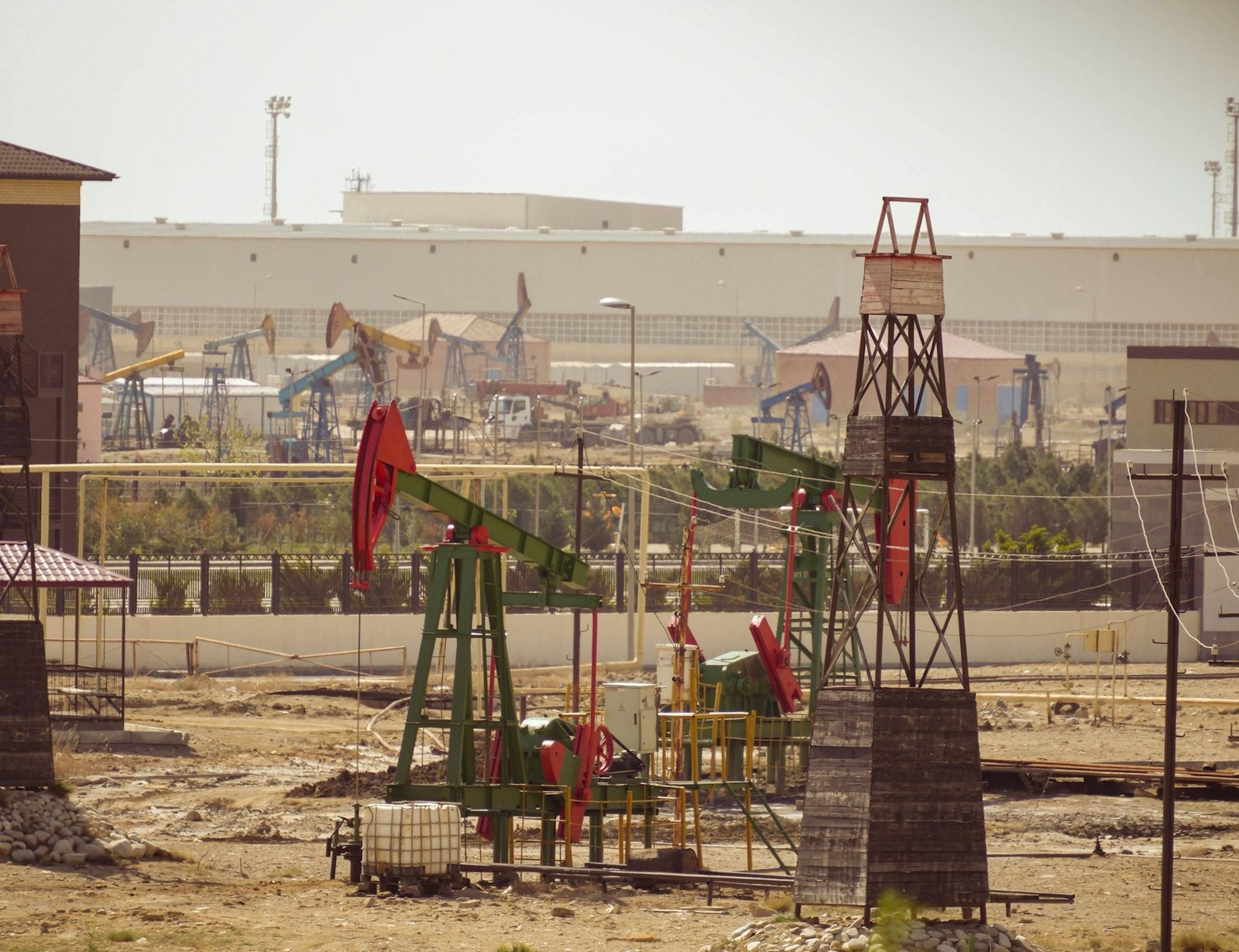
For decades, Azerbaijan’s economy was defined primarily by energy. Oil revenues shaped state budgets, infrastructure investment, and the country’s global economic identity.
That reality is still present in 2026. But it is no longer the whole picture.
A quieter transformation is underway - one in which non-oil sectors are beginning to determine long-term stability rather than short-term export income.
This shift is gradual, uneven, and far from complete. Yet its strategic importance is growing each year.
The Post-Energy Question Is No Longer Theoretical
Throughout the 2010s, diversification was discussed mostly as a policy goal. Today, it is becoming an economic necessity.
Several structural pressures explain why:
-
volatility in global energy prices
-
changing European energy demand patterns
-
demographic and employment needs beyond extractive industries
These factors push Azerbaijan toward a broader economic base where growth must come from production, logistics, services, and technology.
The conversation is no longer about whether diversification is needed - but how quickly it can be achieved.
Transport And Logistics Are Emerging As Core Drivers
One of the most visible changes is the rising importance of transit infrastructure.
Azerbaijan’s geographic position between:
-
Central Asia
-
the Caspian region
-
Turkey and Europe
creates natural conditions for logistics expansion. Investment in railways, ports, and cross-border corridors is gradually turning the country into a regional transport hub rather than only an energy exporter.
This matters economically for two reasons:
1. Transit generates stable, long-term revenue
Unlike commodity cycles, logistics income depends on flow volume and reliability.
2. Infrastructure stimulates secondary sectors
Warehousing, services, manufacturing support, and digital trade all expand around transport routes.
In global economics, connectivity often becomes more valuable than raw resources.
Small And Medium Business Is Quietly Expanding
Another less visible but significant trend is the gradual strengthening of small and medium-sized enterprises (SMEs).
Historically, large state-linked or energy-related structures dominated the economy.
Today, domestic entrepreneurship is slowly increasing its share.
Key areas of growth include:
-
food production and processing
-
construction materials
-
retail and services
-
tourism-related businesses
While individual companies remain modest in scale, their collective impact on employment and regional development is growing.
This shift matters socially as much as economically. A diversified SME sector creates broader income distribution and reduces dependence on a single industry.
Digital Transformation Is Moving From Concept To Practice
Technology policy has long been part of Azerbaijan’s modernization agenda. What is changing now is implementation speed.
Digital public services, fintech solutions, and startup ecosystems are expanding - not yet at the scale of global tech centers, but enough to signal structural direction.
Three developments stand out:
-
wider adoption of electronic government platforms
-
increasing interest in AI and data infrastructure
-
gradual integration into regional digital trade networks
Digitalization does not replace traditional sectors. But it improves efficiency across all of them.
Over time, this can become one of the most powerful multipliers of productivity.
Agriculture And Food Security Are Regaining Strategic Value
Global supply disruptions in recent years have renewed attention to agriculture.
For Azerbaijan, this sector carries dual importance:
-
economic diversification
-
domestic food security
Investment in irrigation, logistics, and processing capacity is gradually improving output stability.
Export potential for certain products is also expanding toward regional markets.
Although agriculture will not dominate GDP, its role in social stability and rural employment remains critical.
In many developing economies, balanced growth depends precisely on such sectors.
Foreign Investment Is Becoming More Selective
International investors continue to view Azerbaijan through an energy lens. However, interest in non-oil sectors is slowly increasing - particularly where infrastructure and state policy create predictability.
Promising areas include:
-
renewable energy
-
transport logistics
-
industrial parks
-
digital services
The key challenge is not attracting attention, but ensuring long-term regulatory confidence.
In modern capital flows, stability and transparency often matter more than raw opportunity.
Regional Economics Are Changing The Context
Azerbaijan’s economic future is also tied to wider regional transformation.
Potential reopening of transport links across the South Caucasus, growing Central Asian trade westward, and evolving Europe-Asia supply chains all increase the country’s relevance.
In this environment, economic policy becomes inseparable from geopolitics.
Not in the sense of rivalry - but in the sense that connectivity defines prosperity.
Risks Still Remain
Despite positive trends, several structural risks persist:
-
continued reliance on hydrocarbon revenue
-
global market uncertainty
-
regional political sensitivity
-
uneven private-sector competitiveness
These constraints mean diversification will take years, not months.
But long-term transitions rarely follow linear timelines. What matters more is direction than speed.
The Real Story Of 2026
From the outside, Azerbaijan may still appear primarily as an energy state. Inside the economy, however, a different narrative is forming.
Step by step:
-
logistics is expanding
-
SMEs are growing
-
digital systems are spreading
-
agriculture is stabilizing
-
investment is diversifying
None of these shifts alone redefine the economy. Together, they begin to.
And that combination may become the most important economic story of Azerbaijan in the decade ahead.
Because the true measure of stability is not how much oil a country exports - but how many sectors can grow when oil no longer leads the cycle.