AZE.US
The war around Iran is no longer just a military story or a market story. It is increasingly becoming an infrastructure story. The more fragile the Strait of Hormuz looks, the more urgently governments, traders and regional powers will search for routes that reduce dependence on a single chokepoint. Reuters reported on April 10 that ship traffic through Hormuz remained near a standstill even after the April 8 ceasefire, with only 15 vessels passing through compared with a pre-war average of 138.
That matters because Hormuz is not a secondary corridor. It is one of the world’s most critical energy arteries, carrying around one-fifth of global oil and liquefied natural gas flows. When movement there breaks down, the shock goes far beyond the Gulf. It hits freight, insurance, energy pricing, industrial planning and political confidence all at once. Even the ceasefire has not restored what Maersk called “full maritime certainty,” a sign that the market still sees the waterway as unstable.
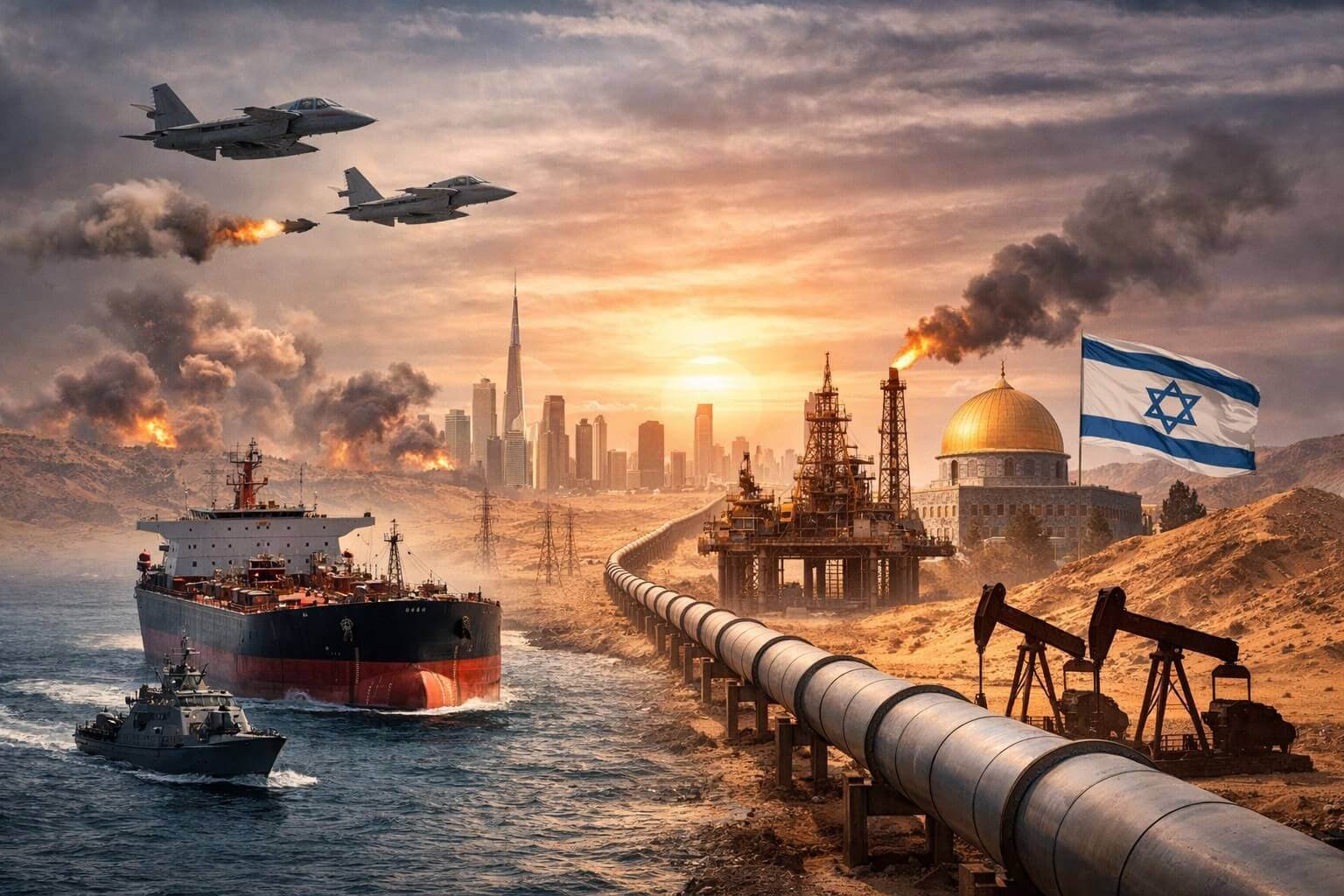
This is why the deeper story is now shifting from war to rerouting. The central question is no longer only whether Iran will keep using Hormuz as leverage. The larger question is who will use this crisis to accelerate an alternative geography of supply. In March, Israeli Prime Minister Benjamin Netanyahu openly said oil and gas from the region should move by pipeline across the Arabian Peninsula to Israeli ports in order to bypass the Iranian threat in Hormuz. That was not a throwaway line. It was a strategic signal.
If that thinking gains traction, Europe will not ignore it. European governments have already made clear that freedom of navigation through Hormuz is a core interest, while political pressure to diversify supply routes has only grown since the latest regional shock. The logic is straightforward: if one chokepoint can be disrupted so dramatically, every alternative route suddenly gains strategic value, even the politically difficult ones.
That is where the conversation becomes more uncomfortable. Once policymakers start thinking seriously about new corridors to Israeli Mediterranean ports, the discussion inevitably moves toward Israel’s southern and central transit geography. It would be too strong to say there is already an agreed oil pipeline “via Gaza” heading for Europe. There is no publicly established, internationally approved project of that kind in place today. But it is fair to say that the pressure created by the Hormuz crisis makes southern Israeli export logic more relevant, and that this could pull previously controversial route ideas back into strategic discussion. That is an inference from the geography and from recent political messaging, not an announced plan.
Israel’s ambitions in this area are not new. Reuters previously reported on the Eilat-Ashkelon pipeline route as a potential corridor for Gulf oil moving onward to Europe, and that history matters now because old infrastructure ideas tend to come back during major wars. What changes in a crisis is not just feasibility. It is urgency. Routes that looked too expensive, too political or too unrealistic in calmer times can quickly start to look strategic once the old system stops functioning normally.
For Europe, this is not only about Israel or the eastern Mediterranean. It is about reducing exposure to a narrow route that can be disrupted by one regional escalation. For countries such as Azerbaijan, it is also a reminder that alternative corridors gain importance whenever maritime chokepoints become unstable. The more dangerous the Gulf becomes, the more value shifts to routes marketed as predictable, overland and politically resilient.
The real takeaway is blunt. Wars in the Middle East do not only destroy. They also redraw. They change which ports matter, which pipelines look viable, which states gain leverage and which corridors suddenly become indispensable. Hormuz may reopen more fully in the days ahead. But the illusion that it can be treated as a permanent guarantee has already been broken. And once that illusion is gone, the race for a new energy map begins.