AZE.US
A fourth meeting between Azerbaijani and Armenian civil society representatives was held in Gabala, with participants saying the process has moved past symbolic contact and into a more candid phase.
One of the clearest messages from the discussion was that the dialogue is no longer confined to cautious wording and carefully filtered exchanges.
Speakers said the format has expanded quickly, growing from 5+5 participants at the beginning to 20+20 within about two months. They presented that as evidence that the mechanism is becoming more structured and that interest in keeping the channel open is widening on both sides.
Another point stressed in the discussion was that these contacts are taking place directly, without third-country mediation. Participants contrasted that with many earlier Armenia-Azerbaijan civil society contacts, which they said were usually held with outside intermediaries and often remained limited to narrow circles.
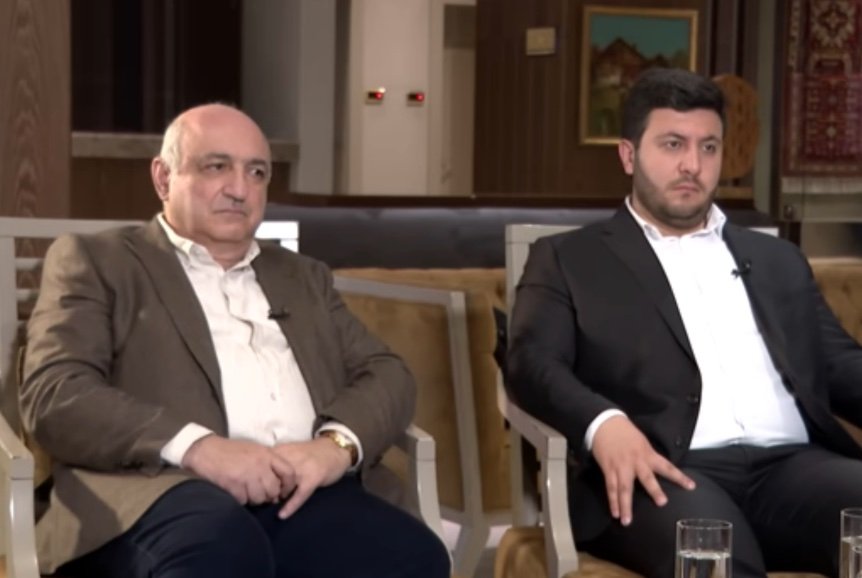
Oreg Kochinyan, identified in the program as president of the Armenian Council, said the very fact that a fourth meeting had taken place was already an achievement.
He said many had initially assumed the process would be one-off or short-lived, but it has instead become more institutionalized. He also said both sides are doing follow-up work at home to explain the meetings to their societies and help prepare public opinion for peace.
Boris Navasardyan, honorary president of the Yerevan Press Club, said one of the most important changes was psychological. In the first meetings, he said, participants were not openly hostile to each other, but they were still censoring themselves.
Now, he said, that self-censorship is fading, and the sides are beginning to discuss subjects that are sharper and more sensitive for their publics. In his view, that is essential if reconciliation is to be more than a formal slogan.
The discussion also highlighted the symbolic significance of practical changes that would once have seemed unthinkable. Navasardyan pointed to Armenian planes landing in Baku, Azerbaijani planes landing in Yerevan, and land-border crossings in both directions as signs that long-standing taboos are being broken.
At the same time, participants were careful not to oversell the format. They said the meetings are not official negotiations and are not designed to produce binding decisions. Instead, they described the process as a track 1.5 format that sits between formal state talks and purely non-governmental dialogue, allowing ideas to be tested, public attitudes to be softened and recommendations to be developed.
The speakers also acknowledged resistance. They said some criticism comes from poor public understanding of what the meetings are meant to do, some from disappointment rooted in failed past initiatives, and some from actors with political or financial reasons to keep the conflict logic alive. One participant also referred to a “third northern country” whose regional influence, he argued, depends in part on continued friction between Armenia and Azerbaijan.
Domestic politics in Armenia were described as a major reason why expectations remain limited in the short term. Participants said parliamentary elections scheduled for June 7 are pulling political attention inward and slowing the broader normalization process.
That has made it harder, they said, to expect breakthrough recommendations now than it was a few months ago. Still, the tone of the discussion suggested that many involved see the post-election period as the next real test of whether the current dialogue can produce more tangible results.
A broader conclusion ran through the conversation: even a peace agreement, on its own, would not be enough. Participants argued that any durable settlement will require more than signatures and formal statements.
It will also require societies on both sides to gradually move beyond years of distrust, mutual dehumanization and political reflexes shaped by conflict. In that sense, the meeting in Gabala was presented not as an endpoint, but as part of the slow work of making peace socially possible.