AZE.US
Washington may see maritime pressure as a cleaner alternative to a wider war, but strategies built around economic strangulation rarely stay contained for long.
After the collapse of U.S.-Iran talks, the confrontation appears to be moving into a more dangerous phase. The center of gravity is shifting away from direct military action alone and toward economic coercion, especially around oil exports, shipping routes and maritime access.
That shift may look, at first glance, like a controlled escalation. It allows Washington to squeeze Tehran without immediately stepping into the kind of large-scale ground conflict the United States has tried to avoid since Iraq. But pressure campaigns of this kind have a habit of spreading beyond their original design.
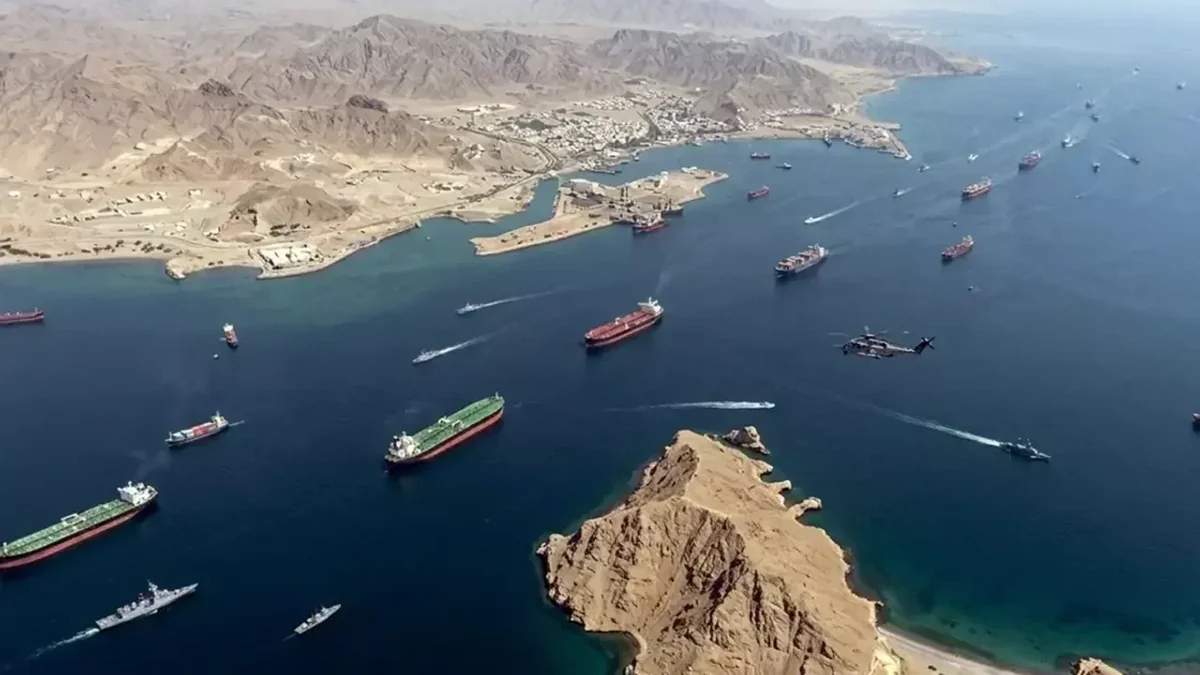
The core logic is easy to understand. If Iran tries to use the Strait of Hormuz and regional shipping pressure as leverage, the United States can respond by targeting the economic arteries that keep the Iranian system functioning. In that framework, the goal is not symbolic punishment. It is to hit the structure of the Iranian economy where it is most vulnerable.
On paper, that may look like a powerful strategy. In practice, it carries risks that go far beyond Iran.
A blockade, or even the credible threat of one, is never just an economic tool. It affects freight insurance, tanker movements, energy pricing, supply chains and market sentiment all at once. Iran may suffer more sharply than anyone else in such a scenario. Its economy has less room to absorb a prolonged shock, and its dependence on oil revenues and maritime trade remains a central vulnerability. But that does not mean the rest of the world escapes the fallout.
This is where Washington’s calculation becomes far more fragile than it may appear in the early stages.
Economic pressure is often designed around a simple assumption: raise the cost high enough, and the other side will back down. Sometimes that works. Sometimes it does not. When a state concludes that its core revenues, political stability and strategic standing are all under threat at the same time, pressure can produce escalation rather than restraint.
That is the real danger in the current moment.
If Tehran comes to believe that the objective is not deterrence but suffocation, its response may not be measured. It may widen the crisis through regional partners, attacks on infrastructure, threats to adjacent shipping routes or other asymmetric steps designed to raise the cost for Washington and its allies. In that case, what began as an attempt to avoid a broader war could end up feeding one.
There is also a second illusion that tends to surface in every energy crisis: the belief that global oil markets will simply adjust. To a degree, they can. Supply can be redirected. Output can rise elsewhere. Alternative routes can be expanded. But markets do not adapt for free. They adapt through higher insurance costs, more expensive shipping, volatility in prices and political pressure on governments facing angry consumers.
For the White House, that matters. A strategy framed as foreign pressure can quickly become a domestic political liability if fuel costs rise and market anxiety spreads.
China is another major factor. Any serious disruption around Hormuz would not only hit Iran. It would affect countries whose energy security depends on stable Gulf flows. That means Beijing, whatever its broader political position, would have its own reasons to push for de-escalation. The same is true, in different ways, for other large importers that may not want to align with either side but cannot afford a prolonged shock in energy transit.
This is why the current phase is less about dramatic headlines and more about endurance.
The contest is no longer just about missiles, deterrence and diplomatic messaging. It is about which side believes it can absorb more pressure, sustain more losses and outlast the other politically and economically. That kind of struggle is often more dangerous than open warfare because it narrows the space for compromise while convincing both sides that retreat would look like defeat.
Washington may believe Iran will bend first. It may even be right. But the history of the region offers plenty of warnings about what happens when major powers treat economic strangulation as a clean path to political results. Pressure can weaken a state. It can force concessions. But it can also corner an adversary and make its behavior less predictable, not more.
That is why the current pressure campaign should not be viewed as a stabilizing alternative to war. It may instead be the opening of a new and more volatile chapter, one in which ports, tankers, shipping lanes and oil revenues become weapons in their own right.
For the United States, this is a test of leverage. For Iran, it is a question of survival and strategic credibility. In that kind of standoff, the greatest danger is not just that both sides keep raising the stakes. It is that both sides begin to believe they no longer have room to step back.