By AZE.US Editorial Team
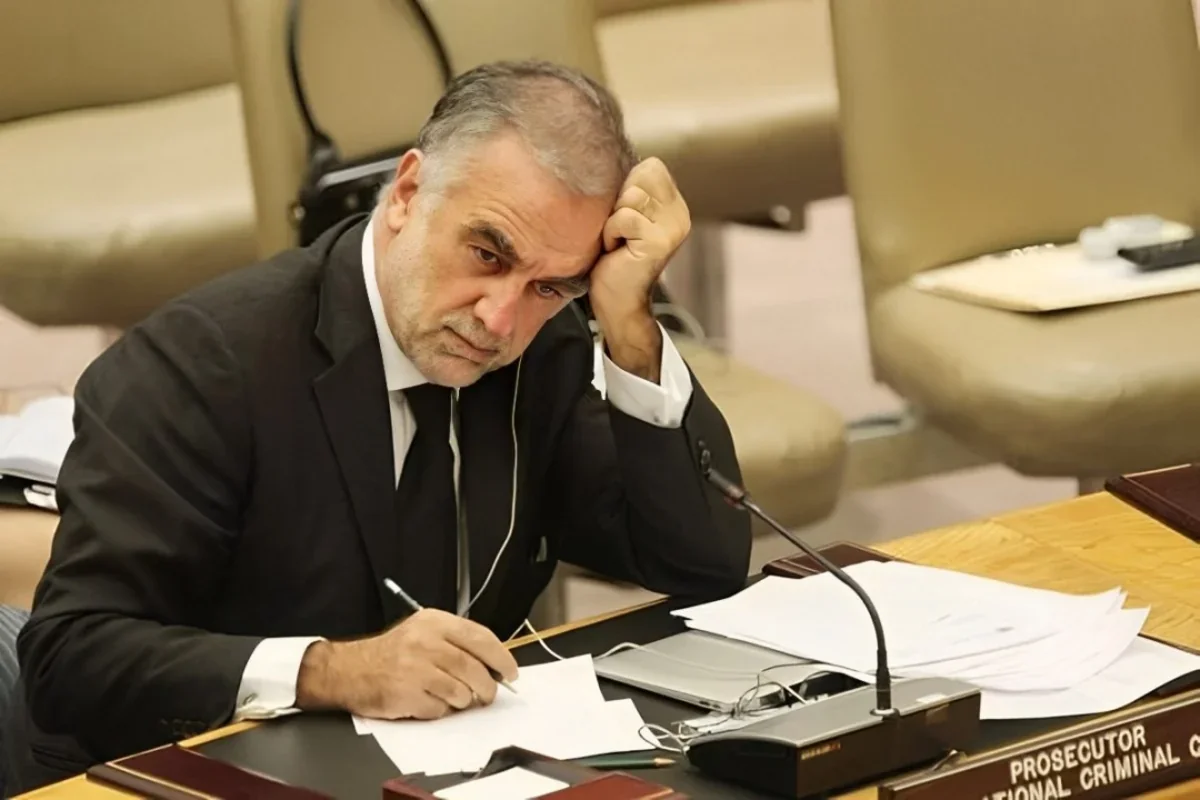
A video released by Azerbaijani media on Thursday has placed Luis Moreno Ocampo back at the center of a familiar but increasingly uncomfortable debate: how former international officials, lobby groups and political access in Europe can be used to shape pressure campaigns against Azerbaijan.
Ocampo is often presented in regional media as a former international prosecutor. More precisely, he was the first chief prosecutor of the International Criminal Court, serving from 2003 to 2012 - a detail that matters because his former title gives his later political statements a sense of legal authority.
The latest controversy began after Minval Politika published footage that it says shows Ocampo and his son, Tomas Moreno Ocampo, discussing ways to increase political and legal pressure on Azerbaijan. Report, APA, Trend and News.Az all carried accounts of the material on April 30, saying the video points to alleged coordination involving Armenian lobby networks and access to European institutions.
The transcript attributed to the video is unusually direct. In one passage, Ocampo allegedly says he has access to a former European Parliament member who now works with him and can help raise questions inside the European Parliament and apply pressure on European Commission President Ursula von der Leyen.
He is also quoted as saying that pressure on Azerbaijan should be increased together with the Armenian lobby in the United States. “I don’t need to tear down a wall - the door is already open,” Ocampo says in the transcript published by Azerbaijani media.
That language is politically revealing. It does not sound like detached legal commentary. It sounds like the language of access, leverage and coordinated pressure.
The key issue is not simply whether Ocampo has criticized Azerbaijan before. He has. The issue is whether those criticisms are part of independent legal advocacy or part of a more organized political campaign dressed in the language of international justice.
That distinction matters.
In modern politics, pressure rarely arrives in a single form. It comes through former officials, parliamentary contacts, diaspora groups, public letters, media campaigns, resolutions and selective legal language. Each element may look separate from the outside. Together, however, they can create a powerful mechanism of influence.
The Ocampo video, if authentic, suggests exactly that kind of mechanism.
According to News.Az, Minval Politika’s report claims the campaign was not limited to Azerbaijan. It also allegedly touched on Armenia’s internal political situation, including discussions around Prime Minister Nikol Pashinyan and possible political scenarios in Yerevan.
The transcript also includes remarks attributed to Tomas Moreno Ocampo, who allegedly says that activists, businesspeople and others were being coordinated around the Armenian and Karabakh issue. Most strikingly, he is quoted as saying that because of “massive chaos in Armenia” and internal disputes ahead of elections, “we need to get Pashinyan, the prime minister, removed from power.”
If accurate, that line pushes the matter far beyond lobbying against Azerbaijan. It suggests that the same network may also be discussing Armenia’s internal political direction.
That makes the story broader than another anti-Azerbaijani media campaign. It raises the possibility of a network trying to act on two fronts at once: externally, by increasing pressure on Baku through European platforms; internally, by linking that pressure to Armenia’s fragile political landscape.
For Azerbaijan, this is not a surprise. Baku has long argued that parts of the Western political and media space have been shaped by Armenian diaspora lobbying, especially on Karabakh-related issues. What is different now is that the alleged video does not merely show public criticism. It appears to show the backstage logic of how pressure is built, routed and sold.
This is where the language of law becomes dangerous. When legal terms are used honestly, they help clarify facts and responsibility. When they are used as instruments of political lobbying, they become a weapon. They give private interests the appearance of universal morality.
Europe should be the first to worry about this.
If European institutions are vulnerable to pressure from private networks, former officials and diaspora-linked campaigns, then the question is no longer only about Azerbaijan. It becomes a question about the credibility of European decision-making itself. Are positions on the South Caucasus being formed through evidence and strategic interest, or through those who know which doors in Brussels to open?
The Ocampo episode also damages the reputation of international justice. When a former ICC prosecutor is perceived not as an independent legal voice but as a participant in a political influence operation, the damage goes beyond one person. It weakens trust in the very institutions that depend on neutrality, restraint and credibility.
Azerbaijan’s response should not be emotional. It should be systematic.
The answer to such campaigns is not only rebuttal, but exposure: who funds the work, who drafts the language, who arranges access, who amplifies the claims and who benefits politically from the result. In this kind of contest, names, documents and timelines matter more than slogans.
The real lesson of the Ocampo scandal is that pressure on Azerbaijan is not always generated by governments or formal institutions. It can also come from private networks that use the vocabulary of human rights while pursuing political objectives.
That is why this story matters. It is not just about Ocampo. It is about a method.
And if the video is authentic, that method is now harder to hide.
AZE.US