By AZE.US Editorial Team
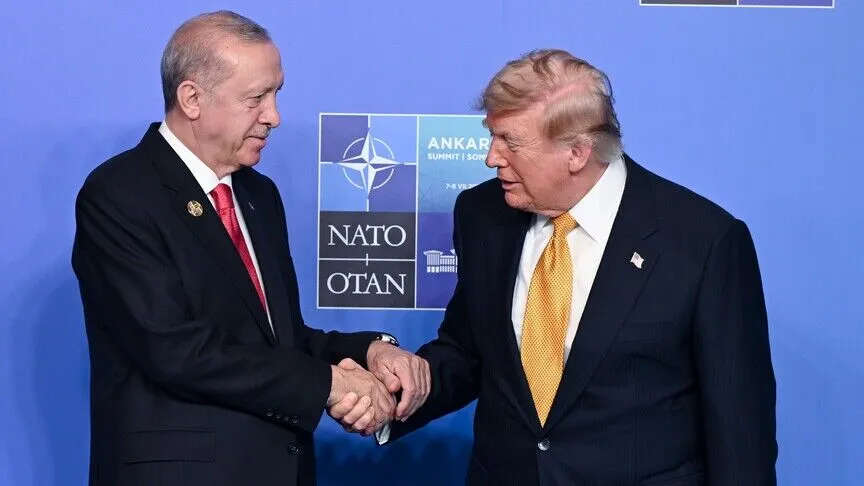
The NATO summit in Ankara was formally about Ukraine, defense spending and the future of the alliance. In reality, it revealed something larger: Turkey is no longer being treated as a difficult ally on NATO’s edge. It is becoming one of the countries without which the new security map cannot be drawn.
That shift was visible in the symbolism, the language and the policy signals. President Donald Trump’s warm reception in Ankara, his praise for President Recep Tayyip Erdogan, and his remarks about lifting sanctions on Turkey and reconsidering the F-35 issue were not just diplomatic theater. They reflected a practical recognition in Washington: the old approach to Turkey has reached its limits.
For years, Ankara was often described in Western capitals as a problem to be managed. Its purchase of Russian S-400 systems, tensions with European allies, disputes over Syria and sharp disagreements with Washington all fed that image. But geopolitics has a habit of punishing lazy labels. Today, Turkey is not just a NATO member with a large army. It is a military-industrial power, a drone producer, a Black Sea actor, a Middle Eastern player, a South Caucasus stakeholder and a bridge to Central Asia.
That is a lot of geography for one country. It is also a lot of leverage.
The Ukraine war has made this even clearer. Kyiv needs air defense, ammunition, drones and long-term military production. The United States may still provide the most important technology, especially when it comes to Patriot systems, but Washington no longer wants to carry the burden alone. Europe is being pushed to spend more, produce more and take more responsibility. In that environment, Turkey’s defense industry is not a side issue. It is part of the answer.
Ankara has already shown that it can produce weapons that matter on the modern battlefield. Its drones changed military calculations before much of Europe had even admitted how far behind it had fallen. Now, as NATO debates future procurement and production, Turkey can argue that it is not merely a consumer of security. It is a supplier of security.
That is also why the debate over F-35s and sanctions matters. If Washington moves toward easing restrictions on Turkey, it will not be because every old dispute has disappeared. It will be because the strategic cost of keeping Turkey at arm’s length has become too high.
The same logic applies to the Middle East. The confrontation around Iran has again exposed the limits of America’s regional architecture. Israel remains Washington’s closest partner, but it is also a partner that often pulls the United States deeper into regional crises. Arab Gulf states are vital, but cautious. Turkey is different. It is a Muslim-majority NATO power with its own military strength, regional channels and political weight.
That makes Ankara valuable to Washington in a way that is difficult to replace. In the Middle East, the Eastern Mediterranean, the Black Sea, the South Caucasus and Central Asia, Turkey gives the United States something it badly needs: a partner that can act, not only ask for protection.
Europe is learning the same lesson, though more slowly. European leaders want Turkey’s role in continental security, especially at a time when Russia remains a long-term threat and Ukraine’s war is stretching Western resources. But Ankara is no longer willing to accept a one-sided bargain. If Turkey is expected to help secure Europe, it will demand access, respect and a share in defense planning and industrial projects.
That is the core tension. Europe wants Turkish strength, but not always Turkish influence. Ankara is making clear that this contradiction cannot last.
For Azerbaijan, this matters directly. A stronger Turkey inside NATO raises the strategic value of the wider Turkic world, the South Caucasus and the Middle Corridor. Azerbaijan is not watching this process from a distant corner. It sits on one of the routes that connects Europe, Turkey, the Caspian region and Central Asia.
That gives Baku opportunities. It also creates responsibilities. As Turkey’s role grows, more attention will fall on the corridors, energy routes and political balances around Azerbaijan. The country’s value as a stable partner will increase, but so will the need for careful diplomacy. In a more competitive Eurasia, geography is an asset only when it is managed with discipline.
The Ankara summit also showed that NATO itself is changing. The old model was simple: the United States led, Europe followed with hesitation, and Turkey stood on the southeastern flank. That model is fading. The United States wants allies to pay more. Europe wants protection but struggles to build enough capacity. Ukraine needs sustained support. Iran remains a source of volatility. Russia is weakened but still dangerous. China watches and benefits from Western fragmentation.
In this environment, Turkey is no longer just a flank state. It is becoming one of the central players in the bargain.
That does not mean Ankara will always align neatly with Washington or Brussels. It will not. Turkey will continue to pursue its own interests, sometimes frustrating its allies and sometimes forcing them to adjust. But that is precisely the point. Turkey is not being absorbed into someone else’s strategy. It is shaping the strategy.
The summit in Ankara was therefore about more than NATO unity. It was about power. It showed that the alliance’s future will not be decided only in Washington, Brussels, Berlin or Paris. Ankara now has a larger voice, and that voice will matter from Ukraine to the Gulf, from the Black Sea to the South Caucasus.
Turkey is no longer asking for a seat at the table.
It is helping decide where the table stands.
AZE.US