By AZE.US Editorial Team
Azerbaijan’s parliament on Friday suspended cooperation with the European Parliament in all areas and moved to end its participation in the EU-Azerbaijan Parliamentary Cooperation Committee, marking a new escalation in tensions between Baku and one of the European Union’s most outspoken institutions.
The Milli Majlis also launched the procedure to terminate Azerbaijan’s membership in the Euronest Parliamentary Assembly and said its delegation would not take part in Euronest events during the process.
The decision came a day after the European Parliament adopted another resolution critical of Azerbaijan, including calls tied to the return of Karabakh Armenians, cultural heritage protection and the treatment of detainees. Baku rejected the document as biased and politically motivated. The EU’s ambassador to Azerbaijan, Mariana Kuyumdjieva, was summoned to the Foreign Ministry and handed a note of protest.
In its resolution, the Azerbaijani parliament said the European Parliament had for years acted as a platform for pressure on Azerbaijan, ignored the destruction caused during Armenia’s decades-long occupation of Azerbaijani territories, and repeatedly used parliamentary mechanisms to interfere in the country’s internal affairs.
For Baku, this was not just a response to one new resolution. It was the continuation of a longer confrontation. Azerbaijani officials and lawmakers argue that after the 2020 war and the restoration of Azerbaijani control over Karabakh, anti-Azerbaijan rhetoric in the European Parliament only intensified. They say the body has consistently taken one-sided positions, especially on issues related to Armenians from Karabakh, while paying little attention to Azerbaijani grievances from the conflict.
Several lawmakers described Friday’s move as an overdue and proportionate response. They argued that the European Parliament’s line has undermined the broader peace process between Azerbaijan and Armenia and emboldened forces opposed to normalization in the region.
The break is politically significant, but it does not amount to a full rupture between Azerbaijan and the European Union.
That distinction matters. The European Parliament is one institution within the EU system, and often the most politically confrontational one from Baku’s point of view. Azerbaijan’s dispute is with that institution’s resolutions and rhetoric, not with every channel of EU engagement.
You May Like
European Parliament Is Helping Russia And Hurting The Peace Process, Mammadov Says
Ocampo Let It Slip: Who Opens Doors For The Armenian Lobby In Brussels
More importantly, Europe’s energy interests remain unchanged.
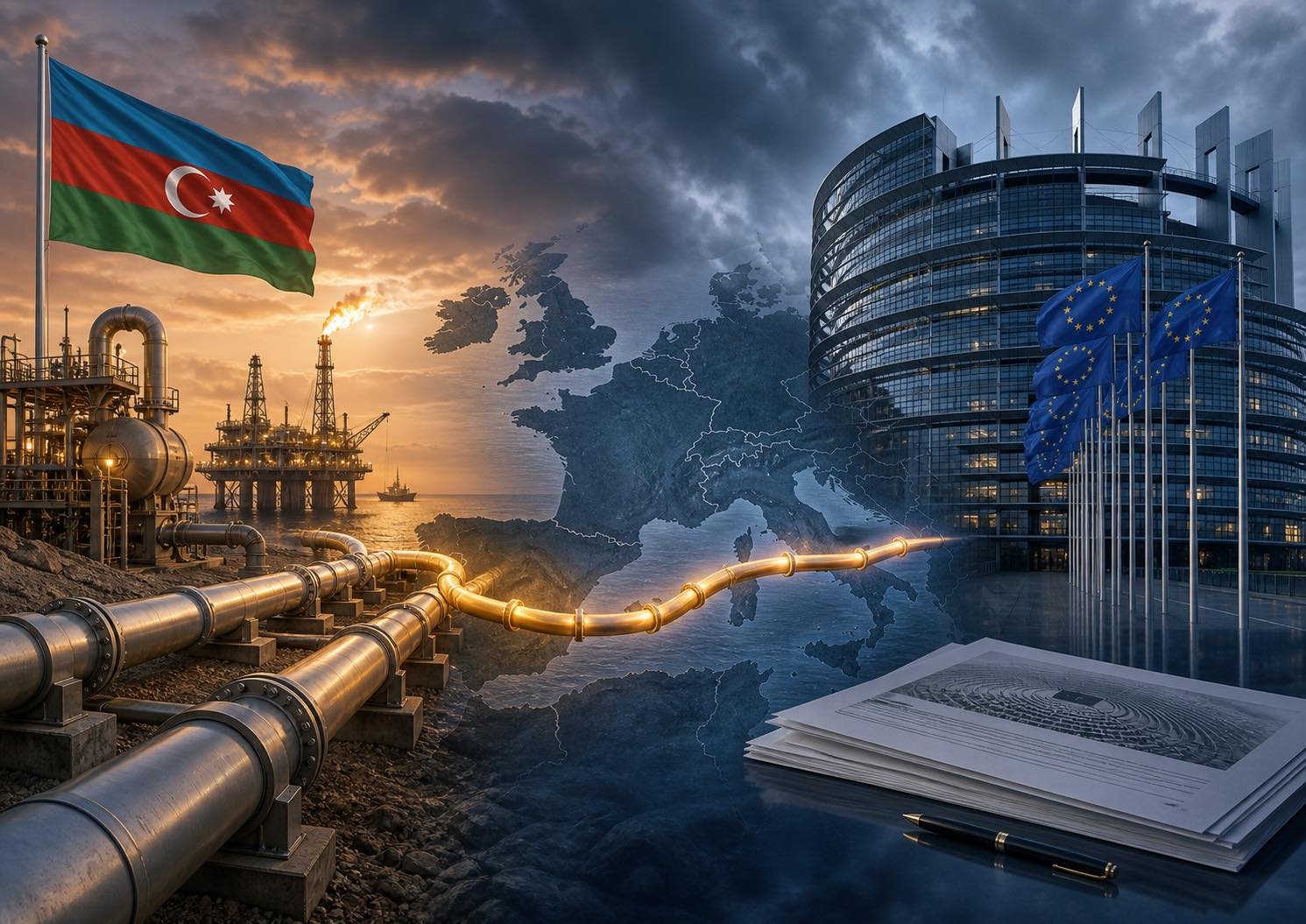
Whatever the political temperature in Brussels, the EU still sees Azerbaijan as an important gas supplier and a strategic partner in the Southern Gas Corridor. Since Europe moved to reduce its dependence on Russian energy, Azerbaijani gas has become more important to the bloc’s diversification strategy. That has created a familiar contradiction: political criticism on one track, practical cooperation on another.
In other words, the parliamentary freeze does not stop the gas.
Azerbaijan is sending a clear signal that it is no longer willing to treat European Parliament resolutions as routine criticism within a normal dialogue. But Baku is also not walking away from the economic side of the relationship. Energy exports, transit routes and broader trade ties remain too important for both sides.
That is why Friday’s decision should be read less as a break with Europe than as a targeted political rupture with the European Parliament.
For Azerbaijan, the message is straightforward: if Brussels wants a working relationship, it cannot expect Baku to accept what it sees as sustained political attacks dressed up as values-based policy. For Europe, the episode is another reminder that its internal institutions do not always speak with the same weight. The European Parliament can raise the political cost for Azerbaijan, but it cannot replace Europe’s underlying need for stable external energy supplies.
The result is an uneasy balance that has defined much of the EU-Azerbaijan relationship in recent years. Political trust is deteriorating. Strategic necessity is not.
And for now, that means Europe may lose ground with Baku in the political arena, while still relying on Azerbaijan in the energy sphere.
AZE.US