By AZE.US Editorial Team
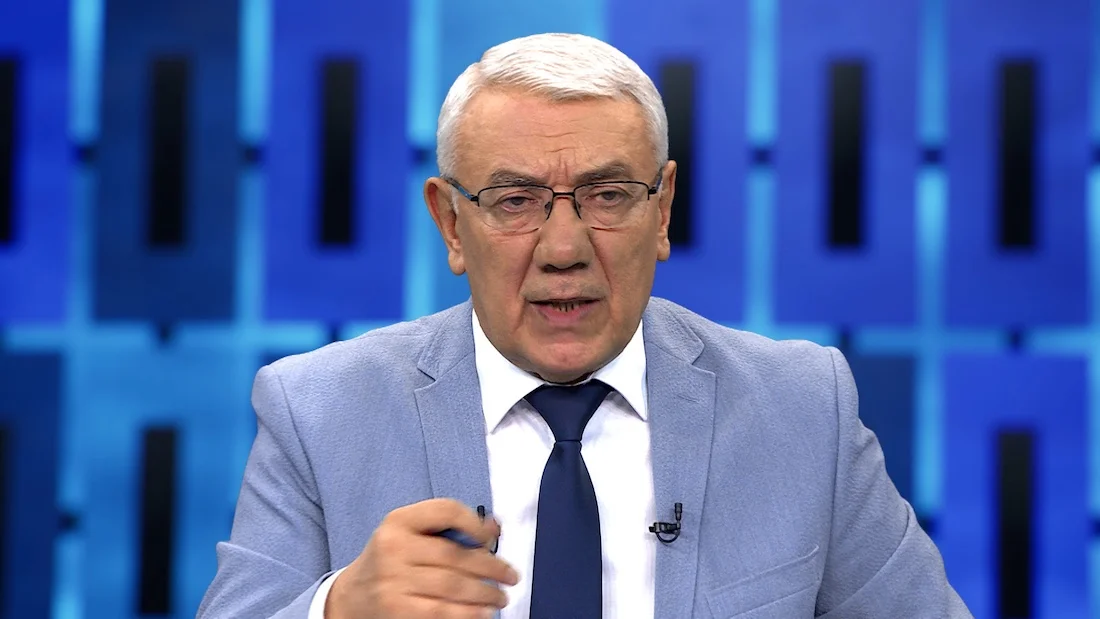
The European Parliament has again placed itself on the wrong side of the peace process in the South Caucasus, Azerbaijani political analyst Eldar Namazov said during an appearance on the YouTube channel Novosti Kavkaza.
Namazov argued that the latest anti-Azerbaijani moves by the European Parliament should not be viewed as an isolated political episode. In his assessment, they are part of a broader struggle over the future of the region and over whether the South Caucasus becomes a bridge between Europe and Central Asia or remains vulnerable to outside manipulation.
According to Namazov, the campaign is not only driven by Armenian lobbying circles. He said it also reflects Russian interests, because Moscow benefits from strained relations between Azerbaijan, Armenia, Georgia and European institutions.
The analyst said Russia wants to disrupt the peace process between Baku and Yerevan and weaken the position of Armenian Prime Minister Nikol Pashinyan, whose government has moved toward normalization with Azerbaijan.
Namazov also referred to recent controversy involving Luis Moreno Ocampo, the former prosecutor of the International Criminal Court. He said the anti-Azerbaijani campaign associated with Ocampo was financed by Armenian businessmen of Russian origin and was aimed at damaging the peace track.
At the same time, Namazov said Azerbaijan is making a clear distinction between the European Parliament and the European Union as a whole.
Baku has cut ties with the European Parliament, he said, but continues to build relations with the European Commission and individual European states.
That distinction is important. Azerbaijan does not see Europe as a single hostile bloc. Instead, Namazov said, Baku is separating institutions that promote confrontation from those that understand the strategic value of cooperation with Azerbaijan.
He said the European Commission and several leading European countries remain interested in partnership with Baku. The reason is not limited to energy. The South Caucasus is increasingly seen as part of a wider route connecting Europe with Central Asia.
For Russia, Namazov argued, that is the central problem. A stronger European presence in the South Caucasus would reduce Moscow’s influence and open alternative political, economic and energy corridors.
“Russia’s worst nightmare is the political presence of the European Union in the South Caucasus and Europe’s ability to receive energy resources not only from Azerbaijan but also from Central Asia,” Namazov said.
He also noted that the European Parliament has already faced several corruption and lobbying scandals. Against that background, Namazov said European institutions should seriously examine who is shaping the anti-Azerbaijani agenda and whose interests are being served.
In his view, the current line of the European Parliament does not only target Azerbaijan. It also puts pressure on Pashinyan’s government in Armenia, which has been trying to move toward a peace agreement with Baku. The more the European Parliament promotes an anti-Azerbaijani narrative, the more ammunition it gives to forces in Armenia that oppose peace.
Namazov said Russia has not fully left the South Caucasus and will continue resisting the loss of influence. But he argued that the direction is already clear: Moscow is gradually losing ground in the region and will use lobbying networks, media campaigns and political provocations to slow that process.
For Azerbaijan, he said, the answer should be strategic discipline rather than emotional reaction. Baku should not fall into provocations, Namazov argued, but should continue strengthening ties with European institutions and states that understand the South Caucasus as a key part of Europe’s future security and energy architecture.
AZE.US