By AZE.US Editorial Team
Europe’s relationship with Azerbaijan is cracking not because Baku has suddenly turned away from the West, but because Europe itself keeps speaking to Azerbaijan in two different languages.
One is the language of gas, oil, transport routes, energy security and alternatives to Russian supplies.
The other is the language of resolutions, pressure, moral lectures and old political habits that still treat the South Caucasus as if nothing changed after Azerbaijan restored control over Karabakh.
That contradiction became impossible to ignore this week.
At the European Political Community summit in Yerevan, President Ilham Aliyev accused the European Parliament of obstructing the peace process between Azerbaijan and Armenia. His remarks came after Baku suspended cooperation with the European Parliament following another resolution critical of Azerbaijan.
This was not just a diplomatic protest. It was a warning that Azerbaijan is no longer willing to accept a situation in which some European officials speak about peace while others push the region back toward old conflict narratives.
Soon afterward, EU foreign policy chief Kaja Kallas visited Baku. Before her, Italian Prime Minister Giorgia Meloni had also arrived in the Azerbaijani capital. The sequence was revealing.
When Europe needs Azerbaijani gas, Baku is suddenly a “reliable partner.” When European politicians need a moral pose for domestic or ideological audiences, Azerbaijan again becomes a convenient target.
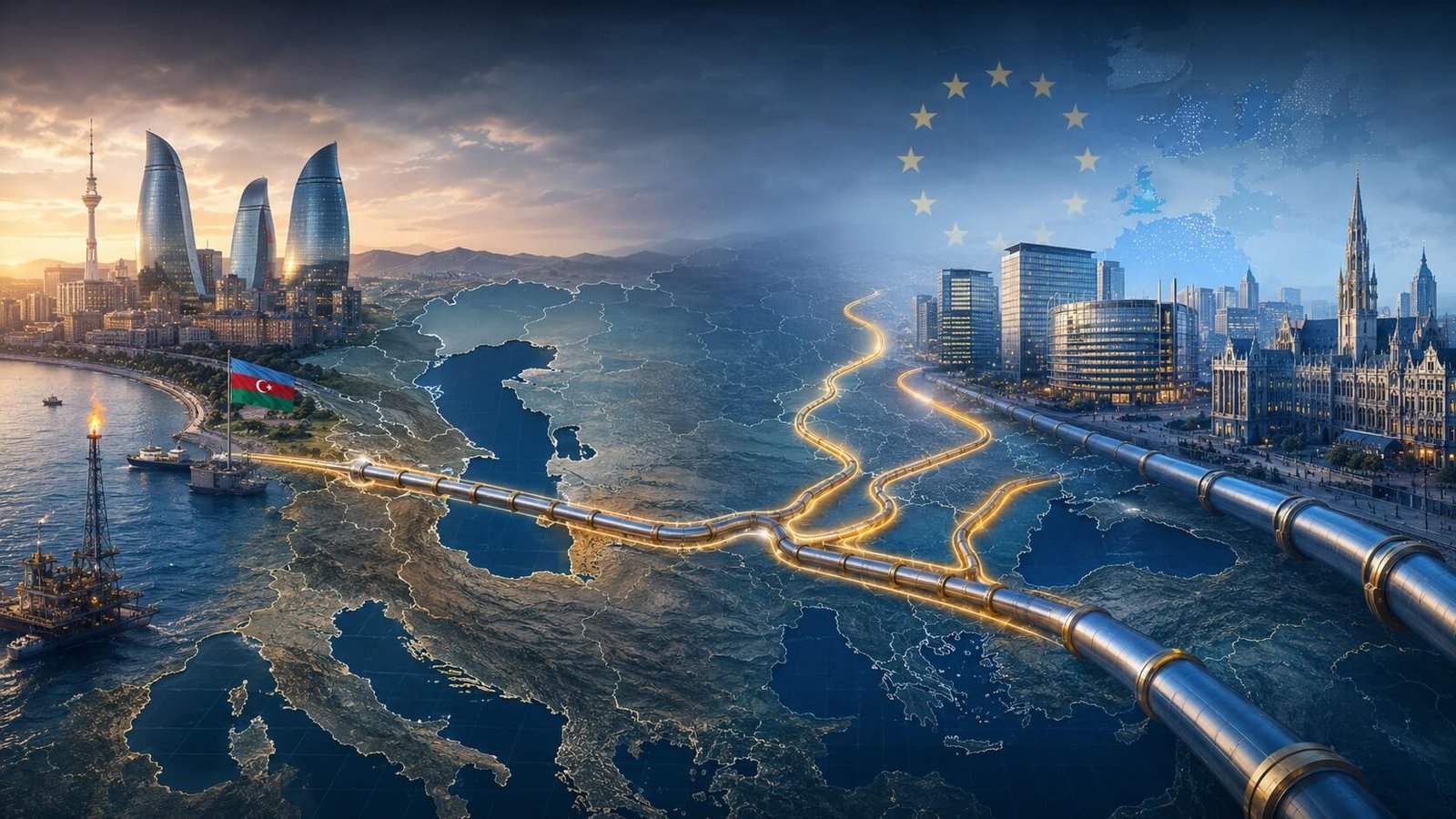
Italy understands the value of the Azerbaijani route very well. For Rome, Baku is not an abstract capital somewhere east of Europe. It is part of Europe’s energy security architecture. Azerbaijani gas, oil, the Southern Gas Corridor, the Caspian basin and the wider transport network have all become part of Europe’s strategic reality.
But the European Parliament often behaves as if it lives in another reality.
It continues to adopt resolutions that effectively ask Azerbaijan to explain why it restored sovereignty over its own internationally recognized territory. The issue of Karabakh Armenians is again brought back into the political debate. Old accusations are repeated. The impression is clear: some in Europe still have not accepted that the era of separatism in Karabakh is over.
This is no longer only a problem for Azerbaijan.
It is a problem for Europe itself.
Today’s Europe is caught between fear of Russia, fatigue over Ukraine, internal economic pressure, migration tensions and a harder American line under Donald Trump. It still wants to look like a center of stability. But more often it looks like a continent unable to agree with itself.
Some European capitals see Azerbaijan as a partner without whom it is difficult to build a stable energy and transport bridge between Europe and Asia. Others continue to view the region through old ideological templates, where Armenia is automatically cast as the victim and Azerbaijan as the problem, regardless of the facts.
That is the real crack.
Not between Azerbaijan and Europe as a whole, but between Europe’s actual interests and the political reflexes of parts of its institutions.
After Russia’s war against Ukraine began, Azerbaijani gas changed from an alternative source into a necessity for Europe. Even an additional one or two billion cubic meters can matter for smaller and medium-sized European states. With instability around the Middle East and risks to global energy routes, Azerbaijan’s role only grows.
But Europe cannot have it both ways.
It cannot want Azerbaijani gas, Azerbaijani oil, Azerbaijani routes and Azerbaijani stability while treating Baku as a country that must sit quietly and listen to political lectures.
Azerbaijan’s objections to European policy are not limited to one resolution. Baku sees a wider pattern.
There is the Armenian lobby. There are politicians who still look at the South Caucasus through religious and civilizational stereotypes. There are forces that benefit from keeping the region tense. There are also those who see Azerbaijan’s rise not as a new reality, but as an irritation to the old order.
Even if Armenia’s leadership continues the peace process, that does not mean anti-Azerbaijani resolutions and statements will disappear from the European agenda.
They may become louder precisely because peace would remove a familiar instrument of pressure.
For Azerbaijan, the right response is not to turn away from Europe. That would be a mistake. Europe remains an important economic and political space. Azerbaijan should not leave European platforms to those who want to speak about the region without Baku.
But partnership cannot be built without respect.
Europe now has to decide what it wants to be in the South Caucasus.
A partner helping the region move from war to economy?
Or a political referee from the past, still trying to manage a reality it no longer understands?
Today, Baku needs Europe. But Europe also needs Baku, perhaps more than many in Brussels are ready to admit. Azerbaijan is not asking Europe to secure its energy future. Europe is looking for new routes, new volumes, new guarantees and new anchors.
That is why the old tone no longer works.
The time when the European Parliament could adopt resolutions and expect Azerbaijan to quietly justify itself is fading. A different era is emerging - one of mutual dependence, where gas, corridors, security and sovereignty are part of the same political equation.
Europe has not yet decided how to live with that.
Azerbaijan already has.
AZE.US