AZE.US
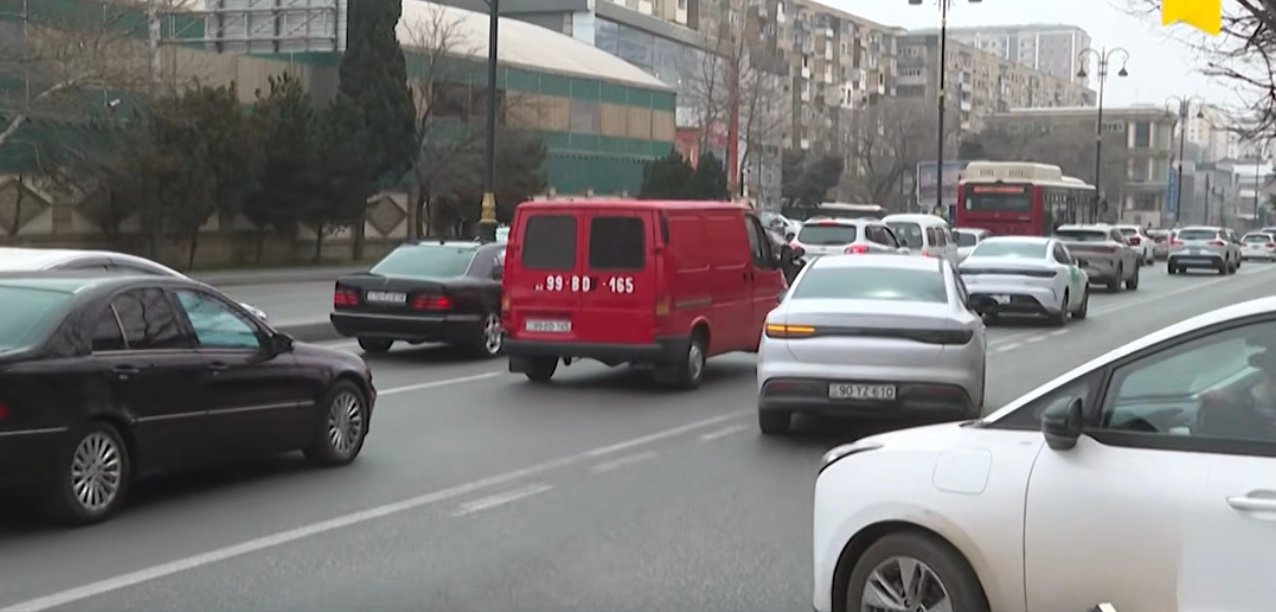
Parking near restaurants, pharmacies, shops and wedding halls in Baku is turning into a growing headache for drivers, as limited parking space and tighter restrictions leave many motorists at risk of fines even during short stops.
The issue returned to public attention after guests who parked near the Millenium wedding hall in Baku were reportedly fined on April 21. Drivers say many commercial venues do not have enough parking spaces, while finding an alternative nearby is often difficult.
For many residents, the problem is simple: they drive to a restaurant, pharmacy or store, stop for only a few minutes, and still risk receiving a fine if the area is not formally designated for parking.
Transport expert Rauf Aghamirzayev told Demokrat.az that Baku’s mobility transformation should be viewed through three main directions.
The first is a deterrent mechanism, including hourly paid parking by zones. The second is the creation of alternatives to private cars, including the development of public transport and stronger priority for buses and other transport options. The third is a set of street-level measures designed to give public transport an advantage in traffic.
Aghamirzayev said this approach is currently being applied in Baku mainly through bus transport, including dedicated bus lanes and changes in traffic organization aimed at increasing bus speed and improving circulation.
Parking, he said, is also part of that broader policy. In modern cities, parking is no longer treated only as a convenience for drivers. It is increasingly used as a tool to discourage excessive car use, especially in central areas.
Higher parking tariffs in the city center and different pricing policies in other zones are intended to reduce the use of private cars for short trips and journeys into the center, Aghamirzayev said.
But this is where the main tension appears in Baku. The city is trying to reduce chaotic parking and ease traffic pressure, while the infrastructure around many commercial venues has not fully adapted to the new rules. Drivers often arrive at a restaurant, pharmacy or shop without a clear understanding of where they can stop legally.
The expert also pointed to the importance of decisions based on real traffic data, including the use of “digital twin” technology. Such systems allow cities to model traffic flows before launching projects and assess which solutions are most effective.
That can include parking policy, dedicated bus lanes, micromobility lanes, tunnels, bridges, traffic management changes, metro and railway expansion, ring roads, pedestrian areas and shorter walking routes.
According to Aghamirzayev, decisions should be made after identifying actual movement patterns in the city. Once the flows are clear, transport projects can be implemented in a way that improves mobility for the wider public.
Baku has already introduced dedicated bus lanes in several areas. The expert said these lanes have increased bus speeds, improved circulation and helped attract more passengers to public transport.
For drivers, however, the transition remains painful. In some areas, parking has been removed. In others, it has become paid or more restricted. At the same time, convenient short-stop points for pickup and drop-off are still not always available.
That is why parking near restaurants, pharmacies, shops and wedding halls has become more than a daily complaint. It is part of a larger shift in Baku’s transport model - one that aims to reduce car dependency, but still leaves many drivers asking where they are supposed to stop without being fined.
AZE.US