Aze.US
Recent diplomatic activity surrounding Azerbaijan and Armenia suggests a structural shift in the balance of power in the South Caucasus, a region long shaped by Russian influence.
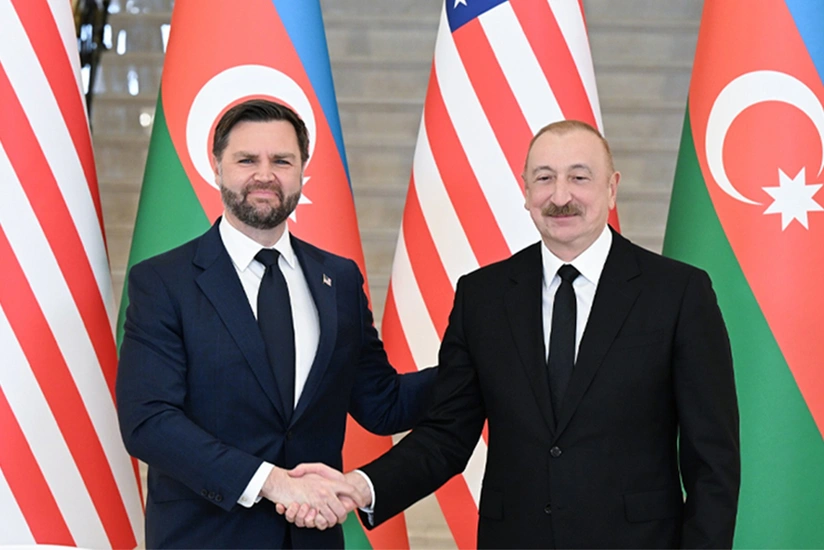
The United States has moved to deepen engagement with both countries, announcing a strategic partnership with Azerbaijan that includes cooperation in security, energy, technology and the protection of Caspian infrastructure. In parallel, Washington has expanded ties with Armenia through civilian nuclear energy initiatives, military assistance and defense modernization programs.
Analysts say these parallel tracks reflect a broader geopolitical transition rather than isolated policy steps.
Russia’s leverage in the region has weakened since the 2020 war between Azerbaijan and Armenia and subsequent political realignments. Armenia has cautiously diversified its foreign policy beyond Moscow, while Azerbaijan has strengthened its role as a key transit and energy corridor linking Europe with Central Asia.
Regional connectivity projects and shifting security partnerships are reshaping the strategic environment that once relied heavily on Russian mediation and military presence.
The wider global context is accelerating this change. Russia’s war in Ukraine, combined with sanctions pressure and intensifying competition among major powers, has reduced Moscow’s capacity to project influence across the post-Soviet space, including the South Caucasus.
Western engagement, alongside Turkey’s established regional role, is contributing to a more multipolar security and economic framework.
Experts caution that the transition remains incomplete and reversible. Russia retains military, economic and political tools in the region, particularly in Armenia. However, the long-term trajectory points toward diversification of alliances rather than renewed dependency on a single external power.
For the South Caucasus, the emerging landscape signals a shift from post-Soviet alignment toward a competitive, multi-vector geopolitical order whose final contours are still forming.