AZE.US
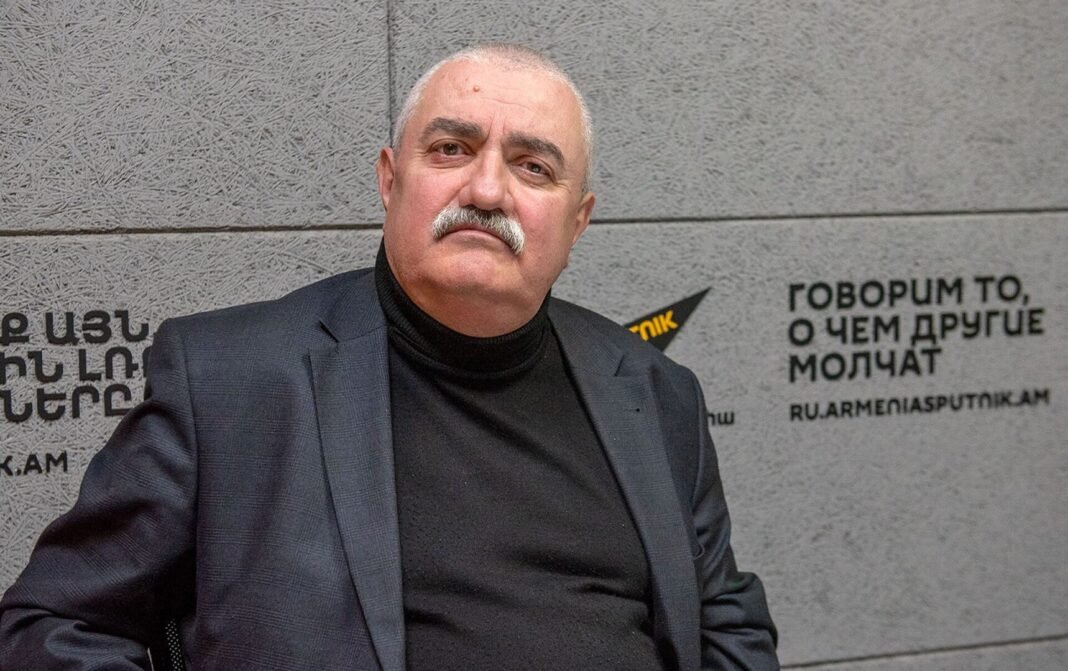
Armenia’s election campaign has entered a more uncertain and politically charged stage, with Prime Minister Nikol Pashinyan’s ruling party and the main opposition forces now appearing to have nearly equal chances, according to Armenian political analyst Aram Safaryan.
Safaryan, coordinator of the Eurasian Expert Club and a former diplomat, said in an interview with the YouTube channel Novosti Kavkaza that Pashinyan’s Civil Contract party had been leading in opinion polls at the start of the campaign. It was followed by three major opposition forces linked to businessman Samvel Karapetyan, former President Robert Kocharyan and Gagik Tsarukyan.
But Safaryan said the situation has changed over the past two weeks as political teams have intensified their work across Armenia. He said it is now harder to identify a clear favorite than it was at the beginning of the campaign.
One important factor, he said, could be the redistribution of votes from smaller parties that fail to cross the electoral threshold. In Armenia, parties must receive at least 4% of the vote to enter parliament, while political blocs need 8%. If smaller forces win 1% to 3% each but fail to enter parliament, those votes may affect the balance among the parties that do qualify.
Safaryan also warned about the risk of post-election tension. He said Armenia’s political forces must avoid crossing dangerous lines, especially if the vote is not perceived by the public and major parties as fair, transparent and legitimate. A contested election outcome, he warned, could damage Armenia’s international image and raise the risk of internal confrontation.
The question of peace with Azerbaijan remains one of the central themes of the campaign. Safaryan said Pashinyan’s team is campaigning on peace, normalization with Baku and the opening of borders with Turkey. The opposition, he said, is no longer using the language of war, but is instead speaking about a “guaranteed” or “dignified” peace.
That position, however, remains unclear, Safaryan argued. He said Pashinyan’s path is more defined: constitutional changes, a peace treaty with Azerbaijan and the promotion of the Crossroads of Peace initiative. The opposition has yet to clearly explain how it would conduct talks with Baku if it comes to power, he said.
Safaryan also pointed to Turkey’s decision to lift its 1993 embargo on trade with Armenia. He said the move could work in favor of the current government, although other major foreign-policy expectations, such as visa-free travel with the European Union or the opening of the Turkish-Armenian land border for limited categories of travelers, have not yet materialized.
Relations with Russia remain another major issue. Safaryan said Moscow is closely watching Armenia’s move toward the West, while Yerevan is not ready for a rapid exit from the Eurasian Economic Union. Such a step, he said, could raise the cost of living, worsen business conditions and disrupt trade with Russia.
On Iran, Safaryan said Tehran’s role in the South Caucasus could grow. He argued that Iran, after the recent crisis involving the United States and Israel, will seek to rebuild its resources and increase its interest in a region that borders Russia and is linked to the broader Eurasian space.
Safaryan’s comments suggest that Armenia’s election should not be reduced to a simple contest between a pro-Western government and a pro-Russian opposition. The campaign is being shaped by several overlapping issues: peace with Azerbaijan, the future of relations with Russia, Turkey and Iran, and Armenia’s long-term orientation toward Europe.
The central question is no longer only who wins the vote. It is also whether Armenia can pass through the election without a domestic crisis and preserve the fragile logic of post-war settlement with Azerbaijan.
AZE.US