AZE.US
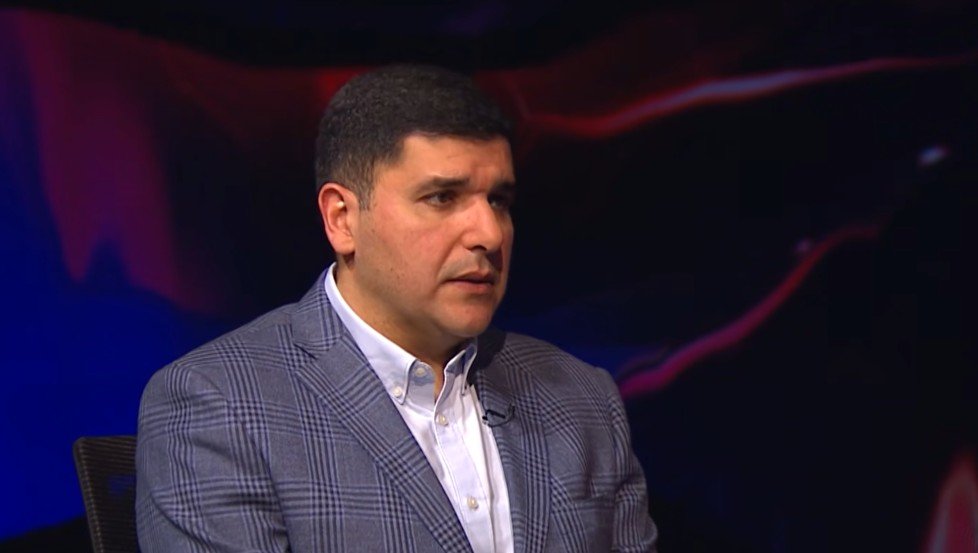
Armenia’s parliamentary election has become part of a broader struggle between Russia and the West for influence in the South Caucasus, Azerbaijani political analyst Farhad Mammadov said.
Speaking on the Novosti Kavkaza YouTube channel, Mammadov said the United States and the European Union appear united in their support for Prime Minister Nikol Pashinyan, although Washington and Brussels are pursuing their own interests.
“The United States is relying on political statements, visits and framework agreements,” he said. “The European Union is supporting Pashinyan’s government politically, materially and through its presence on the ground.”
Mammadov said Western governments see the June 7 vote as more than a domestic Armenian contest. In his view, it has become part of their geopolitical competition with Moscow.
Russia, meanwhile, is seeking either to prevent Pashinyan from winning or to leave him politically weakened after the election, the analyst said.
He argued that Moscow has significant political, financial, media and organizational resources inside Armenia and is prepared to use them over the long term.
“The maximum objective is to bring down Pashinyan’s government,” Mammadov said.
“Russia has people, money, organizational resources and information tools in Armenia. If it does not work now, it can continue playing the long game.”
He pointed to Russian calls for a referendum on Armenia’s foreign policy direction, as well as trade restrictions and public warnings, as examples of pressure ahead of the vote.
A referendum could create another political test for Pashinyan even if he wins the election, Mammadov said. A failure to secure public support in a later vote could be used by his opponents to challenge the legitimacy of his political course.
Azerbaijan watches from the sidelines
Mammadov said Azerbaijan has avoided direct involvement in Armenia’s election campaign and is instead watching how Armenian society responds to the peace process.
Baku, he said, wants to understand whether voters are prepared to support normalization, regional cooperation and a long-term settlement with Azerbaijan.
According to Mammadov, Azerbaijan has demonstrated since last August that a peace agenda can be advanced through political, diplomatic, economic and civil society contacts.
At the same time, Armenia’s campaign has exposed a broad range of attitudes toward Azerbaijan, including openly hostile and nationalist rhetoric from both pro-Western and pro-Russian political groups, he said.
The election result will therefore offer Baku an indication of how much support exists inside Armenia for reconciliation.
A new model in relations with Moscow
Mammadov also said Azerbaijan’s relationship with Russia is moving toward what he called a “new normal” based on reciprocity.
Russian officials have recently raised the possible restoration of cultural and humanitarian ties, the work of the Russian House in Baku, the activities of Russian media outlets and the opening of a Russian consulate in Azerbaijan.
Mammadov said such proposals should be considered only on a reciprocal basis.
If Russia wants a broader presence for Rossotrudnichestvo in Baku, Azerbaijan should be allowed to open a comparable institution supporting the Azerbaijani community in Moscow, he said.
The same principle should apply to media organizations. Mammadov noted that Russia’s Sputnik operation in Baku previously employed far more staff than Azerbaijan’s state news agency AZERTAC maintained in Moscow.
“In the new normal, everything should be one for one,” he said.
Mammadov was skeptical about Russian suggestions that a consulate could be opened in Karabakh, saying there was no practical need for such a mission.
He said Ganja or Lankaran would make more sense if Russia could show that enough of its citizens required consular services there.
A foreign diplomatic office in Karabakh, however, is unlikely to appear for decades, he said.
Trade without political alignment
Mammadov said Azerbaijan should take a pragmatic approach to economic relations with both the Eurasian Economic Union and the European Union.
That does not mean joining either bloc or accepting political obligations, he said. Instead, Baku could seek export benefits, investment and joint production agreements while maintaining its freedom of action.
He suggested studying Uzbekistan’s experience with the Eurasian Economic Union to determine whether observer status or another limited format could offer practical advantages.
Russia remains Azerbaijan’s largest market for non-oil exports, while the European market is central to the country’s energy sector.
Azerbaijan should turn its transport position and access to competing markets into measurable economic gains, Mammadov said.
“This position must be monetized,” he said. “The economic element is becoming strategically important.”
Washington looks beyond the South Caucasus
Mammadov said the Trump administration’s growing interest in the South Caucasus is linked not only to the Armenia-Azerbaijan peace process.
Washington also sees the region as a gateway to Central Asia, critical minerals, new supply chains and energy infrastructure, he said.
Plans for reopening communications through Armenia could include railways, highways, gas pipelines and other infrastructure connecting the Caspian region with Western markets.
Documents signed by the United States with Azerbaijan and Armenia increasingly point toward broader cooperation with Central Asian countries, Mammadov said.
For Azerbaijan, the priorities include the removal of Section 907, access to U.S. technology, defense cooperation, investment and greater opportunities for Azerbaijani state assets in American companies.
He also noted that officials from Azerbaijan’s State Oil Fund have taken part in high-level meetings with U.S. business representatives.
That reflects Baku’s longer-term goal of increasing returns from foreign investments and reducing the state budget’s dependence on direct oil and gas revenue, he said.
Armenia could join regional projects
Mammadov said Azerbaijan and Georgia currently carry most of the South Caucasus’ geopolitical and economic weight.
Together with Turkey and other partners, they have built the main energy and transport routes linking the Caspian basin and Central Asia with Europe.
Armenia now has an opportunity to join that network, he said.
The outcome of the election could determine whether Yerevan accelerates its integration into regional infrastructure or remains outside the main transport and economic projects.
“Azerbaijan and Georgia will continue performing this function in any case,” Mammadov said. “The question is whether Armenia will connect to it.”
He argued that Armenia’s choice should not be reduced to a simple contest between Russia and the West.
The central issue, he said, is what place Armenia wants to occupy in the political, economic and geographic landscape of the region.
Participation in regional infrastructure is not only about transit revenue. It also affects security, investment and a country’s long-term position in the wider Caspian and Central Asian space.
The June 7 election will show whether Armenia is ready to join that emerging regional system or once again remain outside it, Mammadov said.
AZE.US