AZE.US
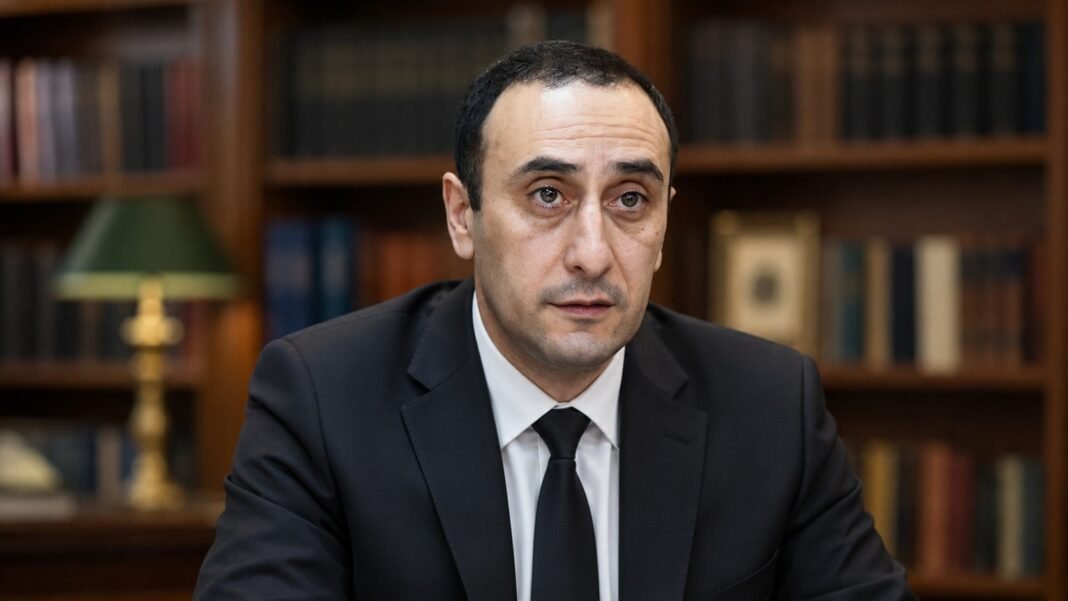
The most consequential developments for Russia on the Ukrainian front could occur in July, August and early September, potentially affecting the country’s domestic political situation, Azerbaijani analyst Rizvan Huseynov said.
Huseynov, director of the Center for the History of the Caucasus and author of Azerbaijan and the Armenian Question in the Caucasus, made the comments during an interview on the YouTube channel Modern Conversation with Rasim Babayev.
According to Huseynov, Ukrainian attacks on Russian oil refineries, fuel depots, industrial facilities and vessels linked to Moscow’s so-called shadow fleet should be viewed as part of a broader economic campaign against Russia.
He argued that one of the main objectives is to weaken Russia’s position in the Black Sea and restrict its ability to continue exporting goods through alternative and less transparent trading networks.
Huseynov said Russia’s Black Sea Fleet had already lost a significant part of its previous operational capacity, while its remaining forces had been pushed toward Novorossiysk and the Sea of Azov.
In his assessment, a further decline in Russia’s naval position would strengthen Ukraine and NATO in the Black Sea region. He also pointed to NATO’s growing influence in the Baltic Sea.
The analyst linked pressure on Russia’s energy infrastructure to possible difficulties in agriculture and food exports.
Large-scale harvesting requires gasoline, diesel and other fuel supplies, he said. Any prolonged fuel shortage could therefore affect not only civilian transportation but also agricultural production, storage and the shipment of grain.
Huseynov did not rule out additional attacks on Russian grain terminals and storage facilities, noting that the Black Sea has traditionally played a major role in Russian agricultural exports.
At the same time, he said the wider transport map of Eurasia is being reshaped as routes bypassing Russia gain greater importance.
He highlighted the Middle Corridor, which connects Central Asia with Azerbaijan, the South Caucasus and Europe, as one of the routes benefiting from the decline of older supply chains centered on Russian territory.
“We are seeing a multidimensional effort to limit Russia’s ability to deliver its goods to European markets,” Huseynov said. “Old routes are being replaced by transport links passing through Central Asia, Azerbaijan and the South Caucasus.”
The Middle Corridor has gained strategic importance as governments and logistics companies seek alternatives to routes affected by war, sanctions and security risks.
Huseynov also drew a comparison between the current situation in Russia and the final years of the Soviet Union.
He said the combination of a prolonged war, mounting economic pressure, energy disruptions and declining living standards could gradually intensify domestic instability.
Russia has not yet experienced widespread food shortages, he acknowledged, but pressure on its energy, transport and export systems is becoming increasingly visible.
“The ring is gradually tightening,” Huseynov said, arguing that a similar strategy of sustained political and economic pressure was used by the West during the Cold War and eventually contributed to the collapse of the Soviet Union.
He predicted that the period through early September could become particularly important for both the battlefield situation and Russia’s internal political climate.
AZE.US