AZE.US
Azerbaijani political analyst Eldar Namazov says Armenian Prime Minister Nikol Pashinyan has himself created the conditions that make many in Azerbaijan question whether he is truly committed to the peace agenda.
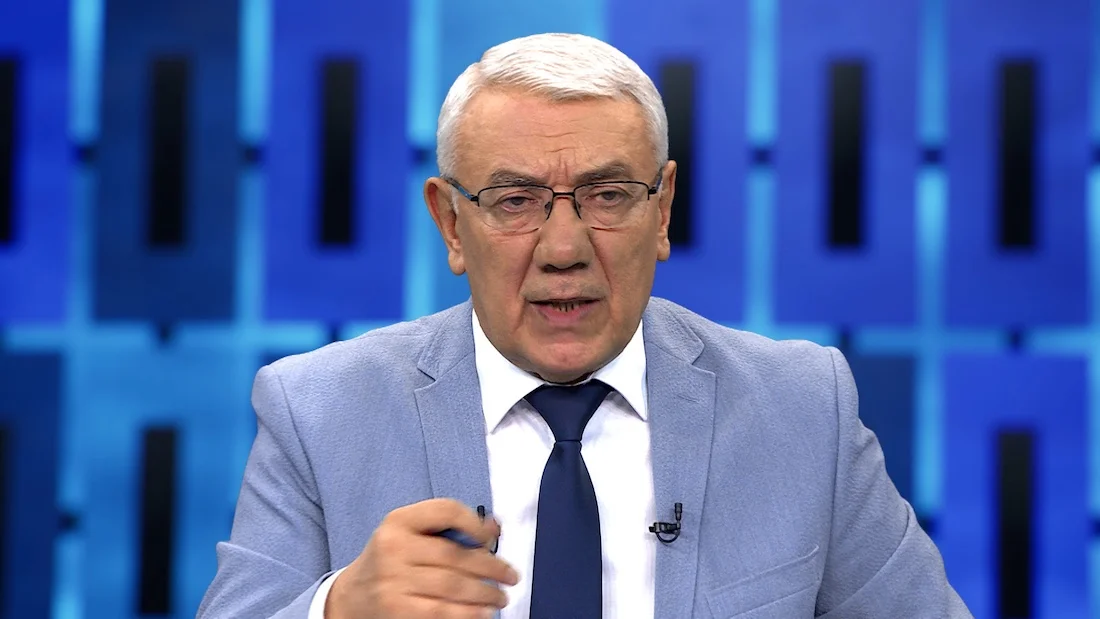
Namazov, director of the Center for Strategic and International Studies, made the remarks in an interview with CBC TV while commenting on Armenia’s post-election political landscape and the prospects for a peace agreement with Azerbaijan.
According to Namazov, the results of Armenia’s parliamentary elections should not be assessed only by comparing Pashinyan’s party with the main opposition forces that entered parliament. He said the votes cast for smaller parties that failed to pass the threshold also matter, because some of them supported Pashinyan’s peace agenda, while others were aligned with the revanchist opposition.
Namazov argued that, when those votes are taken into account, more than 50 percent of voters supported peace with Azerbaijan, while more than 40 percent backed forces associated with the revanchist agenda.
At the same time, he noted that the picture looks different when measured against the full list of registered voters. About 40 percent of Armenian voters did not take part in the election, he said. In that broader calculation, roughly one third of Armenian society supported the peace agenda, while a smaller share backed forces opposed to it.
Still, Namazov described the shift inside Armenian society as significant.
He said that five or six years ago, Armenia had virtually no political force openly advocating compromise with Azerbaijan. In his view, the fact that a major part of Armenian society now supports peace represents an important transformation, even if opposition to the process remains strong.
Namazov said the main unresolved issue is Armenia’s Constitution. Azerbaijan has repeatedly said that references and political claims linked to Azerbaijan’s territorial integrity must be removed before a final peace agreement can be signed.
According to the analyst, Pashinyan has already had two major chances to move toward peace with Azerbaijan.
The first, he said, came after Pashinyan initially came to power and asked Azerbaijani President Ilham Aliyev for time. Namazov said Baku gave him that time, and there was initially a relatively positive attitude toward Pashinyan in Azerbaijan because he was seen as a new political figure not directly tied to the former Karabakh clan.
But, Namazov said, Pashinyan later went to Shusha and declared that “Karabakh is Armenia,” which, in his view, destroyed the negotiation process and led to the Second Karabakh War.
The second chance, according to Namazov, came after Armenia’s defeat in the war, when Pashinyan won snap parliamentary elections and received a new mandate from Armenian society. Namazov said that mandate could have been used to finalize peace, but Pashinyan instead spent years waiting for geopolitical conditions to change.
He said Yerevan appeared to hope for political changes in Turkey and the United States, as well as a weakening of Russia’s position in the South Caucasus. Those expectations, Namazov argued, did not materialize.
“Pashinyan himself created conditions in which many in Azerbaijan doubt his sincerity and whether he is fully committed to the peace agenda,” Namazov said.
He added that Baku will now closely watch whether Armenia’s new government program includes concrete steps related to a constitutional referendum, constitutional amendments and the opening of the regional route that Azerbaijan calls the Zangezur corridor.
Namazov also commented on Russia’s reaction to Pashinyan’s victory, saying Moscow appears to be following a formula of not formally recognizing him politically while continuing to work with Armenian authorities in practice.
He said this may be an attempt by Moscow to keep pressure on Pashinyan’s government and maintain leverage through pro-Russian opposition forces inside Armenia.
The analyst also touched on Iran’s opposition to a potential U.S.-linked transport project near its border, saying the issue reflects a broader internal struggle in Iran between forces that favor economic opening and radical groups that resist such transformation.
Namazov said the European Union’s efforts to expand access for Armenian goods to European markets could also become another factor weakening Russia’s influence over Armenia. For the EU, he said, the figure of 420 million euros is not large, but for Armenia it could be significant.
AZE.US