AZE.US
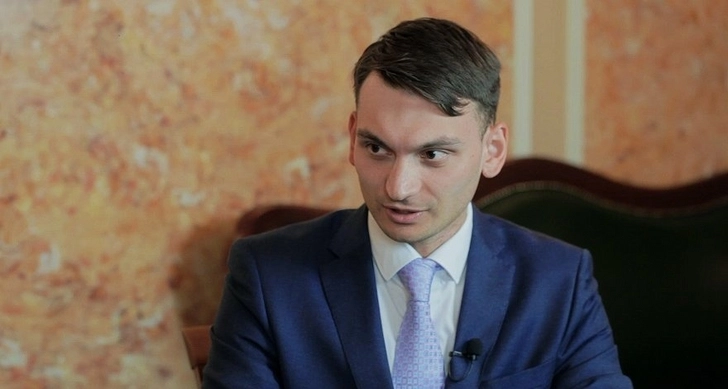
In a new episode of “News From The Caucasus,” journalist and researcher Ruslan Suleymanov discussed Syria, Lebanon and the lessons the South Caucasus can draw from the recent history of the Middle East.
Suleymanov said Syria is now going through a historic transition after years of civil war. According to him, the country is trying to build a new state, but much of the bureaucracy and many local institutions were inherited from the era of Bashar al-Assad.
He said many Syrians see December 8, 2024, as a day of liberation. One sign of this, according to Suleymanov, is the gradual return of refugees. He said that while crossing the Lebanese-Syrian border, he saw Syrians with British, German, Moldovan and other passports returning home.
But the process remains slow and difficult.
“Syria is still in ruins,” Suleymanov said, noting that many refugees have nowhere to return to even if they want to come back.
He said the new authorities are trying to bring Syria out of nearly 14 years of isolation. One symbolic step was the announcement that international Visa and Mastercard bank cards would resume operating in the country. In practice, however, Suleymanov said Syria remains largely cash-based.
Speaking about Syria’s political future, Suleymanov said the key test will come after the five-year transition period. He expressed doubt that the country is ready for a Western-style multiparty democracy, arguing that in a deeply divided society, such a model could produce more chaos rather than stability.
According to Suleymanov, the new authorities in Damascus are pursuing a policy of strict centralization. Any discussion of autonomy for Kurds, Alawites or Druze is viewed as a potential threat to Syria’s territorial integrity.
He said this position is shaped not only by domestic fears, but also by the legacy of the Syrian conflict, which was heavily internationalized. Many local groups had foreign backers, making the question of decentralization even more sensitive for Damascus.
Suleymanov also pointed to ongoing security threats from Iran-linked networks, Hezbollah and the Islamic State. He said ISIS did not disappear after the fall of Assad’s regime and has become more active, including through attacks and terrorist incidents.
The expert also rejected the simplified view that Syria is now fully controlled by Turkey. According to him, Damascus is showing signs of independence by holding talks with Israel, refusing new Turkish bases and maintaining dialogue with Russia.
He said the main financial sponsors of the new Syria are not Turkey, but the Arab monarchies of the Persian Gulf, especially Saudi Arabia and the United Arab Emirates.
On Russia’s role, Suleymanov said Moscow’s presence in Syria has not ended. Russian forces remain at the bases in Tartus and Khmeimim, with Khmeimim still functioning as a logistics hub, including for Russian activity in Libya.
He said Damascus also has practical reasons to keep ties with Moscow because much of Syria’s military equipment is Russian or Soviet-made and still requires Russian expertise for maintenance and training.
A major part of the conversation focused on Lebanon. Suleymanov described the country as a difficult example of what happens when the state becomes weak while society remains deeply divided along political, religious and geopolitical lines.
He said Lebanon has gone through another war, with more than one million people becoming internally displaced. The country’s economy, which had shown signs of recovery, is again under pressure.
According to Suleymanov, Hezbollah, despite suffering major losses, remains a key factor in Lebanese politics and an inseparable part of the social fabric of the Shiite community.
He said the only possible way out for Lebanon is through negotiations. The current government, he noted, has entered into talks with Israel, something that would have been difficult to imagine several years ago.
In the final part of the interview, Suleymanov was asked what lessons Syria and Lebanon offer to the South Caucasus, including Azerbaijan.
He said the main lesson is that internal contradictions must be addressed before they spiral into violence.
Suleymanov recalled that the Syrian conflict began in 2011 with protests and demonstrations. But violence then escalated step by step, involving the government, armed opposition groups and outside powers. The result was more than 14 years of devastating civil war.
According to Suleymanov, Syria’s experience should serve as a warning not only for the South Caucasus, but for the entire world.
The lesson, he said, is simple: societies must learn to negotiate before conflicts become irreversible.
AZE.US