AZE.US
The politicization of the Armenian Genocide issue was one of the mistakes of Armenia’s foreign policy and for years complicated normalization with Turkey, Armenian political commentator David Stepanian said in an interview with “Noyan Tapan In Russian.”
Stepanian was commenting on Prime Minister Nikol Pashinyan’s response to Israel’s government-level move on recognizing the Armenian Genocide. Pashinyan said Armenia saw no need for a reaction because avoiding politicization of the genocide issue was in the country’s interest.
Stepanian called Pashinyan’s response the only correct one.
He said the Armenian people regard the genocide as an indisputable historical fact, but that does not mean Armenia should turn the issue into an instrument of foreign policy bargaining.
“For me, the genocide is a fact. It is indisputable. It is a historical fact. It is our memory, our pain,” Stepanian said.
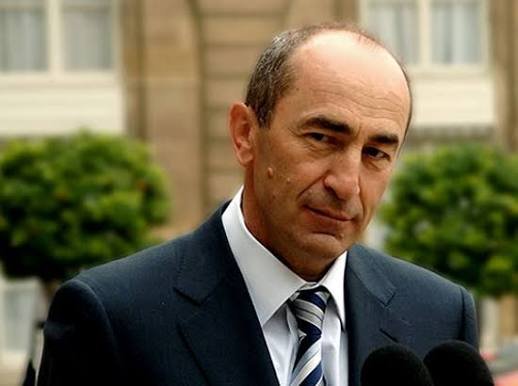
At the same time, he argued that turning the issue into a permanent international campaign was a mistake. He placed responsibility for that shift on Armenia’s second president, Robert Kocharyan.
According to Stepanian, after becoming president, Kocharyan declared international recognition of the Armenian Genocide one of Armenia’s foreign policy priorities. Stepanian said this artificially moved the issue into the international agenda in a way that made it harder for Armenia to address relations with Turkey.
“What did this give Armenia? What did this give the Armenian people?” he said.
Stepanian argued that this policy objectively served Russia’s interests because it obstructed Armenian-Turkish reconciliation and the opening of the border.
He said an open border with Turkey would give Armenia access to Europe, increase Western and Turkish influence in the region and allow Yerevan to gradually reduce its dependence on Moscow.
“If tomorrow the Armenian-Turkish border opens and we get a road to Europe, Russia will lose any interest for us,” Stepanian said.
He said Russia does not need a “living Armenia” capable of developing without Russian influence. In his view, forces that promoted the constant politicization of the genocide issue were acting not in Armenia’s interests, but in Russia’s interests.
Stepanian also drew a parallel with the Karabakh issue. He said that after 2023, the topic risks becoming another instrument of political pressure and a way to block regional opening.
According to him, after the Karabakh factor was removed as the main cause of conflict between Armenia and Azerbaijan, the region received a chance to open communications. But Stepanian said Russia is trying to obstruct that process because a more connected South Caucasus would strengthen the region’s links with Turkey, Europe and the West.
One of Moscow’s tools of pressure, he said, is control over Armenia’s railways through South Caucasus Railway. If that control remains, Stepanian argued, Russia could slow down regional connectivity projects, including Armenia’s “Crossroads of Peace” initiative.
AZE.US