AZE.US
The sentencing of Ruben Vardanyan has added a new layer of strain to already complicated relations between Azerbaijan and Russia, prompting debate in Baku over whether the case could become a geopolitical lever.
Vardanyan, a Russian-Armenian businessman who moved to Karabakh in 2022 and briefly held a senior position in the now-dissolved separatist administration, was convicted this week by an Azerbaijani court on charges including terrorism-related offenses and illegal arms activities. Azerbaijani authorities framed the ruling as part of a broader accountability process tied to the post-conflict period.
But beyond the courtroom, the case has taken on strategic weight.
A Sensitive Moment In Regional Politics
The verdict comes at a time when Azerbaijan and Armenia are moving closer to a bilateral peace framework without Russian mediation – a shift that analysts say has unsettled Moscow’s traditional role in the South Caucasus.
In recent weeks, Azerbaijani officials and pro-government commentators have pointed to what they describe as an intensifying information campaign against Baku in segments of the Russian media. At the same time, high-level diplomatic engagement between Azerbaijan and Western capitals – particularly Washington – has drawn attention in regional commentary.
Against this backdrop, some Azerbaijani political figures argue that Vardanyan’s past financial and political connections in Russia could carry broader implications.
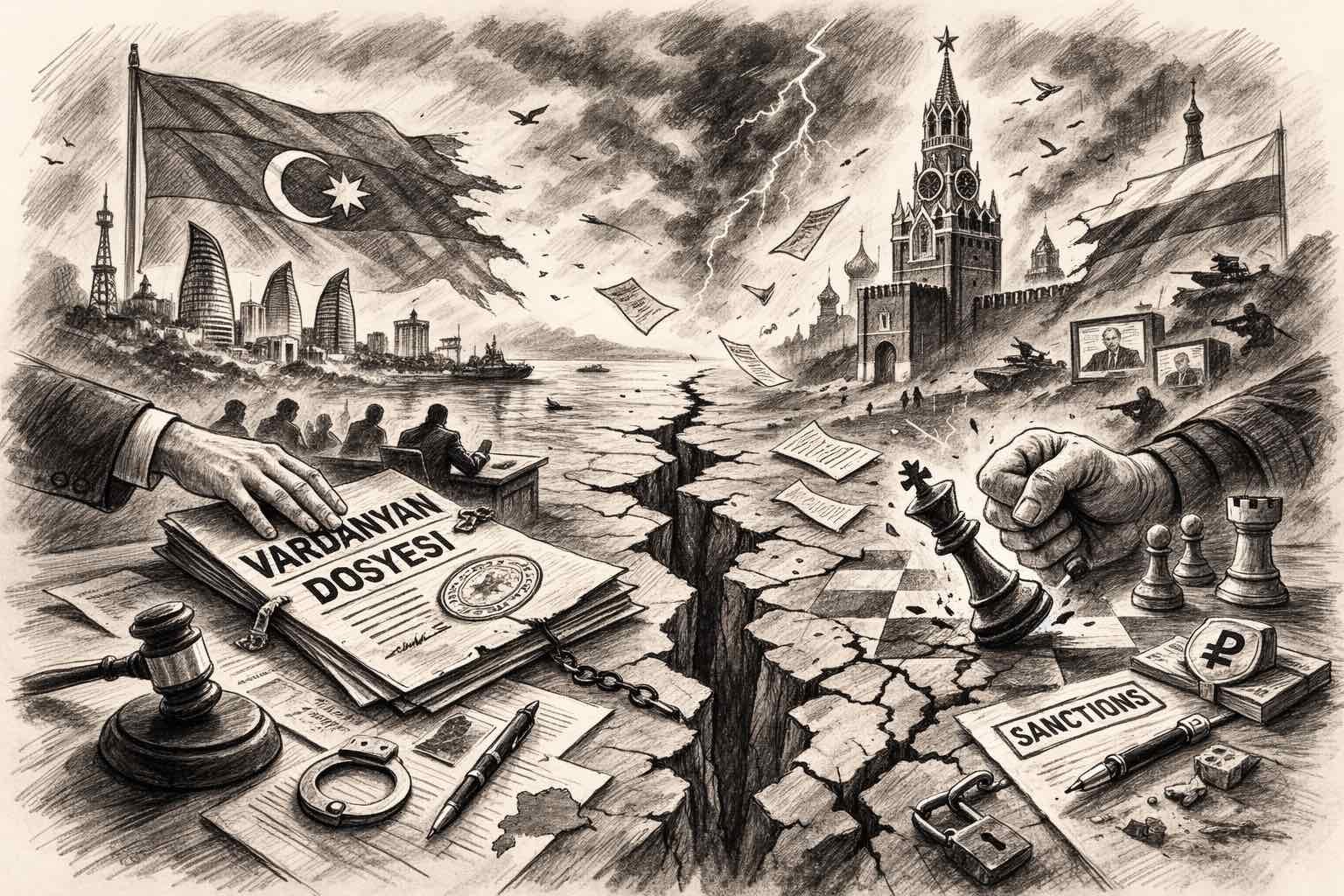
The “Dossier” Narrative
Former Azerbaijani Foreign Minister Tofig Zulfugarov suggested publicly that materials related to Vardanyan’s alleged financial networks could, in theory, serve as a counterweight if pressure from Moscow increases.
Over the years, Vardanyan’s name surfaced in international investigative reports concerning offshore financial structures and ties to influential figures in Russia. While none of those past reports were part of the Azerbaijani trial proceedings, their reappearance in public discourse underscores the political symbolism attached to the case.
There has been no official statement from Baku indicating any intention to use such information as leverage. Still, the discussion itself reflects a perception that the relationship between the two countries has entered a more confrontational phase.
A Relationship Under Strain
Diplomatic rhetoric has sharpened in recent months. Azerbaijani officials emphasize that foreign policy decisions are guided by national interests rather than bloc politics, while Russian commentary has increasingly framed Baku’s Western engagement as a strategic shift.
Whether the Vardanyan case remains confined to the legal sphere or evolves into a broader diplomatic flashpoint will likely depend on how tensions unfold in the coming weeks.
For now, the episode highlights a deeper transformation underway in the South Caucasus – one in which traditional power dynamics are being reassessed, and legal cases risk becoming part of a much wider geopolitical equation.