AZE.US
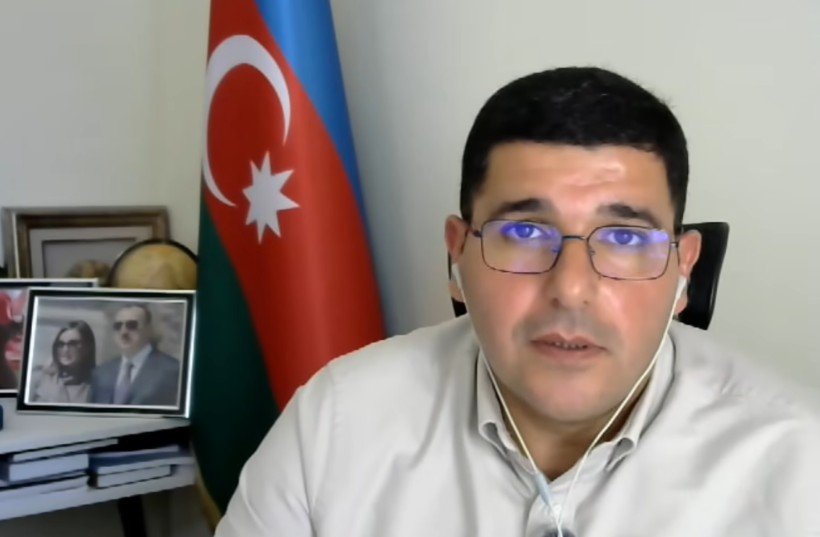
The growing crisis between Moscow and Yerevan should not be interpreted as an Azerbaijani attempt to push Russia out of Armenia, according to South Caucasus Research Center Chairman Farhad Mammadov.
Instead, the peace process between Azerbaijan and Armenia has created a new regional reality that gives Yerevan greater room to pursue a more independent foreign policy, Mammadov said in an analysis published on his Telegram channel.
Security Ties With Russia Remain
Despite the deterioration in Russian-Armenian relations, Mammadov argued that the military and security partnership has not collapsed.
Russia continues to operate its military base in Gyumri, while the two countries maintain a joint air defense system. He said no major revision of either arrangement appears imminent.
Armenia’s participation in the Collective Security Treaty Organization, however, remains frozen, and the dispute has reached the point where the possibility of stripping Yerevan of voting rights has been discussed.
High-level political contacts between Moscow and Yerevan also continue, although Mammadov said they are increasingly used to convey grievances and demands rather than demonstrate strategic alignment.
Russian border guards are still deployed along Armenia’s borders with Iran and Turkey, although their presence has been reduced.
According to Mammadov, the implementation of TRIPP and Armenia’s potential movement toward visa-free travel with the European Union could eventually require Yerevan to assume full control over its borders.
Trade Has Fallen Sharply
Economic ties show clearer signs of strain.
Mammadov said bilateral trade between Russia and Armenia reached a record $12 billion in 2024, driven in part by re-export operations involving sanctioned goods, gold and diamonds.
Trade fell to around $8 billion in 2025 and dropped to approximately $2.63 billion in the first half of 2026.
At the current pace, he said, annual trade could fall to around $4 billion.
Money transfers from Russia, however, remain substantial. According to the figures cited by Mammadov, transfers from Russia to Armenia totaled about $3.87 billion in 2025 and roughly $1.9 billion between January and May 2026.
Russian Strategic Assets Face Pressure
Mammadov also pointed to several areas where Russia’s long-term economic role in Armenia could come under pressure.
Russia’s Gazprom controls Armenia’s gas distribution network, while negotiations over gas prices have the potential to become another source of tension.
In nuclear energy, Armenia has expressed interest in eventually adopting U.S.-designed small modular reactors, while the country’s existing nuclear sector remains closely linked to Russia’s Rosatom.
Armenian officials have also raised the possibility of ending the concession under which South Caucasus Railway, a subsidiary of Russian Railways, operates the country’s rail network.
Mammadov said the most serious areas of crisis currently include trade, Armenia’s relationship with the CSTO, the future of the railway concession and Russia’s role in Armenia’s nuclear energy sector.
Where Does Azerbaijan Fit In?
According to Mammadov, the key regional shift came with the normalization process between Baku and Yerevan.
Following the August 8, 2025 Washington summit and the subsequent dissolution of the OSCE Minsk Group, the Karabakh issue ceased to be the central factor shaping Armenia’s security relationship with Russia.
The peace agenda with Azerbaijan, he argued, reduced what Armenia had long viewed as security threats from Azerbaijan and Turkey - one of the main reasons Yerevan had traditionally relied on Moscow.
The TRIPP project, coordinated with Azerbaijan and the United States, could also allow Armenia to develop new railway infrastructure outside the operational control of South Caucasus Railway.
It could give Armenia a larger transit role along the East-West corridor and allow Yerevan to rethink its transportation strategy with less Russian involvement.
Another new factor is the beginning of gasoline supplies from Azerbaijan to Armenia. Mammadov said other forms of energy trade could follow.
‘Baku Is Not Pushing Moscow Out’
Mammadov stressed that these developments should not be described as Azerbaijan deliberately forcing Russia out of Armenia.
Rather, he said, the Azerbaijan-Armenia peace process has created a new geopolitical environment and increased Armenia’s ability to make sovereign decisions.
It is now up to Prime Minister Nikol Pashinyan’s government to determine how far it wants to go in recalibrating relations with Moscow.
The remaining question, Mammadov said, is how far Russia itself will go in trying to preserve its traditional influence and role in the South Caucasus.
AZE.US