AZE.US
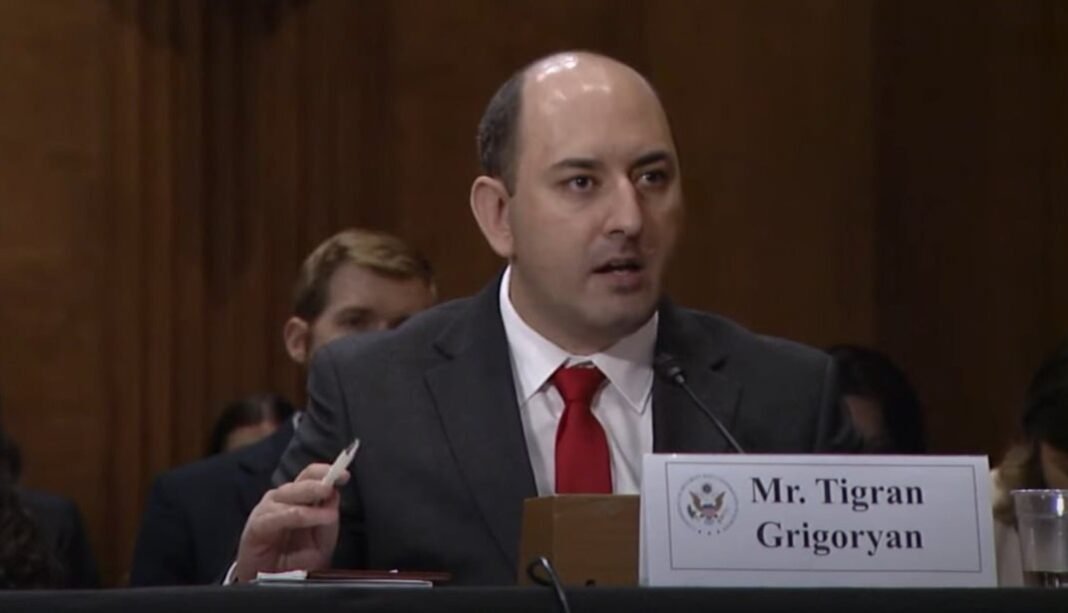
Relations between Armenia and Russia are entering a potentially more confrontational phase in which Moscow could use economic pressure ranging from gas prices to air travel restrictions and the status of Armenian citizens living in Russia, Armenian political analyst Tigran Grigoryan has warned.
Speaking on a new episode of the program on CIVILNET, Grigoryan discussed President Ilham Aliyev’s recent statements about Armenia’s energy future, the implementation of the TRIPP project and the deepening crisis between Yerevan and Moscow.
Aliyev, TRIPP and Armenia’s Energy Future
Grigoryan first focused on Aliyev’s statements concerning planned electricity transmission lines between mainland Azerbaijan and Nakhchivan, as well as reports that Azerbaijani specialists had visited Armenia to study areas connected with the implementation of TRIPP.
He said the more significant aspect was Aliyev’s attempt to connect those developments with the future of Armenia’s nuclear energy sector.
Armenia’s existing nuclear power plant has a limited operational lifespan, while Yerevan has also been holding discussions with various international partners over the construction of a new facility.
Grigoryan argued that Aliyev’s remarks should therefore be viewed not only in relation to the current plant but also in the context of Armenia’s future nuclear strategy.
According to the analyst, Azerbaijan may ultimately seek a regional energy model in which Armenia relies more heavily on imported electricity, including supplies from Azerbaijan.
He also noted that Aliyev’s remarks triggered an emotional debate inside Armenia.
In Grigoryan’s view, the opposition has partly exaggerated the significance of the comments, while pro-government voices have tended to minimize or ignore them in order to avoid disrupting the peace process with Azerbaijan.
TRIPP and the “Zangezur Corridor”
Grigoryan separately addressed Aliyev’s continued use of the term “Zangezur Corridor.”
He said the Azerbaijani president never completely stopped using the phrase, although its use became less frequent following the Washington agreements.
According to Grigoryan, Baku continues to view TRIPP through the broader objective of establishing an unhindered connection between mainland Azerbaijan and Nakhchivan.
He added, however, that the current TRIPP framework may not fully correspond to what he described as Azerbaijan’s earlier, more maximalist expectations regarding the route.
Moscow Raises the Stakes
The second part of the discussion focused on the worsening relationship between Armenia and Russia.
Grigoryan pointed to recent statements by Russian Deputy Foreign Minister Mikhail Galuzin, including discussion of potentially stripping Armenia of voting rights within the Collective Security Treaty Organization and Moscow’s demands concerning Yerevan’s future position within the Eurasian Economic Union.
The analyst said Russia appeared to be taking the confrontation seriously and that limited concessions from Armenia might not be enough to ease tensions.
If Moscow and Yerevan fail to reach an understanding, Grigoryan said Russia could expand pressure into other areas.
Among the possible measures, he cited restrictions on flights between Armenia and Russia and measures affecting Armenian citizens currently living and working in Russia.
Such steps could have significant economic consequences, he said, including damage to tourism, reduced money transfers from Russia and social pressure inside Armenia if large numbers of migrant workers are forced to return home.
Gas Could Be Moscow’s Strongest Lever
Grigoryan said the most important Russian instrument, however, could be energy.
“The main tool, of course, will be negotiations over gas and the gas price,” he said.
A change in the price of Russian gas could have a significant impact on Armenia’s broader economic situation, according to the analyst.
At the same time, Grigoryan said he found it difficult to imagine the Armenian government agreeing to abandon its declared course toward closer relations with the European Union.
Such a reversal, he argued, would carry serious political and reputational costs for a government that has made sovereignty and a westward foreign-policy orientation central elements of its political message.
A Much Deeper Break Is Also Possible
Grigoryan said some form of compromise could still emerge, particularly on issues involving Armenia’s railway system.
But he also outlined a much more serious scenario.
If Russia chooses to use the harshest available pressure tools, Armenia could eventually conclude that it has little left to lose and begin a broader disengagement from Moscow.
In that case, Grigoryan said, the confrontation could extend beyond economic relations and eventually touch Russia’s military base in Armenia and other elements of the Russian presence in the country.
He stressed, however, that a complete collapse of relations would likely be undesirable for both Moscow and Yerevan.
Grigoryan described the current confrontation as a test of nerves in which both sides are probing how far the other is prepared to go.
He expects the coming months to be difficult and intense but said both Armenia and Russia would probably try to avoid what he called an “apocalyptic scenario” of a complete breakdown in relations.
The central question, he concluded, is which side will retreat first from its declared objectives - Russia or Armenia.
AZE.US