AZE.US
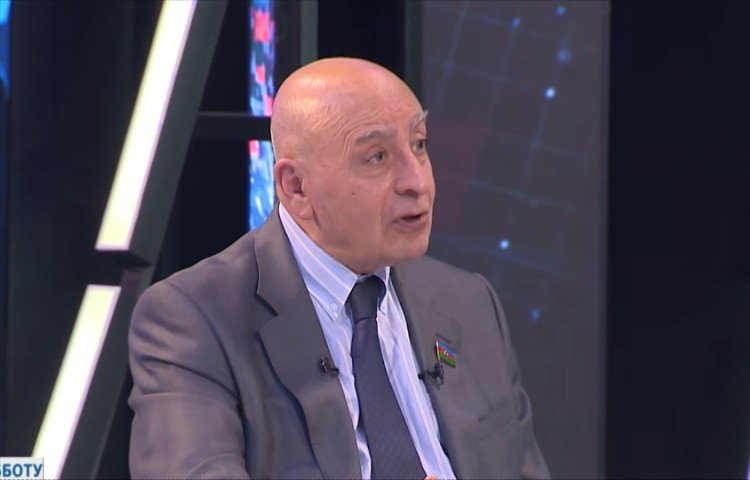
Ukraine’s resistance to Russia has not only prevented Moscow from restoring its dominance across the former Soviet space but has also created new strategic opportunities for Azerbaijan and other South Caucasus countries, Azerbaijani political analyst Rasim Musabekov said.
Speaking in an interview with the Novosti Kavkaza YouTube channel, Musabekov argued that Ukraine has played a decisive role in Eurasia’s political transformation twice: first during the collapse of the Soviet Union and again after Russia launched its full-scale invasion in February 2022.
Ukraine’s Role in the Soviet Collapse
According to Musabekov, independence movements initially gained momentum in the Baltic states and the South Caucasus. However, Ukraine’s refusal to join a proposed renewed union treaty, followed by its independence referendum, ultimately made the Soviet Union’s dissolution irreversible.
Moscow could attempt to suppress smaller republics, he said, but it could no longer force Ukraine to remain within the Soviet system because of the country’s population, industrial base and military capacity.
Ukraine’s decision, Musabekov argued, helped secure internationally recognized independence for all former Soviet republics, including Azerbaijan.
He described Russia’s 2022 invasion as an attempt to reverse that outcome and restore Moscow’s control over the post-Soviet region.
“If Ukraine had fallen under Moscow’s control, the others would have accepted Russian dominance out of fear,” Musabekov said.
Capturing Ukraine would have allowed Russia to combine Ukrainian human, industrial and military resources with its own, creating a foundation for renewed imperial influence, he said. Ukraine’s resistance disrupted that scenario and gave neighboring states more room to pursue independent foreign policies.
“What is being decided in Ukraine is not only the question of Ukraine’s independence, sovereignty and territorial integrity,” Musabekov said. “To a significant extent, it is also a struggle for the freedom and independence of all of us.”
Baku-Moscow Alliance Under Strain
Musabekov also addressed the worsening relationship between Azerbaijan and Russia.
He noted that the two countries signed their Declaration on Allied Interaction on Feb. 22, 2022, two days before Russia began its full-scale invasion of Ukraine.
More than four years later, he said, the substance of that alliance is increasingly in question.
Musabekov cited pressure on members of the Azerbaijani diaspora in Russia and a wave of anti-Azerbaijan rhetoric across Russian state and Kremlin-linked media.
Referring to a statement by Azerbaijan’s ambassador in Moscow, Musabekov said approximately 98 Russian media outlets - ranging from state television networks to affiliated Telegram and YouTube channels - were involved in an information campaign targeting Azerbaijan.
He portrayed that pressure as evidence that Moscow lacks the ability to force Baku to change its policies.
“They cannot do anything to Azerbaijan,” Musabekov said. “It is an expression of anger born from powerlessness.”
The analyst suggested that the latest escalation may have followed Azerbaijan’s rejection of unspecified Russian requests, possibly involving the transit of goods to Iran. Musabekov presented this as his own hypothesis and did not cite public evidence confirming it.
He also argued that detentions and expulsions targeting prominent Azerbaijani diaspora figures were unlikely to have occurred without political approval from Moscow.
“Azerbaijan leaves nothing unanswered,” Musabekov said.
Energy Links With Russia Decline
The political crisis is also affecting energy cooperation, according to Musabekov.
He said Azerbaijan previously purchased up to 1.5 million metric tons of Russian crude for processing at its refineries. Baku has now halted those purchases, he said, and could replace the volumes with oil from Kazakhstan if necessary.
Azerbaijan also previously bought as much as 1 billion cubic meters of Russian gas during periods of lower seasonal prices, placing it in storage for winter use. Musabekov said those purchases could also end without causing significant problems for Azerbaijan’s energy system.
Plans to use Azerbaijani infrastructure to transport Russian gas to Iran are no longer being actively discussed, he added.
Musabekov was similarly skeptical about the prospects for the International North-South Transport Corridor, citing sanctions against both Russia and Iran, political uncertainty and the lack of visible progress on the route.
Azerbaijan Looks Across the Caspian
As relations with Moscow deteriorate, Azerbaijan is expanding its economic and strategic partnerships with Central Asia, particularly Uzbekistan and Kazakhstan.
Musabekov highlighted cooperation with Uzbekistan in energy, shipbuilding, automotive manufacturing, tourism and transportation. SOCAR and its international partners are preparing to participate in the exploration and potential development of Uzbek oil and gas resources.
Uzbekistan is also seeking greater access to vessels and terminals on the Caspian Sea as the Middle Corridor becomes increasingly important for its foreign trade.
Musabekov said a broader Tashkent-Baku-Ankara partnership is emerging, connecting Central Asia with Azerbaijan and Turkey through trade, energy, transportation and defense cooperation.
Azerbaijan may be smaller than Turkey or Uzbekistan in terms of population and economic scale, he said, but its geography makes it an indispensable bridge across the Caspian.
In Musabekov’s assessment, Ukraine’s resistance has therefore produced consequences far beyond the battlefield. It prevented Russia from reestablishing uncontested control over its former imperial space while accelerating Azerbaijan’s turn toward Turkey, Central Asia and trans-Caspian trade routes.
AZE.US