AZE.US
CIA Director John Ratcliffe made an unannounced visit to Moscow on August 25, spending several hours in the Russian capital before the U.S. military aircraft carrying the American delegation departed.
Neither Washington nor Moscow has disclosed whom Ratcliffe met or what was discussed. However, the circumstances surrounding the visit suggest talks of unusual importance, potentially involving the war in Ukraine, Russia’s relationship with Iran and possible humanitarian agreements.
CBS News and Axios were the first U.S. outlets to report Ratcliffe’s arrival, citing officials familiar with the trip. Russian media later received separate confirmation that the CIA director had traveled to Moscow.
A Military Flight From a Base Near Washington
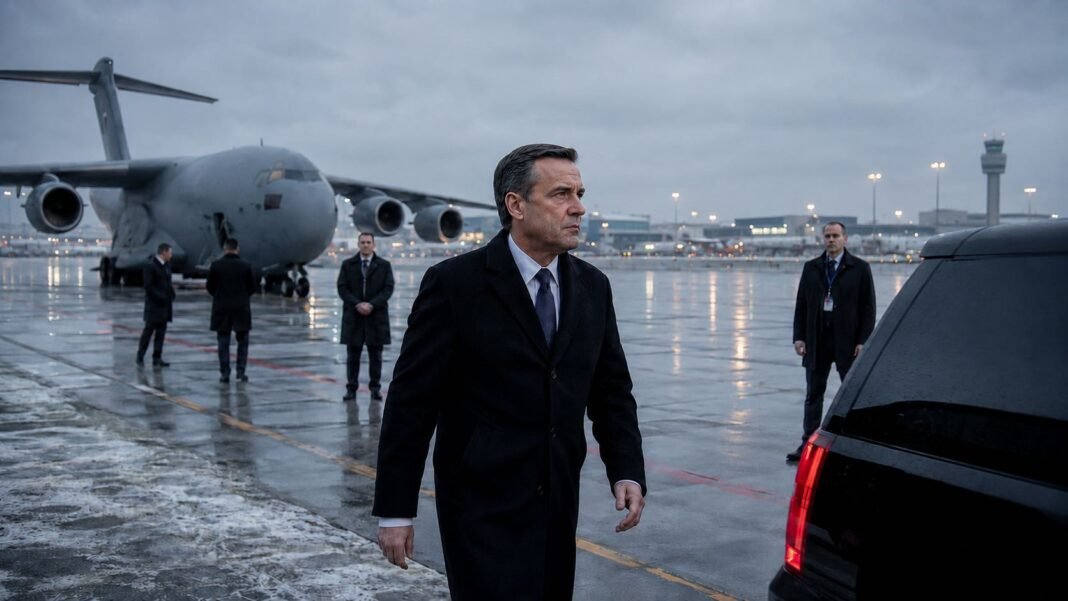
A U.S. Air Force Boeing C-17A Globemaster III, identified by Reuters as aircraft number 07-7181, landed at Moscow’s Vnukovo Airport on the morning of August 25.
Flight-tracking data showed that the aircraft had arrived in Riga on August 23 from Joint Base Andrews in Maryland, near Washington. Two days later, it flew directly from the Latvian capital to Moscow.
A motorcade carrying U.S. diplomatic license plates was reportedly seen in the Russian capital shortly after the plane landed.
CBS News correspondent Jennifer Jacobs subsequently reported that Ratcliffe had arrived aboard the C-17 to hold meetings with Russian officials. Axios journalist Barak Ravid said a U.S. official had confirmed the trip.
Reuters also confirmed that this was Ratcliffe’s first known visit to Russia since becoming CIA director.
The aircraft departed Vnukovo at approximately 7 p.m. Moscow time and headed back toward Riga. The American delegation therefore spent only several hours in the Russian capital.
Kremlin Said It Had No Information
Kremlin spokesman Dmitry Peskov initially said Moscow had no information about the reason for the American military aircraft’s arrival.
Peskov added that Russian President Vladimir Putin had no officially scheduled meetings with representatives of the U.S. administration during the week. The CIA and the White House also declined to comment publicly.
As of the evening of August 25, there was no official confirmation that Ratcliffe had met either Putin or Sergei Naryshkin, the head of Russia’s Foreign Intelligence Service.
Russian media identified Naryshkin as Ratcliffe’s most likely counterpart. The two intelligence chiefs have previously maintained direct telephone contact and agreed to preserve a channel for discussing crises and issues of mutual concern.
Speculation about a possible meeting with Putin emerged after reports that a major event on the Russian president’s schedule had been postponed. That claim, however, remains unverified.
U.S. Reportedly Asked Ukraine to Suspend Strikes
A significant detail surrounding the visit was Washington’s reported advance warning to Kyiv.
According to Axios, the United States informed Ukraine that a senior American delegation was traveling to Moscow and asked Kyiv to suspend strikes until the officials had departed.
The Financial Times separately reported that Washington had asked Ukraine to avoid attacks on northern Russia because of travel by a senior U.S. official.
The request indicates that Washington wanted to eliminate the risk of an incident that could endanger the delegation or derail the talks. It does not, however, prove that Ukraine was the principal subject of Ratcliffe’s meetings.
First Possibility: A New Channel on Ukraine
The most immediate explanation is that Ratcliffe carried a message from the Trump administration concerning Ukraine or attempted to revive the largely stalled negotiating process.
U.S.-led diplomatic efforts have faced major disagreements over territory, security guarantees and the terms of a ceasefire. Moscow continues to demand recognition of what it calls the “realities on the ground,” while Kyiv rejects any legal surrender of Ukrainian territory.
Ukraine, the United States and European governments have meanwhile been working on a shorter peace proposal intended for Moscow.
According to Reuters, the document includes a ceasefire and a U.S.-proposed free economic zone in eastern Donbas that could be administered by a neutral third party.
There is no evidence that Ratcliffe personally delivered this proposal to the Kremlin. The CIA director could nevertheless have used the closed intelligence channel to test Moscow’s position before any renewed political negotiations involving presidential envoy Steve Witkoff and Jared Kushner.
Sending the head of the CIA instead of a conventional diplomat could also indicate that the discussions focused on security arrangements, military risks, confidential warnings and the limits of a possible compromise rather than a completed peace agreement.
Second Possibility: Russia, Iran and Washington’s New Pressure Campaign
U.S. media also noted that Ratcliffe’s visit coincided with a sharp escalation in American pressure on Iran.
One day before the Moscow trip, the Trump administration announced “Operation Economic Outcast,” a campaign intended to isolate Tehran financially. Washington sanctioned nearly 60 companies and entities accused of helping Iran evade existing restrictions and threatened secondary measures against governments and businesses that continue trading with the country.
Russia maintains extensive military and economic relations with Iran.
Ukraine has accused Moscow of transferring drone technology to Tehran and providing intelligence that could be used against U.S. assets in the Middle East. Russia denies the allegations and says it is prepared to help find a diplomatic solution to the U.S.-Iran confrontation.
Ratcliffe may therefore have delivered a warning against direct Russian assistance to Iran or discussed measures intended to prevent a broader confrontation involving the United States and Russia.
There is no official confirmation of this explanation, but the timing makes Iran difficult to exclude from the possible agenda.
Third Possibility: A Prisoner Arrangement
Another theory links the CIA director’s visit to the possible release of Charles “Chuck” Zimmerman, an American sentenced in Russia to five years in prison after weapons and ammunition were found aboard his yacht.
Ratcliffe has previously participated in confidential negotiations with Russian officials over prisoner releases. Intelligence channels played a role in earlier agreements that returned detained Americans to the United States.
Reports concerning a possible pardon for Zimmerman, however, were based on an unnamed source. There was no confirmation that he had been released or was aboard the C-17 when it departed Moscow.
For that reason, the prisoner-exchange theory remains the least substantiated of the main explanations circulating in Russian and U.S. media.
Why the Visit Matters
Ratcliffe’s trip was the first publicly reported visit by a serving CIA director to Moscow since November 2021, when then-CIA chief William Burns traveled to the Russian capital.
With formal diplomatic relations between Russia and the United States severely restricted, intelligence services remain among the few institutions capable of maintaining direct contact on the most sensitive issues.
Those issues include the risk of a military confrontation, nuclear security, Ukraine, Iran, prisoner exchanges and preparations for possible talks at the presidential level.
The visit’s short duration and the lack of official statements point to a highly confidential working meeting rather than ceremonial diplomacy or the signing of a completed agreement.
Ratcliffe most likely arrived to deliver a specific message from President Donald Trump’s administration and receive Moscow’s response.
For now, only a limited set of facts has been established: the CIA director traveled to Moscow, held meetings with Russian officials and departed the same day. Claims about talks with Putin or a specific agreement concerning Ukraine, Iran or detained Americans remain unconfirmed.
AZE.US