AZE.US
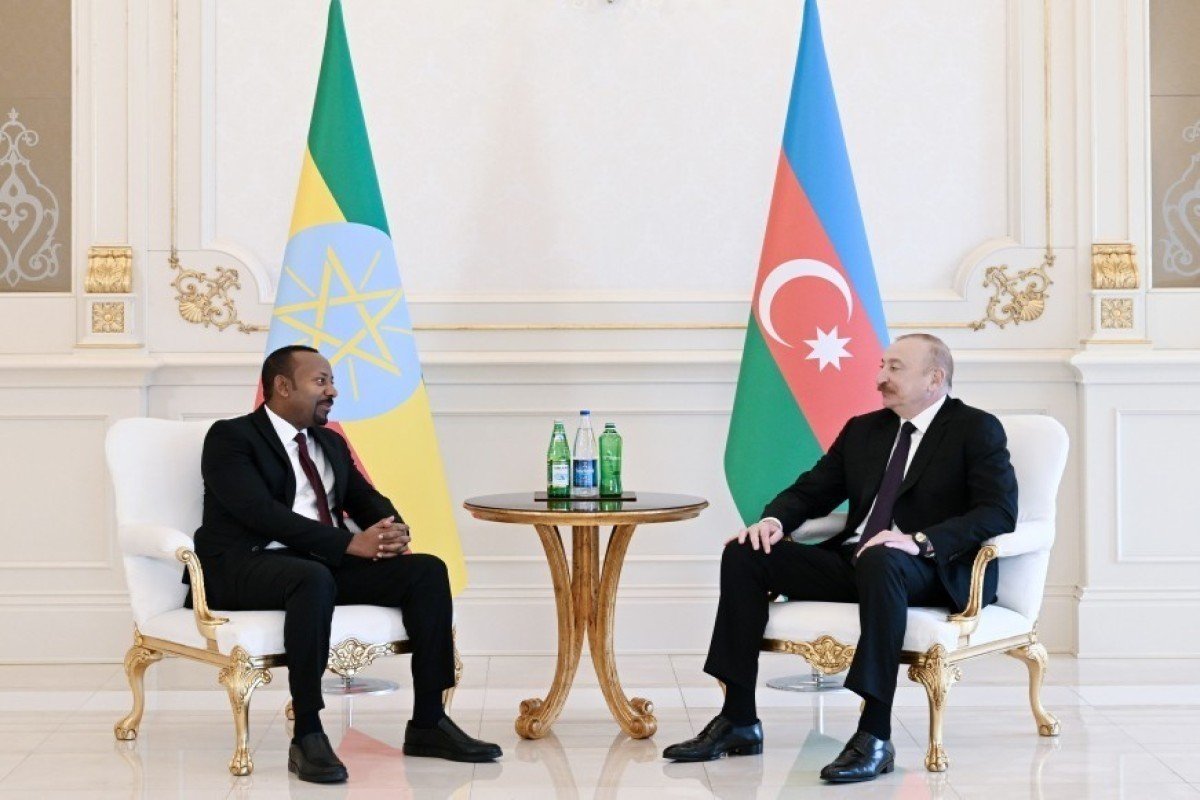
President of Azerbaijan Ilham Aliyev held an expanded meeting with Ethiopian Prime Minister Abiy Ahmed Ali, as the two countries moved to formalize cooperation across defense, agriculture, energy and emerging technologies.
Welcoming the Ethiopian delegation, Aliyev said the talks covered a broad range of priority areas and reflected both sides’ interest in building a structured and result-oriented partnership. He emphasized Baku’s readiness to deepen political dialogue and expand economic ties, including in energy, agriculture and cultural exchange.
Abiy, for his part, described Azerbaijan as a rapidly developing country and said relations between Baku and Addis Ababa are entering a practical phase focused on tangible outcomes. He noted that the two nations share common interests and see investment cooperation as a key pillar of future engagement.
According to the Azerbaijani side, discussions also addressed coordination within international organizations and potential joint projects in mining, digital transformation and artificial intelligence. The parties reviewed opportunities for cooperation in tourism, education and student exchanges.
Particular attention was given to the implementation in Ethiopia of service centers modeled on Azerbaijan’s “ASAN xidmət” public service platform, as well as consultations on applying elements of the country’s “DOST” social services model.
Following the talks, Foreign Minister Jeyhun Bayramov and his Ethiopian counterpart Gedion Timotheos signed a defense cooperation agreement between the two governments. The sides also signed a memorandum of understanding on cooperation in organizing the 32nd session of the United Nations Climate Change Conference (COP32).
Additional memoranda were concluded between the agriculture ministries, anti-corruption bodies, export and investment promotion agencies, and public broadcasting institutions of the two countries.
The visit marks one of the most comprehensive steps to date in formalizing Azerbaijan-Ethiopia relations, signaling a push to translate political goodwill into sector-specific cooperation.