Farmers in several Azerbaijani regions say the cost of machinery, labor and fieldwork has risen sharply, while sales revenue does not always cover their expenses.
Farms in Shaki, Ujar and Tovuz provided their own cost estimates in a television report. One farmer said he previously spent about 400 manats per hectare, but the figure now reaches 700 to 800 manats, with some work still to be paid for.
The figure reflects one farm’s experience, not a nationwide average. The final cost depends on the crop, the land and the operations required.
Labor and Machinery Both Cost More
Farmers interviewed in Shaki said plowing that previously cost 30 to 40 manats now costs at least 70 manats. Some farms are skipping a second round of soil preparation they consider necessary because of the expense.
Other participants said harvesting costs had risen from 40 manats to 80 to 100 manats, while daily labor costs had increased from 15 to 20 manats to 40 to 50 manats. The scope and conditions of the work differ in each case.
Availability is another problem. Farmers said machinery and workers can be difficult to find when they are needed, delaying agricultural operations and adding pressure on small family farms.
Market Price Is Not the Farmer’s Income
Yunus Sadigov, head of the agricultural sector economic problems department at the Institute of Economics, said profit depends not only on the harvest but also on how much of it can be sold.
Some produce spoils or sells for less because of quality, while packaging and transportation reduce revenue. If a farmer receives 10 gapiks less per kilogram than expected on a 10-ton sale, the difference totals 1,000 manats.
Sadigov said timely access to water and machinery is important and that small farms could benefit from organizing joint purchases and sharing equipment.
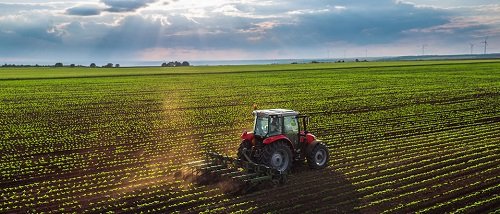
Illustrative photo: Chris Ensminger / Unsplash.
Source: Vesti Baku.