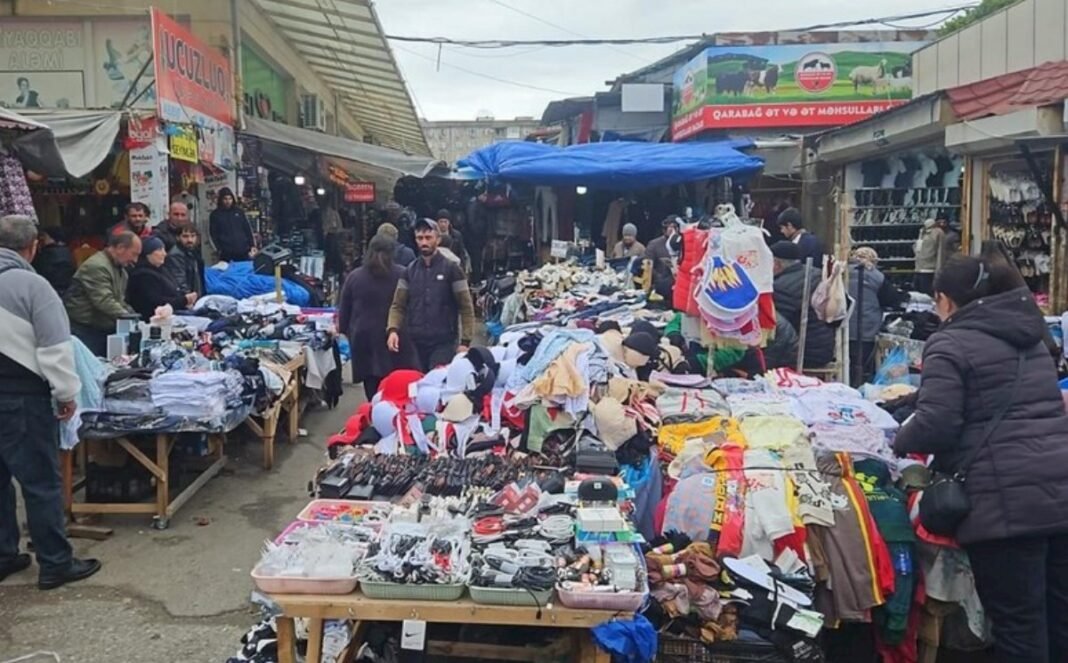
Goods sold on sidewalks let Baku residents buy food and household items on the way home, but they also reduce space for pedestrians. The city is again debating how to regulate street trade while preserving vendors’ ability to earn income.
Residents interviewed in a television report expressed different views. Some described informal stalls as convenient and more affordable. Others pointed to blocked walkways, sanitary concerns and the disorderly appearance of streets.
The problem is especially visible where commerce extends beyond a shop’s premises and goods, counters and displays occupy space intended for people to walk.
Trade Is Permitted in Designated Places
Baku’s city department for trade and services told the program that such activity must comply with rules for mobile trade and services in the capital. It is permitted in specifically designated locations.
Relevant municipal services said they also explain the rules to vendors who occupy sidewalks and obstruct pedestrians, directing them to operate only in authorized areas.
A Ban Is Not a Substitute for Organization
Specialists interviewed in the report said street trade should be organized by defining zones and establishing requirements for the appearance and sanitation of stalls.
For some residents, street sales provide income; for buyers, they can offer lower prices. Those benefits do not remove the obligation to keep walkways open and streets orderly.
The central question is where and under what conditions a vendor may operate. Without clear locations and enforcement of the rules, conflicts between commerce and pedestrians will continue.
Source: Vesti Baku.