AZE.US
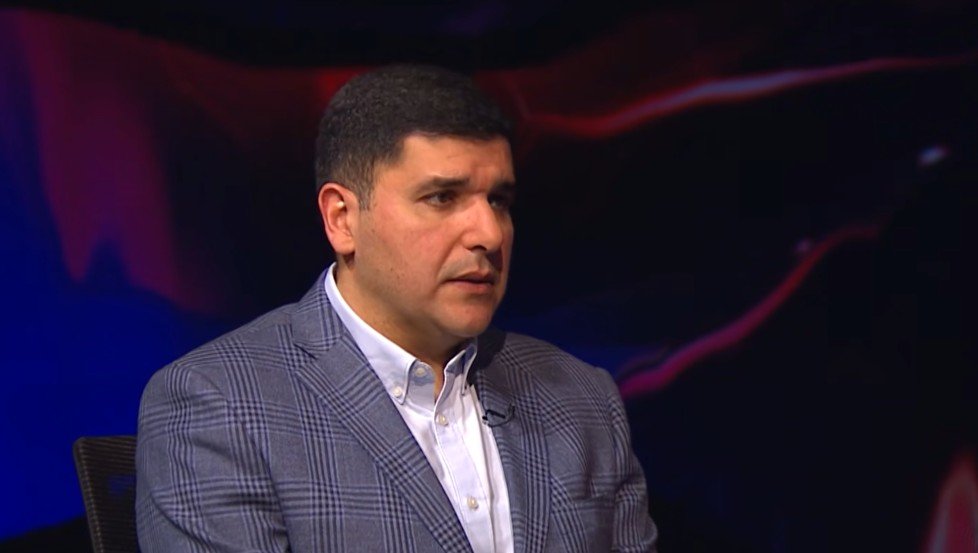
Political analyst Farhad Mammadov said European institutions cannot ignore Azerbaijan’s role in the Middle Corridor, even if Brussels often underestimates that role in its political messaging.
Speaking on the YouTube program “Novosti Kavkaza,” Mammadov said recent decisions and statements by the Parliamentary Assembly of the Council of Europe and the European Parliament have worsened Azerbaijan’s relations with European institutions. According to him, this deterioration was not initiated by Baku.
He said some lawmakers inside European structures are already beginning to ask what anti-Azerbaijani resolutions have actually achieved. In this context, Mammadov thanked Ukrainian lawmakers Tamila Tasheva and Oleksiy Goncharenko, who, in his view, spoke from a pragmatic position.
“If you want to resolve the issues on the agenda, you need to organize dialogue,” Mammadov said.
He said it was important that this position came from Ukrainian lawmakers because Ukraine understands the geography of the South Caucasus and the transformation processes taking place in the region.
According to Mammadov, Ukraine also understands Azerbaijan’s role in strengthening the sovereignty of countries in the region, including Georgia and Armenia. He said the possibility of opening regional communications already gives Armenia more room to act independently in its relations with Russia.
Discussing the European Union’s transport policy and the Global Gateway initiative, Mammadov said Brussels is trying to build a strategy around the Middle Corridor but does not always take Azerbaijan’s central role into account.
He said European officials often emphasize the role of Turkey and Armenia, while Azerbaijan holds the key function of linking the South Caucasus with Central Asia.
“The exceptional role in the Middle Corridor belongs to Azerbaijan. Whether they want it or not, they will have to take this into account,” he said.
Mammadov explained that there are alternatives on the western side of the route, including Georgian ports, the Black Sea and the land route through Turkey. On the eastern side, there are also several possible connections through Central Asia. But in the South Caucasus section, he said, there is no alternative to Azerbaijan.
Without that segment, he argued, the whole picture of the Middle Corridor does not come together.
For this reason, Mammadov said European institutions will eventually need to adjust their approach. If they do not, Azerbaijan could move toward a more differentiated policy toward European countries.
He said Baku could develop pragmatic ties with EU member states that maintain normal relations with Azerbaijan, while taking a different approach toward countries pursuing what he described as an unfriendly line.
Mammadov also addressed Azerbaijan’s relations with the Council of Europe. He said Baku does not need to rush toward leaving the organization, because the situation may change and it is not Azerbaijan that will have to revise its position, but those who created the current crisis.
According to him, Azerbaijan’s independent foreign policy comes with costs, but it also gives the country important advantages in moments of crisis.
He said neighboring states understand that Azerbaijan has a predictable government that does not allow the country to be drawn into outside geopolitical games.
Mammadov stressed that Azerbaijan does not seek to join blocs and continues to pursue an independent course. This approach, he said, may create limitations at times, but in the long term it strengthens the country’s political weight.
During the interview, Mammadov also commented on the visit of Iranian Parliament Speaker Mohammad Bagher Ghalibaf to Baku. He said the visit had both symbolic and practical importance, especially amid an internal transformation of power in Iran.
For Azerbaijan, he said, it is important to maintain normal and predictable relations with Iran’s legitimate authorities, represented by the executive and legislative branches.
Mammadov also said Iran is likely to try to influence processes around regional transport projects and communications. However, he noted that Azerbaijan has already brought its infrastructure to Zangilan and is ready to take part in different infrastructure scenarios, including routes through Armenia or Iran.
At the same time, he said Azerbaijan’s priority for the coming years remains the northern route through Georgia, where Baku has practical presence and operational capabilities.
Commenting on Azerbaijan’s relations with NATO, Mammadov questioned the appointment of a Canadian representative for the South Caucasus and Central Asia. He said Canada does not have sufficient regional expertise and that relations between Baku and Ottawa remain difficult.
He added that Azerbaijan’s cooperation with NATO is mainly linked to standards, training of officers and interaction through Turkey. According to Mammadov, France creates obstacles in Azerbaijan-NATO relations, and the alliance now has to decide whether it wants to become hostage to Paris’ position.
Speaking about France, Mammadov said Paris is actively working against Azerbaijan on European platforms, but this policy has not produced practical results.
He said France failed to secure real decisions against Azerbaijan either in the UN Security Council or within the OSCE. Resolutions in the European Parliament and PACE may be adopted, he added, but the key question is whether they have any practical effect.
Mammadov said Azerbaijan will continue to act according to its own interests, maintain an independent foreign policy and use its transport, energy and geographic advantages.
AZE.US