By AZE.US Editorial Team
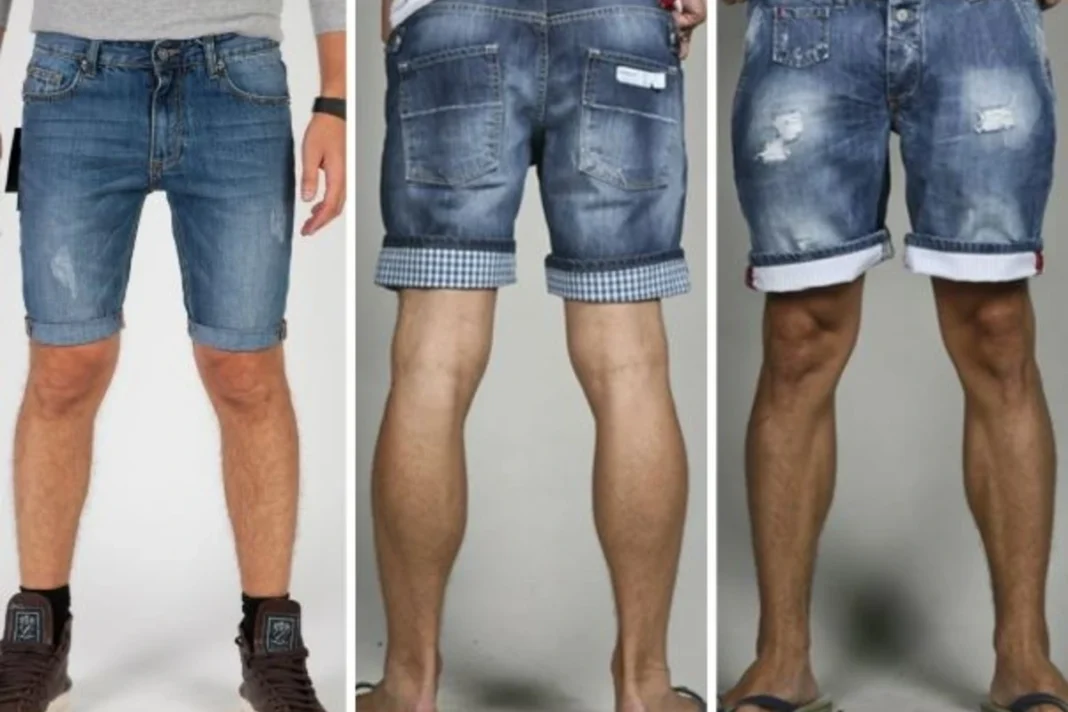
Baku has somehow found itself in the middle of a summer culture war over one urgent national question: should men be allowed to wear shorts in public?
The argument began with a confrontation in Icherisheher, where a middle-aged man challenged a younger man over his clothing. The video spread quickly on social media, and the older man later apologized.
Then came reports that several restaurants were refusing entry to men wearing shorts. Owners defended the policy as part of their house rules, saying they wanted to preserve a family-friendly atmosphere and a certain standard of appearance.
And, honestly, a dress code is not a human rights crisis.
A restaurant has every right to ask guests to wear trousers. Customers have every right to turn around, choose another place and spend their money somewhere that does not consider bare knees a threat to public order.
Not everyone sitting down for dinner wants to look at the hairy legs of a stranger, especially when the shorts resemble underwear and the shirt appears to have survived several construction seasons.
There are beaches. There are promenades. There are sports grounds and casual venues built around a resort atmosphere. There are also restaurants that prefer a cleaner, more formal look.
That is not the real problem.
The real problem begins when the rule changes depending on who is standing at the door.
Why does an Azerbaijani man in shorts supposedly threaten the “family atmosphere,” while a woman in very short shorts does not?
Why is a local customer stopped, while a foreign tourist wearing the same thing is welcomed with a smile?
Why are the hairy legs of an Azerbaijani treated as an assault on national values, while the same legs on a visitor suddenly become part of international hospitality?
A rule is only a rule when it applies to everyone.
Men, women, local residents, tourists, friends of the owner and ordinary paying customers should all know the standard in advance.
A sign at the entrance could simply say:
Beachwear and sportswear are not permitted after 6 p.m.
That would settle the matter.
No confrontation. No moral lecture. No security guard improvising a theory of civilization based on the nationality of the customer.
But when women are admitted, men are turned away and foreigners receive exceptions, this is no longer a dress code.
It is selective enforcement.
The distinction between “our people,” who can be publicly corrected, and foreigners, who must not be offended, is especially revealing.
If a rule applies to Azerbaijanis but not to visitors, that is not respect for tradition. It is provincial insecurity disguised as hospitality. Authority is displayed toward locals, while principles disappear the moment foreign currency enters the room.
Restaurant owners will say their businesses are private property. That is true.
But restaurants operate in public, take money from the public and build reputations through the way they treat people.
An owner may set conditions of entry. A customer may also ask why those conditions are applied according to gender, nationality or social status.
There is another issue here.
Too often, public dress codes are not enforced by businesses at all, but by random men on the street who appoint themselves inspectors of other people’s clothing.
A stranger suddenly decides that he has authority over the length of another person’s shorts. He issues warnings, raises his voice, insults the person or demands that a video be deleted.
That is not the defense of tradition.
It is interference in someone else’s life.
A public street is not a private dining room. Icherisheher does not belong to the man who dislikes another person’s knees. Public space belongs to everyone, as long as no law is being broken and no one is being harmed.
Do not like what someone is wearing? Look away.
Do not like a restaurant’s policy? Do not go there.
Do not want to see men’s legs at the next table? Choose a venue with a clearly stated evening dress code.
What cannot be justified is humiliating someone over a rule that was never clearly announced.
Baku wants to present itself as a modern, open and tourist-friendly city. That does not mean every restaurant must become a beach bar.
A modern city is not a city without rules.
It is a city where the rules are clear, predictable and equal.
Shorts can be banned.
Hypocrisy is harder to regulate.
AZE.US