AZE.US
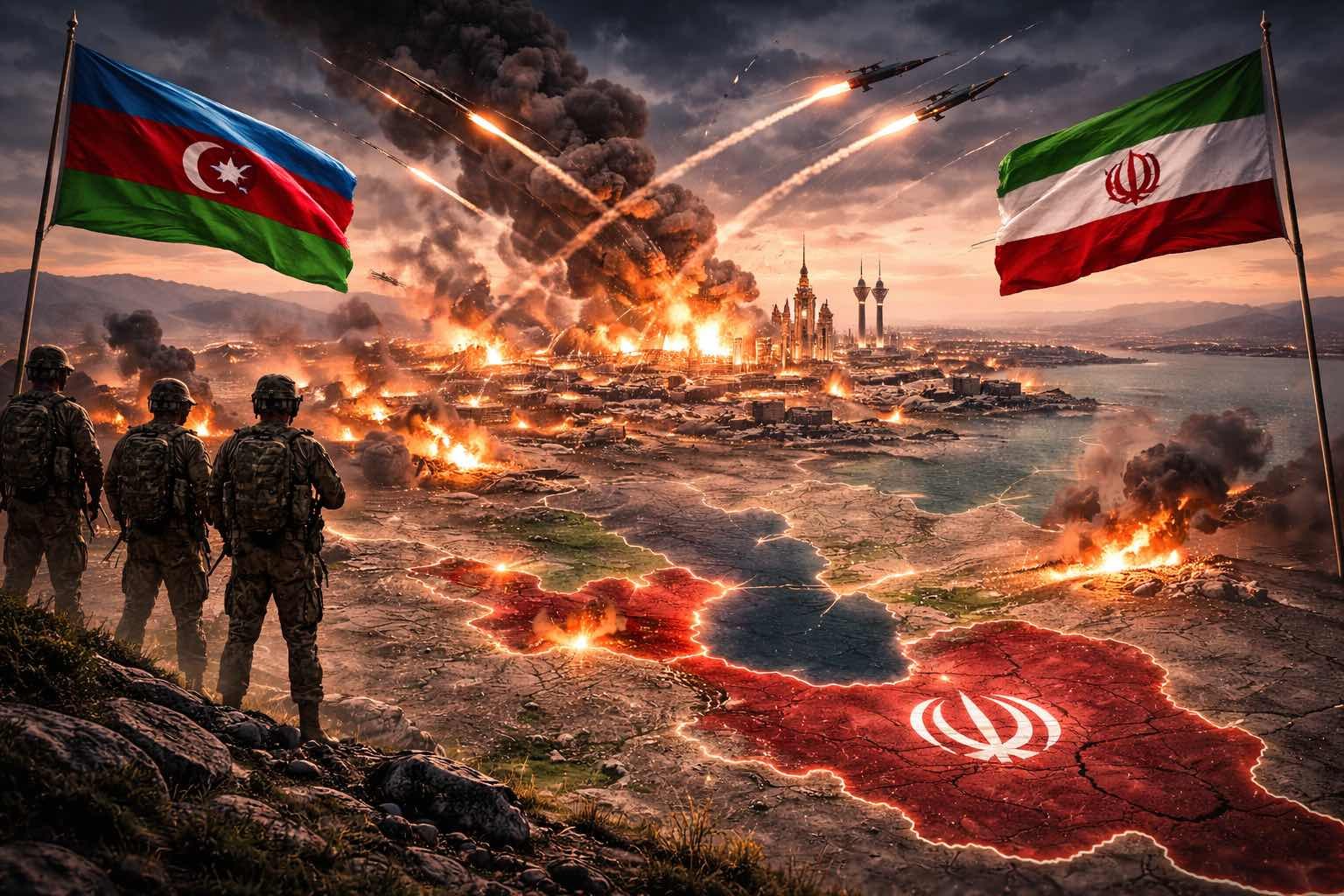
As tensions across the Middle East escalate, one question quietly circulates in regional security discussions: could Iran strike targets inside Azerbaijan?
The short answer is technical – yes.
The real answer is strategic – highly unlikely under current conditions.
The Military Capability: What Iran Could Theoretically Use
Iran possesses several categories of weapons that could, in theory, reach Azerbaijani territory.
Ballistic missiles (1,000–2,000+ km range)
From central Iran, such systems could theoretically reach:
-
Baku
-
Caspian energy infrastructure
-
Major airbases
-
Strategic transport nodes
Iran maintains medium-range ballistic missiles capable of covering these distances. The limiting factors would not be range – but accuracy, interception risk, and escalation consequences.
Cruise missiles
Lower-flying and less detectable than ballistic missiles, but slower and more vulnerable to layered air defenses.
Long-range drones
Iran has demonstrated extensive use of UAV systems across the region. However, reaching Azerbaijan would require long flight paths and exposure to radar coverage.
In purely technical terms, Iran has the hardware.
But military capability alone does not define probability.
The Geographic Constraint: The Flight Path Problem
Striking Azerbaijan is not the same as striking targets in Iraq or Israel.
A missile launched toward Baku would:
-
travel across international airspace,
-
potentially pass near or over other states,
-
trigger multi-layer regional tracking systems.
Unlike confined regional exchanges, a strike northward would immediately involve:
-
Turkey (Azerbaijan’s strategic ally),
-
Russia (a major regional actor),
-
Caspian security dynamics,
-
potentially NATO attention.
The geopolitical cost multiplies instantly.
The flight path itself becomes a diplomatic crisis.
The Motive Question: Why Would Tehran Do It?
This is where the analysis becomes decisive.
Iran traditionally uses missile capability for:
-
deterrence,
-
signaling,
-
retaliation against direct military threats.
A direct strike on Azerbaijan would only become plausible under extreme conditions:
Scenario A: Tehran believes Azerbaijani territory is being used for hostile operations. That would fundamentally change the equation.
Scenario B: Internal Iranian collapse. In a chaotic fragmentation scenario, factions within the security apparatus could act unpredictably.
Scenario C: A broader Iran–Turkey confrontation. At that stage, the region would already be in large-scale war.
Outside of these scenarios, the incentive structure does not favor escalation.
The Internal Azerbaijani Factor Inside Iran
An often overlooked dimension is demographic and political.
Millions of ethnic Azerbaijanis live in northwestern Iran. Historically, Azerbaijani-origin elites have held significant influence within Iran’s political structure.
A direct strike on Azerbaijan would:
-
inflame sensitive provinces,
-
risk internal destabilization,
-
create separatist pressure,
-
weaken Tehran domestically at a critical moment.
Strategically, that is a self-inflicted wound.
Risk Assessment
| Factor | Assessment |
|---|---|
| Technical capability | Present |
| Military necessity | Low |
| Political benefit | Minimal |
| Escalation risk | Extremely high |
In other words: The physical ability exists. The strategic logic does not – unless the regional order collapses further.
The More Realistic Threat
For Azerbaijan, the primary risks are not ballistic missiles, but:
-
spillover instability from Iran,
-
refugee flows,
-
proxy provocations,
-
information warfare,
-
pressure narratives attempting to pull Baku into the conflict.
Azerbaijan’s current posture – cautious neutrality, border control, and strategic restraint – reduces the probability of direct confrontation.
At this stage, the missile question is more theoretical than operational.
But in a region where escalation dynamics can shift quickly, theoretical scenarios deserve sober analysis – not alarmism.