AZE.US
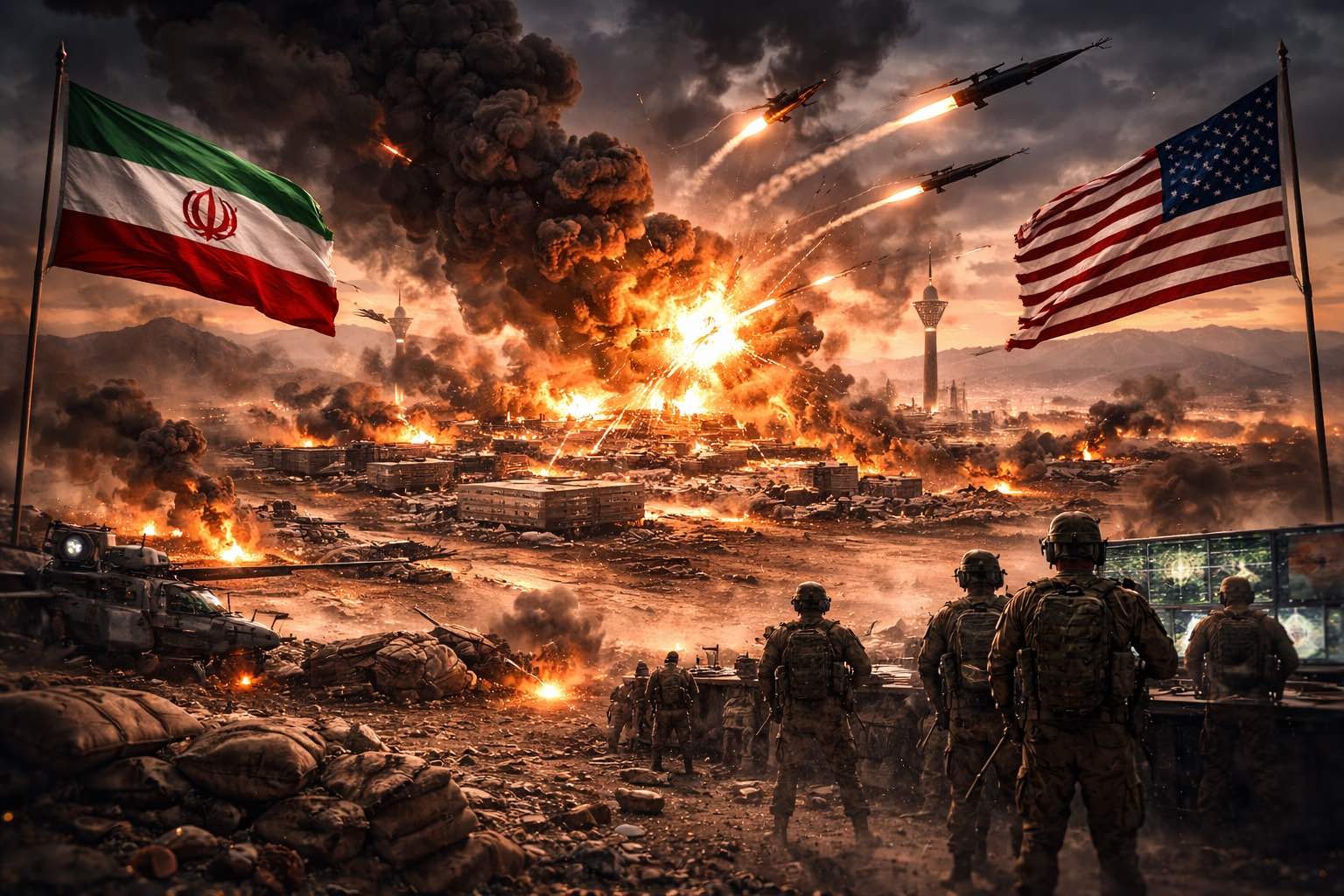
Iran has launched missile strikes targeting U.S. military installations across the Middle East, marking a sharp escalation in the rapidly widening conflict following joint U.S.-Israeli operations against Iranian leadership and strategic infrastructure.
U.S. Central Command confirmed that three American service members were killed and five others seriously wounded in a missile strike. Additional personnel reportedly suffered shrapnel injuries and concussions. Officials have not disclosed which base was hit, citing ongoing family notifications.
The casualties come after the United States and Israel began a large-scale operation aimed at degrading Iran’s military capabilities. According to U.S. defense officials, more than 40 senior Iranian commanders have been killed since the campaign began, including top Revolutionary Guard leadership figures. Iranian state media confirmed the death of Supreme Leader Ayatollah Ali Khamenei in a strike on his compound – an operation reportedly enabled by U.S. intelligence shared with Israel.
President Donald Trump described the development as “justice for the people of Iran,” adding that representatives of what he called potential new leadership in Tehran had reached out and were willing to talk. “They should have done it sooner,” Trump said in remarks reported Sunday.
Regional Escalation
In retaliation, Iran fired dozens of ballistic missiles and drones at U.S. and allied targets. Pentagon officials reported:
-
66 missiles launched toward Qatar
-
45 toward Bahrain
-
Additional strikes targeting facilities in Kuwait and the United Arab Emirates
The U.S. Navy’s Fifth Fleet headquarters in Bahrain was reportedly struck. British officials confirmed missiles were also fired toward Cyprus, marking the first time the island has faced Iranian ballistic threats.
In Israel, at least nine people were killed west of Jerusalem after a ballistic missile struck a residential area. Nearly 50 others were injured, including children. Israel has mobilized 100,000 reservists as air defenses continue intercepting incoming projectiles.
Strategic Bombing Campaign
U.S. B-2 bombers operating from Whiteman Air Force Base in Missouri carried out precision strikes on underground Iranian ballistic missile facilities, deploying bunker-penetrating munitions designed to destroy hardened targets.
Israeli officials stated that air defenses over Tehran have been significantly degraded, allowing sustained aerial operations above the capital.
Defense officials describe the campaign as the largest coordinated military action against Iran in decades.
Pressure And Negotiation Signals
Despite ongoing strikes, diplomatic signals have emerged. According to U.S. officials, Iran has reportedly reached out through intermediaries in Oman expressing a willingness to engage in talks. President Trump has indicated openness to dialogue, framing the strategy as “peace through strength.”
At the same time, Iranian officials have vowed retaliation. A senior figure within Iran’s leadership warned that the country would “burn the hearts” of its adversaries in response to what Tehran calls a decapitation strike.
Broader Implications
The conflict is reverberating across the region. Protests have erupted in Iraq and Pakistan, where security forces moved to protect U.S. diplomatic facilities. Gulf states with varying degrees of relations with Tehran have also been drawn into the escalation.
Military analysts note that the confrontation now extends beyond bilateral retaliation. With missile exchanges across multiple countries, mobilization of reserves, and direct leadership targeting, the Middle East faces a defining moment that could reshape regional alliances and global power balances.
For now, both sides continue to strike – while signaling, cautiously, that negotiations may still be possible.