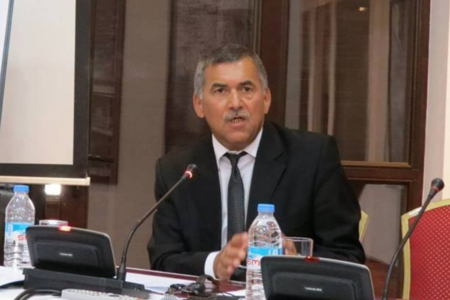
Recent criticism of Azerbaijan by some Turkish politicians reflects an internal struggle over Turkey’s political future and the question of who may eventually succeed President Recep Tayyip Erdogan, Azerbaijani political analyst Rauf Rajabov said.
Rajabov made the remarks in an interview with the Daily Europe Online YouTube channel, according to a report by Vesti Baku.
He argued that the sharp statements heard in Turkey should not be viewed only through the dispute over headscarves and school clothing that helped trigger the public debate.
“A struggle for Turkey’s future has begun inside the ruling party. A struggle for the successor has begun inside the ruling party,” Rajabov said.
He said the participation of lawmakers, officials and figures close to the Turkish president in the criticism suggested that the dispute had deeper political causes.
Azerbaijan’s Changed Regional Position
Rajabov said Azerbaijan should not be treated as a dependent partner. He estimated Azerbaijani investment in Turkey at about $20 billion, much of it directed toward industrial, production and processing projects that create added value.
Azerbaijani officials have for years described Turkey as the country’s largest overseas investment destination, with energy and petrochemical projects accounting for a major share. President Ilham Aliyev has previously said Azerbaijani investment in Turkey was expected to reach roughly $20 billion.
Rajabov said Azerbaijan’s restoration of its territorial integrity and full sovereignty had changed the regional balance and strengthened Baku as an independent center of decision-making. In his view, older assumptions about the relationship no longer reflect current realities.
He also said cooperation among Turkic states now extends well beyond the “one nation, two states” formula traditionally used to describe Azerbaijan-Turkey ties. Kazakhstan, Uzbekistan, Kyrgyzstan and Turkmenistan are independent actors with their own economic capacity and foreign-policy priorities, he said.
Azerbaijan, meanwhile, has been expanding ties with Central Asian countries while developing mutually beneficial relations with the United States, China and the European Union, Rajabov said. He argued that Turkey still faces uncertainty over how it will balance its European, Turkic and Middle Eastern orientations over the long term.
Restructuring, Not an Alliance Crisis
Rajabov described the current friction as a restructuring of relations rather than a crisis in the alliance. He said the two sides need to recognize Azerbaijan’s changed role and avoid language implying political seniority.
On religion, he said personal faith was normal but warned that outside forces could exploit the religious environment for political influence. He cited Iran’s previous attempts to build confessional influence in Azerbaijan and said Iranian media efforts to shape the current debate had failed.
Rajabov said demands coming from figures in Turkey were particularly sensitive because people in an allied country appeared to be seeking changes in Azerbaijan’s domestic policy.
Economic Risks for Azerbaijani Investors
The analyst also linked Turkey’s domestic political uncertainty to economic risk. He criticized weaknesses in the country’s financial and banking system and the concentration of authority after the abolition of the prime minister’s office.
That uncertainty could affect Azerbaijani investors, existing industrial projects and planned facilities, Rajabov said. Baku needs a stable ally, predictable business conditions and reliable protection for its investments, he added.
“Turkey is not clashing with Azerbaijan,” Rajabov said, arguing that the dispute instead reflects competition among internal Turkish groups that favor different models of the country’s future development.