AZE.US
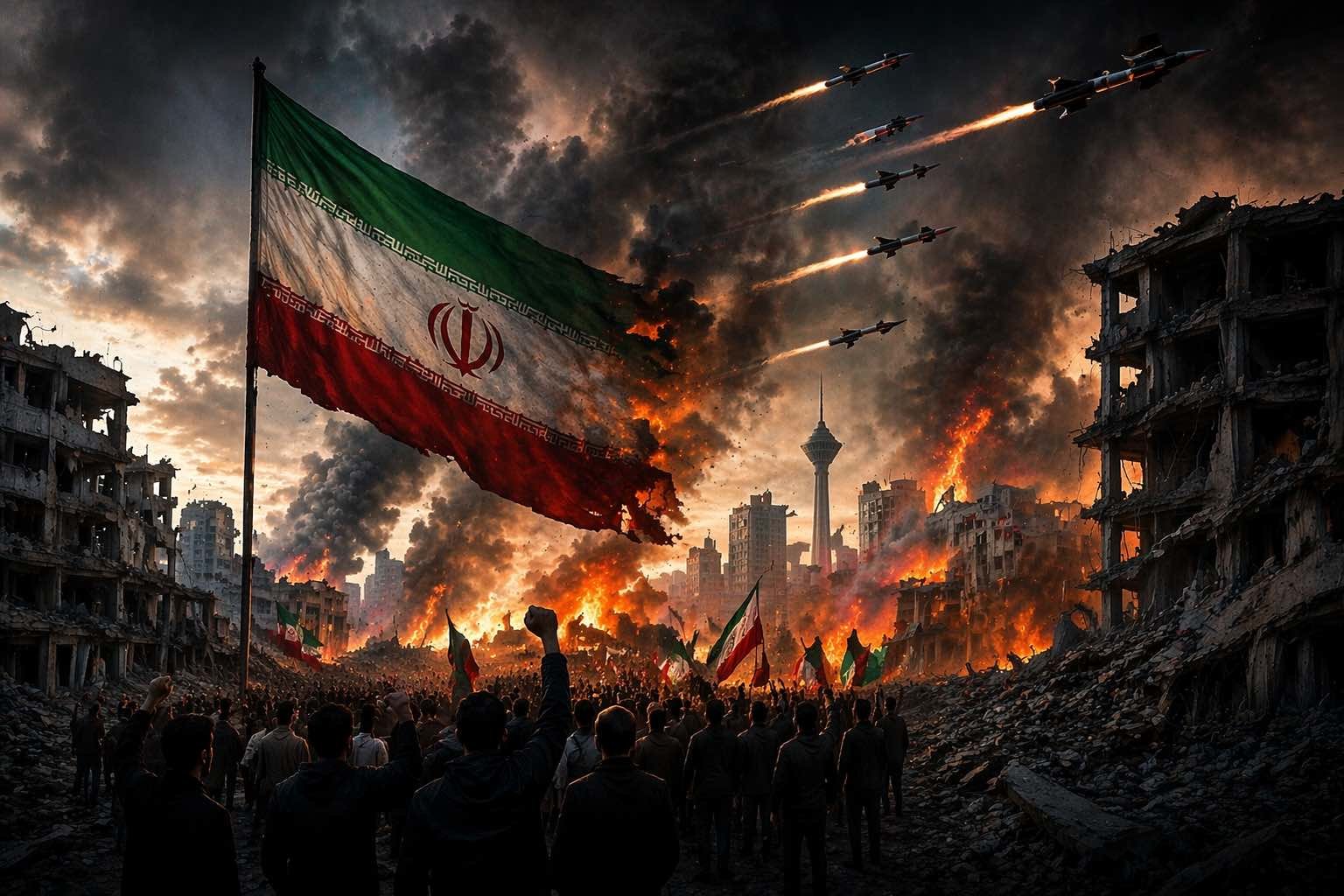
Azerbaijani political analyst Eldar Namazov said the war around Iran could move into a far more dangerous stage after the military phase ends, with the country facing the risk of a deep internal crisis and possible fragmentation.
Speaking on the Novosti Kavkaza channel, Namazov argued that the current confrontation is no longer about limited strikes or short-term pressure. In his reading, Washington has moved toward a much broader objective: weakening not only Iran’s military capacity, but also the state’s ability to govern, finance itself and keep internal control.
Namazov said the real test for Tehran may begin only after the fighting eases. He argued that Iran’s leadership is caught between outside military pressure and growing domestic anger, a combination that could trigger new protests and political turmoil once the active phase of the conflict subsides. He also said the opposition remains too fragmented to present a single figure capable of uniting the country in a post-war transition.
In his view, that creates the risk of a prolonged internal breakdown rather than a clean political reset. He compared the possible aftermath in Iran to other regional cases where authoritarian systems were badly shaken by war and then struggled to reestablish central authority.
Namazov also linked this tougher scenario to what he described as a shift in U.S. political thinking. He said former President Donald Trump and his circle increasingly frame the Iran campaign in historic terms, not just electoral or tactical ones, suggesting that the goal is no longer simple containment but a decisive outcome that reshapes the regional balance.
That, he suggested, is why the post-war period may prove even more consequential than the military campaign itself. If the state emerges battered, economically weakened and unable to contain public anger, Iran could enter a period of severe internal instability with consequences far beyond its borders.