AZE.US
Russia will pay compensation to Azerbaijan over the crash of an AZAL passenger plane near Aktau, in what amounts to one of the most politically sensitive outcomes in recent Azerbaijan-Russia relations. The agreement closes an important part of a case that carried not only legal consequences, but also strong public and geopolitical weight for Baku.
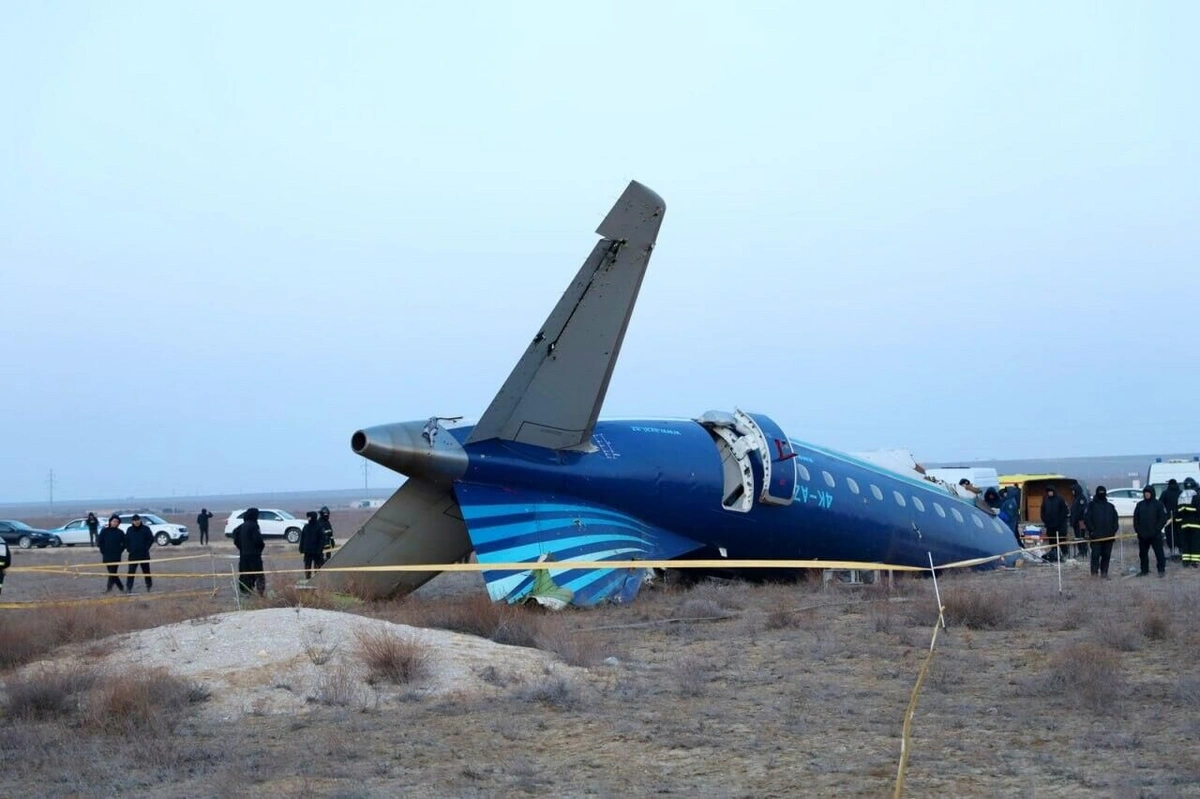
The crash involved an Embraer 190 operating AZAL flight J2-8243 from Baku to Grozny on December 25, 2024. The aircraft went down near Aktau with 67 people on board. Thirty-eight people were killed and 29 survived. The incident was tied to the unintended activity of a Russian air defense system in Russian airspace, turning the disaster into a matter of state responsibility rather than a routine aviation tragedy.
For Azerbaijan, the issue was never just about money. The larger objective was to secure accountability, defend state dignity, and show that the loss of Azerbaijani lives in such an incident would not be treated as something to be quietly absorbed or politically diluted. Baku pushed the matter as one of principle, tying compensation to a broader demand for responsibility and a proper political response.
That is what makes the compensation decision important. It signals that Azerbaijan was able to convert a tragic and highly emotional crisis into a concrete diplomatic result. In practical terms, it reinforces the idea that Baku is prepared to press sensitive cases through political and legal channels when national interests and citizen safety are at stake.
The outcome also reflects a carefully controlled strategy from the Azerbaijani side. Rather than allowing the crisis to spiral into open confrontation, Baku appears to have combined firmness with calculated diplomacy, keeping pressure on the issue while preserving room for negotiations. That balance matters in a relationship as layered and strategically important as the one between Azerbaijan and Russia.
For Russia, the compensation decision is also politically meaningful. It amounts to acknowledgment that the consequences of the crash had to be addressed in a formal and tangible way. Even without turning the episode into a full-scale rupture, Moscow was pushed into a position where some form of redress became unavoidable.
More broadly, the case sets a notable precedent. It shows that even in a region shaped by hard power and security tensions, a state can still extract a measure of accountability through sustained diplomatic pressure, legal framing, and political persistence. For Azerbaijan, that matters as much as the compensation itself.
This is why the deal is likely to be seen in Baku not simply as a settlement, but as proof that the country can defend its position in a crisis involving loss of life, sovereign rights, and a far larger neighbor – and still force a result.