AZE.US
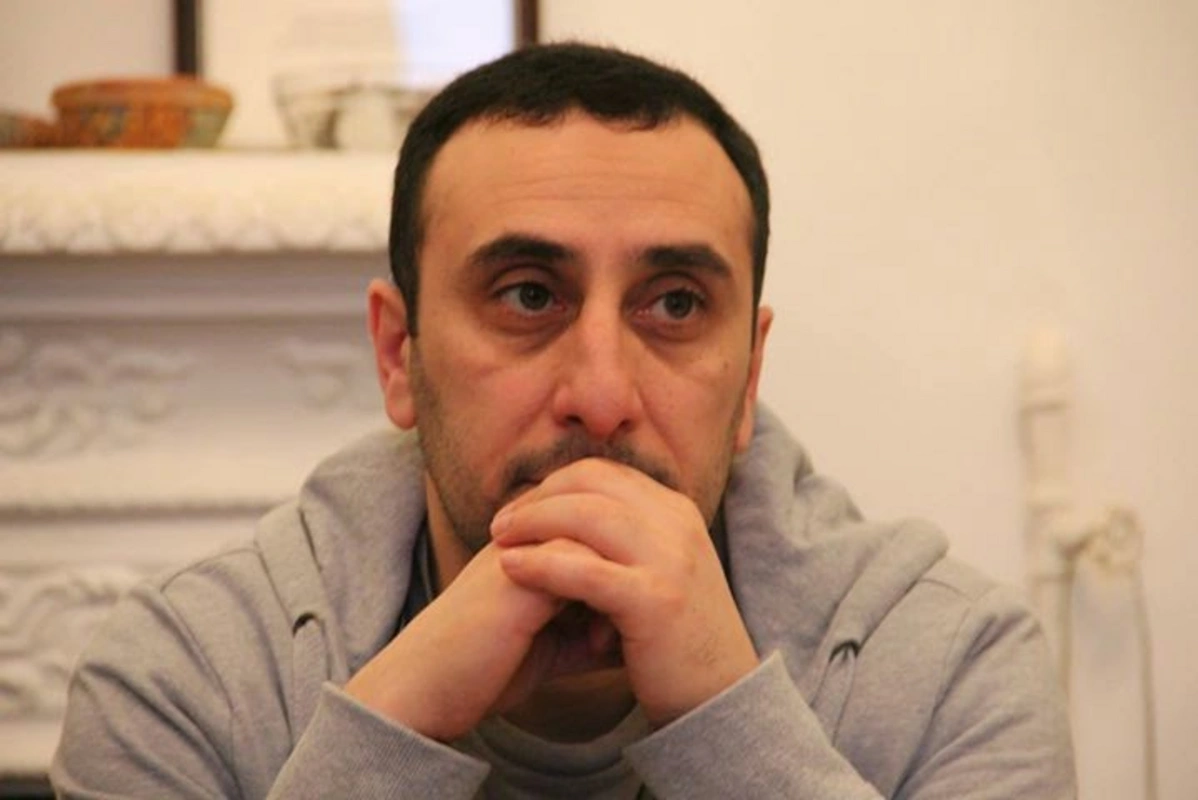
Ukrainian President Volodymyr Zelensky’s visit to Azerbaijan was not merely a bilateral diplomatic event, but a signal of a wider geopolitical realignment across the Greater Caspian, the South Caucasus, Central Asia and the Black Sea, political analyst Rizvan Huseynov said.
Speaking on the “Novosti Kavkaza” program, Huseynov said the visit challenged expectations that Baku would avoid steps that could irritate Moscow amid attempts to stabilize Azerbaijan-Russia relations. Instead, he said, Azerbaijan showed once again that it is pursuing an independent foreign policy line.
According to Huseynov, Azerbaijan has been one of the few countries in the post-Soviet space to openly support Ukraine’s territorial integrity and its defensive war against Russia. That, he said, makes Baku a special platform for Kyiv - politically, diplomatically and in terms of security.
The analyst said Azerbaijan could also be viewed as a possible venue for broader contacts related to the Russia-Ukraine war. He argued that Baku has become one of the few spaces where security concerns, diplomatic balance and regional trust can intersect.
Huseynov linked Zelensky’s visit to the changing map of Eurasian transit. In his view, Russia is unlikely to fully restore its former monopoly over land routes connecting China, Central Asia and Europe after the war. This creates new space for corridors running through the Caspian Sea, the South Caucasus, the Black Sea, Ukraine and onward to Europe.
In that setting, Azerbaijan’s role is no longer limited to the South Caucasus. Huseynov said Baku is increasingly part of a larger chain involving the Greater Caspian, Central Asia, Turkey, Ukraine and Eastern Europe.
He said the issue is not only logistics. It also involves energy, security, trade, military cooperation and the broader balance of power around Russia’s southern perimeter.
The Black Sea, Huseynov added, is another critical part of the picture. He said Ukraine’s ability to defend Odesa and weaken Russia’s naval position has changed the strategic environment. In his assessment, Russia has suffered a major setback in the Black Sea, while Turkey, Romania and Bulgaria are gaining importance in maritime security.
The analyst also pointed to the growing importance of the Trans-Caspian route and the potential Zangezur connection linking mainland Azerbaijan with Nakhchivan and Turkey. These routes, he said, would not reduce the importance of Georgia, but would give the region additional strategic depth by creating more than one corridor to Europe and global markets.
Huseynov described Turkey as a central player in the emerging architecture. He said the Baku-Tbilisi-Ankara axis has already passed several major tests, including the crises of the 1990s, the 2008 war in Georgia and later regional shocks. The next stage, he argued, may involve expanding that axis toward the Black Sea, the Eastern Mediterranean and the broader Middle East.
He also stressed the importance of personal trust between the leaders of Azerbaijan and Ukraine. In a period when international law is under severe strain, he said, direct relations between leaders and the ability to maintain confidence have become increasingly important.
Drawing a parallel with Azerbaijan’s own experience, Huseynov said Baku did not wait for approval from Moscow or Tehran before developing major strategic projects such as the Baku-Tbilisi-Ceyhan pipeline, the Baku-Tbilisi-Kars railway, TANAP and TAP. He said that experience shows how long-term national interests can be advanced even under external pressure.
The analyst said Kazakhstan and Uzbekistan are also likely to look more actively toward alternative routes. Kazakhstan, he noted, may move more cautiously because of its long border with Russia and domestic sensitivities, but even limited steps by Astana could carry significant weight. Uzbekistan, he said, may act more actively in projects aligned with Western, Turkish and regional interests.
Huseynov said the broader picture is clear: Russia is absorbed by the war and internal uncertainty, Iran is weakened by its own crises, and Azerbaijan, Turkey, Ukraine and Central Asian states have a window of opportunity to consolidate new routes, partnerships and security arrangements.
In his view, Zelensky’s visit to Azerbaijan should therefore be read not as an isolated trip, but as part of a new geopolitical map taking shape between the Caspian Sea, the Black Sea and Europe.
AZE.US