AZE.US
Claims circulating on Azerbaijani social media that drivers may be fined simply for parking a car outside their private home have caused confusion among residents. Lawyers say the issue is more specific: the fine is not for parking itself, but for blocking public space, creating obstacles or informally claiming land that does not belong to the homeowner.
The question has become familiar in many neighborhoods. A driver parks outside a private house. Another resident places stones, metal objects, bags or other barriers near the road to reserve a spot. Someone living on the first floor of an apartment building fences off land under the window and plants flowers or trees. What looks like a small neighborhood habit can become a legal problem if the land is public or shared.
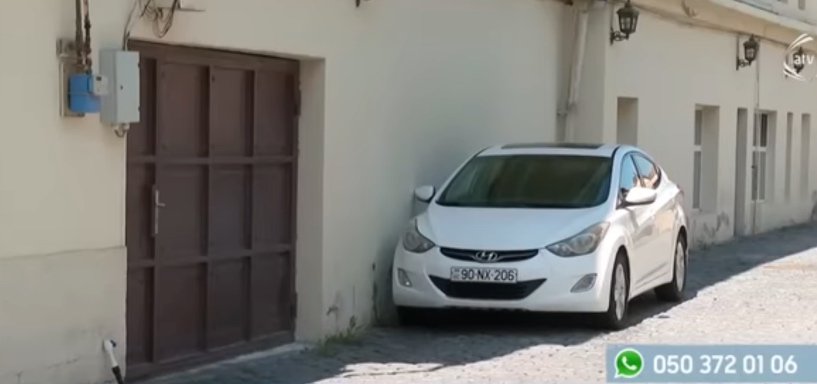
According to legal experts, a homeowner may park outside a private house if the vehicle does not obstruct traffic, block access, create danger or violate road rules. In such cases, there is no fine simply because the car is standing near the house.
The problem begins when residents treat the street or shared land as private property. If the road or adjacent area is not legally owned by the citizen, they cannot place stones, iron barriers or other objects there to prevent others from using the space.
The same principle applies to land outside apartment buildings. The area in front of a ground-floor apartment does not become private property just because it is under someone’s window. Residents who want to plant flowers, trees or carry out landscaping work must coordinate it with the relevant state bodies or municipality.
Officials say the most sensitive issue is not greenery itself, but unauthorized fencing or occupation of land. A resident may want to improve the area, but they cannot fence it off, restrict access or turn a shared space into a private yard without permission.
Lawyers refer to Article 227 of Azerbaijan’s Code of Administrative Offenses. If authorities identify unauthorized planting, the placement of stones, fencing or other restrictions on public or shared land, police, municipalities or local executive bodies may draw up a protocol and send the case to court.
For individuals, illegal occupation of land can lead to a fine of 500 to 800 manats. For officials, the fine can range from 1,500 to 2,000 manats.
That means the viral claim about fines for “parking outside the house” is only partly accurate. Parking itself is not the violation. The violation begins when a person blocks the road, reserves public space, limits access or treats common land as private property.
For many residents, the distinction matters. A car near the gate is one thing. Stones, metal barriers and a self-declared private parking spot on a public street are another.
AZE.US