AZE.US
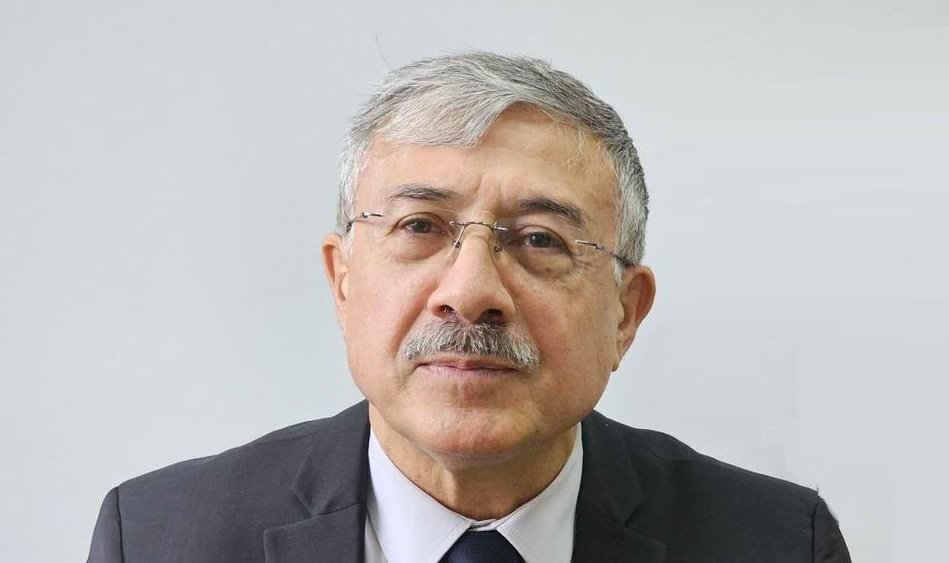
Azerbaijani political analyst and international affairs expert Chingiz Mammadov says Russia is losing influence across its former sphere of dominance, while Armenia is still struggling to accept the political and military reality that emerged after Azerbaijan restored its sovereignty over Karabakh.
Speaking to the YouTube channel Daily Europe Online, Mammadov said the current tension between Moscow and Yerevan should not be viewed only through the lens of Prime Minister Nikol Pashinyan’s latest moves, including his absence from Moscow’s May 9 events or Yerevan’s contacts with Ukraine and the West. In his view, the deeper process is the erosion of Russia’s ability to dictate outcomes in the South Caucasus.
Mammadov recalled that only a few years ago, Azerbaijani President Ilham Aliyev and Armenian Prime Minister Nikol Pashinyan would travel to Moscow, sit around the table, and watch Russian President Vladimir Putin act as the central coordinator. “Those times are already behind us,” he said.
According to Mammadov, Azerbaijan has already demonstrated its independence in relations with Moscow, including during the dispute over the downed aircraft, while a new reality is now forming between Russia and Armenia as well.
He said Armenia’s relationship with Russia is more complicated than Azerbaijan’s because of deeper historical, economic and military ties. From Moscow’s perspective, he argued, Russia invested heavily in Armenia, provided cheap gas, allowed large Armenian business and labor networks to function inside Russia, and played a central role in the creation of modern Armenian statehood.
But the Armenian side, Mammadov said, increasingly sees the issue differently. Many Armenians believe Russia “betrayed” Armenia during the 44-day war and later developments. Mammadov disputed that interpretation, saying Russia took a relatively neutral position rather than backing Armenia as openly as it had during the First Karabakh War. Yet even that neutrality, he said, was perceived in Armenia as betrayal.
That perception, he argued, has become the background for Pashinyan’s current political line.
Mammadov said Pashinyan’s message is built around the idea that Armenia must focus on the interests of Armenia itself, within its internationally recognized borders, rather than be driven by the diaspora, outside powers or old territorial ambitions. Armenia, he said, does not have the strength to pursue aggression against Azerbaijan or Türkiye and must deal with reality as it is.
He also addressed Armenia’s opposition, including businessman Samvel Karapetyan and former leaders often seen as closer to Moscow. According to Mammadov, their position resembles a formula of “neither peace nor war”: they do not openly call for a new conflict, but they also do not want to implement the existing agreements in their current form.
For Azerbaijan, he said, that stage has already passed.
Mammadov described the opposition’s argument as weak but politically usable, because it tells part of Armenian society what it wants to hear: that Armenia did not truly lose the war, and that the defeat was caused only by Pashinyan’s alleged betrayal.
He warned that old narratives about “Greater Armenia” and territorial dreams remain alive in parts of Armenian public thinking. Until those ideas are abandoned, he said, Armenia will remain in conflict with reality and with its neighbors.
The analyst also said one reason Azerbaijan succeeded in the 44-day war was the Armenian side’s inflated sense of confidence. He noted that before the 2020 war, Armenian officials and commentators still spoke in terms such as “new war, new territories,” while many analysts in Armenia dismissed Aliyev’s repeated statements about restoring Azerbaijan’s territorial integrity as domestic propaganda rather than a real state strategy.
In Mammadov’s view, that was a serious misreading.
He said Azerbaijani society never accepted the occupation, and the state prepared for years to reverse it. The result, he argued, was visible in the war itself: Azerbaijan fought with modern weapons purchased from many countries, while Armenia relied heavily on outdated systems, a problem later acknowledged by many in Armenia itself.
Mammadov also pointed to a broader political contrast. During the 44-day war, he said, all major political forces in Azerbaijan supported the state’s position. Even during periods of tension between Baku and Moscow, he argued, there were no prominent Azerbaijani analysts or public figures who took a position against Azerbaijan’s national interests.
For Mammadov, this reflects the central difference between the two societies after the war. In Azerbaijan, the question of sovereignty became a national consensus. In Armenia, the debate over defeat, responsibility and the future is still unresolved - and that unresolved debate continues to shape the country’s relations with Russia, the West and its neighbors.
AZE.US