AZE.US
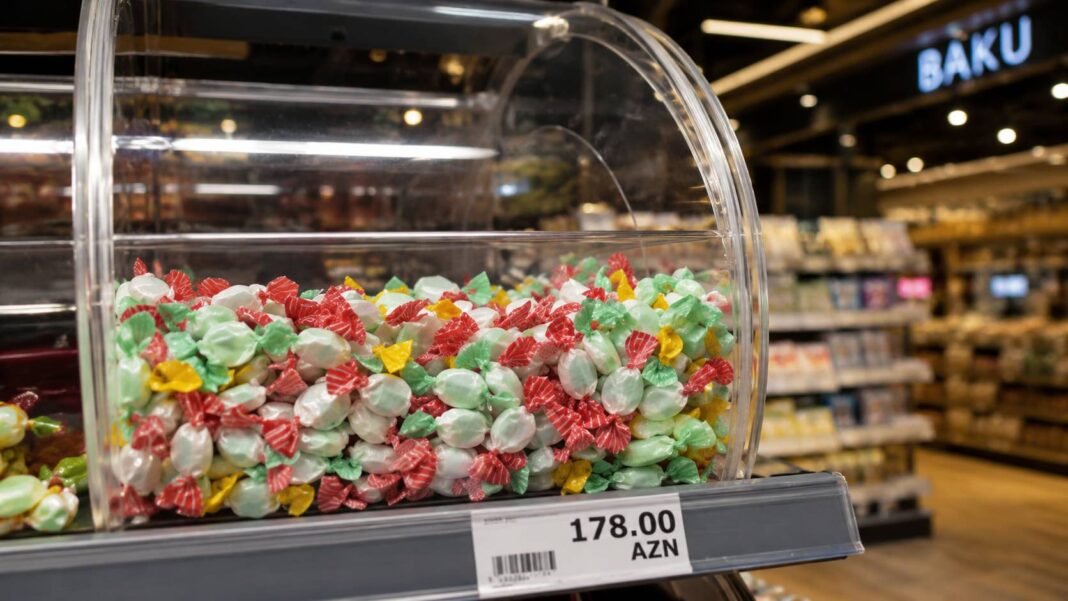
A price tag on candy in Baku has sparked a new round of debate on social media after one supermarket appeared to offer the product for 178 manats or about $105.
The sweets, described online as “glass candy” because of their transparent look, are being compared with similar products sold abroad for the equivalent of roughly 15 to 20 manats, or about $9 to $12. The gap has left many users asking the same question: how can a candy product become so expensive by the time it reaches an Azerbaijani store shelf?
At first glance, the price looks absurd. But economist and doctor of legal sciences Vusala Ahmadova says several factors can push up the cost of imported goods, including logistics, customs-related expenses, small shipment volumes and distributor margins.
When products are imported in small batches, the transport cost per unit is higher. That can make a product significantly more expensive once it reaches Azerbaijan.
But Ahmadova says the main explanation in this case may not be the real cost of the candy.
She sees the price as part of a marketing strategy: a seller presents a trending product as “premium,” raises the price sharply and lets social media do the rest. TikTok and Instagram have made this tactic easier, especially for unusual sweets, snacks and drinks that can quickly become viral.
In such cases, the high price itself becomes advertising. People complain, share photos of the price tag, record videos and discuss the product. The store gets attention without spending a separate advertising budget.
Ahmadova said consumer psychology also plays a role. When a product is expensive, many buyers subconsciously associate it with higher quality, prestige or exclusivity, even if the real production cost is much lower.
That strategy does not always work. If there is demand, the price may stay high. If buyers refuse to pay, the product can quickly be discounted. For food items with a limited shelf life, retailers often do not have much time to wait.
The economist advised consumers not to rush into buying viral products at inflated prices. In many cases, she said, the same item may soon appear at a much lower price or disappear from the shelf altogether.
The story of candy for 178 manats ($105) points to a wider retail trend in Azerbaijan. Imported and fashionable products are increasingly sold not just as food, but as objects of attention. In that model, the price is no longer only about taste, cost or quality. It becomes part of the spectacle around the product.
AZE.US