AZE.US
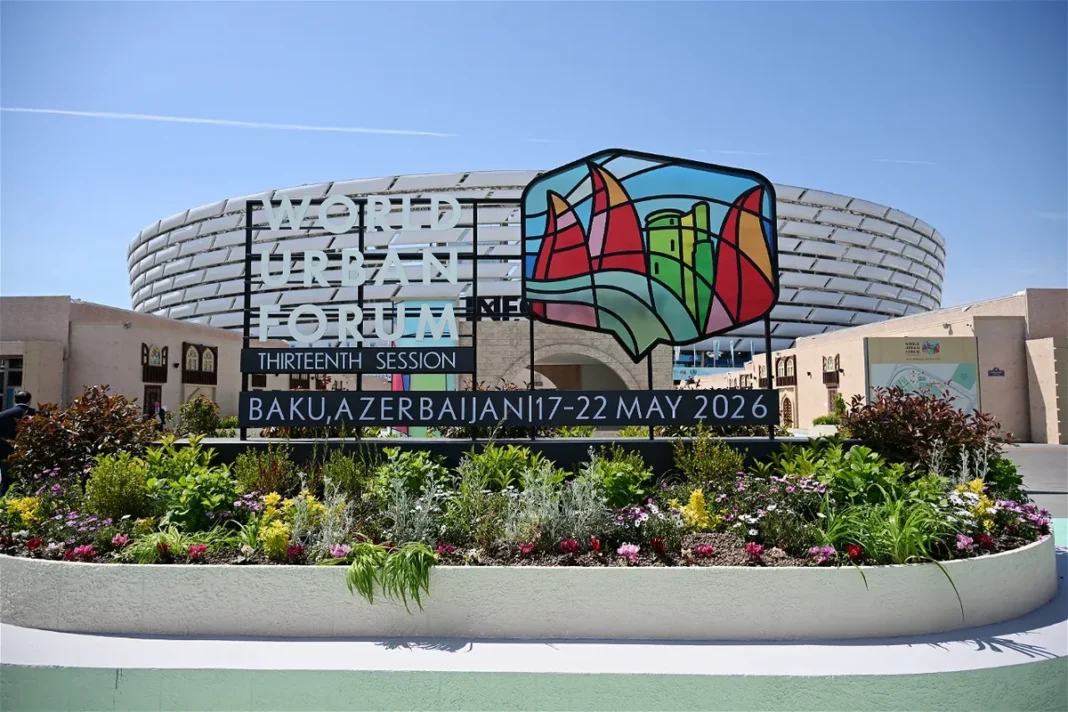
Baku is hosting the 13th World Urban Forum this week, bringing Azerbaijan into one of the world’s central conversations on housing, urban resilience and the future of cities.
The forum, known as WUF13, is being held in the Azerbaijani capital from May 17 to 22 under the theme “Housing the World: Safe and Resilient Cities and Communities.”
Organized by UN-Habitat and the Government of Azerbaijan, the event brings together national governments, city leaders, urban planners, international organizations, civil society groups, academics and private-sector representatives.
For Azerbaijan, the forum is more than another international event on the calendar. It is part of a wider effort to present Baku as a venue for global policy debates after the country hosted COP29 and expanded its diplomatic visibility across energy, transport, climate and reconstruction issues.
Baku is ready. The stage is set. The world is coming together for WUF13.
Tomorrow, ideas, cities and communities meet in Azerbaijan to shape the future of urban living.#WUF13 #WUF13Azerbaijan #Baku2026 #WorldUrbanForum pic.twitter.com/ncXHqJQmoc
- WUF13Azerbaijan (@WUF13Azerbaijan) May 16, 2026
The choice of Baku also gives Azerbaijan a chance to connect the global urban agenda with its own domestic priorities. The country is rebuilding cities and villages in Karabakh and East Zangezur, expanding transport infrastructure, facing rapid development pressure in the capital and trying to balance modern construction with livability, public services and urban planning.
That makes WUF13 politically and symbolically important for Baku. The forum’s central theme - housing and safe, resilient communities - intersects directly with questions Azerbaijan is already facing at home: how to rebuild liberated territories, how to manage the growth of Baku, how to make new housing more livable, and how to prevent rapid urbanization from creating new social divides.
The official WUF13 programme includes a Ministerial Meeting on the New Urban Agenda, held at the midpoint of the agenda’s 20-year implementation horizon. The meeting is expected to review progress, identify challenges and outline priorities for the next phase of global urban development.
The forum also includes multiple assembly sessions, including platforms for women, local and regional governments, grassroots and civil society organizations, children and youth, and the business community. This gives the Baku forum a broader character than a standard intergovernmental meeting: it is designed to bring together political decision-makers and those directly affected by urban policy.
One of the most visible parts of WUF13 is the Urban Expo at the Baku Olympic Stadium. Organizers say this year’s Expo is the largest in the history of the World Urban Forum, covering 3.5 hectares and bringing together more than 217 organizations from 66 countries. The exhibition is focused on housing solutions, climate resilience, digital innovation, accessibility and inclusive urban development.
For Baku, the timing is also significant. The city is itself a case study in fast urban growth. Over the past two decades, it has gained new roads, high-rise buildings, luxury residential projects, renovated public spaces and major event infrastructure. At the same time, residents continue to raise questions about housing affordability, traffic, parking, public transport, green space and the quality of new residential complexes.
That contrast gives WUF13 a practical local relevance. The global discussion about safe and resilient cities is not abstract in Baku. It touches daily life: whether new neighborhoods have enough schools, parks, parking and public transport; whether apartment buyers receive proper ownership documents; whether urban growth serves residents or mainly developers.
Azerbaijan is likely to use the forum to highlight its reconstruction model in Karabakh and East Zangezur, where the government has promoted concepts such as “smart villages,” modern infrastructure and planned urban return. For international participants, these projects offer a real-time example of post-conflict urban and rural reconstruction, though their long-term success will depend on sustainability, economic opportunity and the ability to create functioning communities rather than only new buildings.
The forum may also strengthen Azerbaijan’s institutional ties with UN agencies, development banks, urban planners and city networks. That matters for a country seeking to position itself as a regional connector not only in energy and logistics, but also in development policy.
WUF13 will not solve Baku’s urban problems in one week. But it gives Azerbaijan a global stage to show how it thinks about cities - and it gives Baku a mirror. Hosting the world’s leading urban forum is a diplomatic achievement. The larger test will be whether the conversation about safe, inclusive and resilient cities leaves a visible mark on how Azerbaijan builds, rebuilds and manages its own urban future.
AZE.US