AZE.US
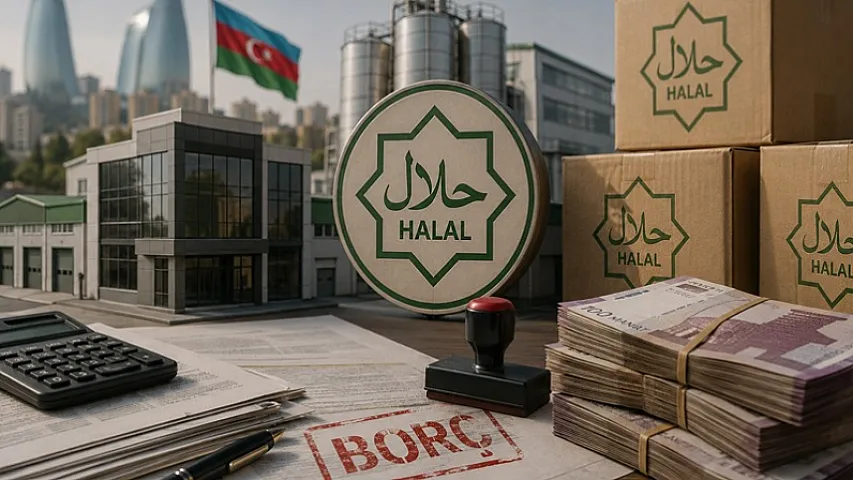
Several Azerbaijani companies operating under the “halal” label have accumulated millions of manats in tax debts, turning what might have looked like a routine fiscal issue into a wider question of public trust, corporate responsibility and the commercial use of religious reputation.
According to published figures, Azeri Halal LLC owes more than 49,000 manats in taxes, Az.Halal Qida LLC has debts exceeding 1.642 million manats, and Halal Food LLC owes more than 2.14 million manats. Together, the three companies’ tax debts exceed 3.8 million manats, or roughly $2.2 million.
The numbers are striking not only because of the size of the debts. The companies’ charter capital is almost symbolic: 100 manats for Azeri Halal, 50 manats for Az.Halal Qida and just 10 manats for Halal Food. In other words, businesses linked to millions in liabilities formally entered the market with capital smaller than the cost of an ordinary dinner in Baku.
Legally, such a structure is possible. Azerbaijani law allows limited liability companies to be established with very low capital, a model intended to make business formation easier and support small entrepreneurship. But when companies with 10 or 50 manats in charter capital build large commercial operations and then accumulate major debts, the question becomes more serious: who ultimately carries the risk?
In practice, that risk is often shifted to the state and society. Profits remain private, while unpaid taxes become a burden on the budget. This is not only a matter for accountants or tax inspectors. It also affects fair competition.
A business that pays taxes, formalizes salaries, keeps proper accounts and carries the cost of compliance operates at a disadvantage if competitors are able to delay or avoid their obligations. Over time, such behavior weakens honest businesses, expands the shadow economy and damages trust in the market.
The issue is especially sensitive in the halal food sector. In Azerbaijan, “halal” is not merely a food label. For many consumers, it implies honesty, clean trade and moral responsibility. People choosing such products often place trust not only in the ingredients, but also in the ethical behavior of the company behind them.
That is why large tax debts under a halal-branded name create an obvious contradiction. In Islamic commercial ethics, financial responsibility, timely payment of debts, honest trade and respect for public obligations are central principles. If a company benefits from the moral weight of the word “halal” while failing to meet its financial duties to the state, the problem becomes ethical as well as legal.
The case points to wider weaknesses in the system: oversight of companies with minimal charter capital, early monitoring of large tax debts, transparency around beneficial ownership and clearer standards for businesses using religiously sensitive terms in their branding.
If “halal” becomes only a marketing label without financial discipline and transparency behind it, the damage will not be limited to the state budget. It will also hit the public trust on which this entire sector depends.
And trust, unlike a 10-manat charter capital, is much harder to rebuild.