AZE.US
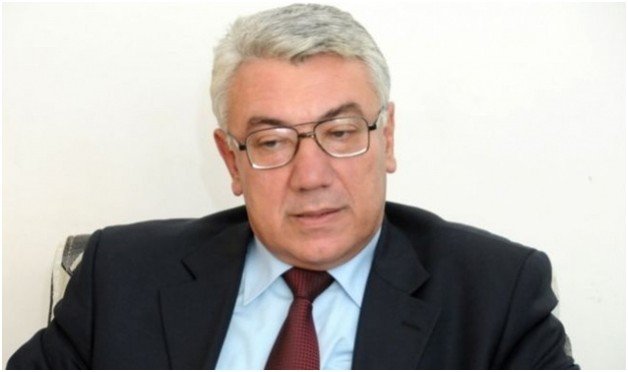
Political analyst Eldar Namazov says Armenia’s parliamentary election results do not block the peace process with Azerbaijan, even though Prime Minister Nikol Pashinyan’s team failed to secure a constitutional majority.
Speaking on the YouTube channel ITON-TV, Namazov said Armenia’s parliament has several levels of majority. A simple majority allows a party to form a government. An absolute majority gives the government the ability to appoint key officials, including the prosecutor general and judges. A constitutional majority, or two-thirds of parliament, is needed to approve constitutional changes or send a new constitution to a referendum.
According to Namazov, Pashinyan secured the first two levels: a simple majority and an absolute majority. He called this a serious political success, because it allows the ruling party to form the government alone and control the state system.
However, he said this is not enough to carry out constitutional reform, which he believes is necessary for the signing of a full peace treaty with Azerbaijan.
Namazov noted that Armenia’s Constitution contains a reference in its preamble to the country’s Declaration of Independence, which mentions the unification of Karabakh with Armenia. In his view, this is not just a territorial claim, but a legal formulation of annexation, directly contradicting the logic of a peace agreement with Azerbaijan.
“With such a constitution, no peace treaty can be signed,” Namazov said.
At the same time, he stressed that the lack of a constitutional majority does not mean the peace process will stop. According to Namazov, it is important to distinguish between a peace treaty and a peace process.
He said international practice allows different scenarios. Sometimes a peace treaty is signed first, and the peace process develops afterward. In other cases, the sides first move forward on practical issues and only later reach a final treaty.
In the case of Azerbaijan and Armenia, Namazov said, there are many issues that can already be addressed. These include opening communications, the Zangezur corridor, border delimitation and demarcation, trade links, contacts between societies and gradual normalization.
“The peace process can continue. At what stage the Armenian side will be able to hold a referendum and change the Constitution, it will do so. We will not wait for that,” Namazov said.
He also said that even before constitutional change, the sides can establish diplomatic relations and sign interstate or intergovernmental agreements on specific issues.
Namazov separately mentioned the project referred to during the broadcast as the “Trump road,” as well as the future connection between Azerbaijan and Nakhchivan. He said there is already practical work underway, including projects involving American companies, while Turkey is building a railway from its territory toward Nakhchivan.
According to him, such projects create a practical basis for continuing the peace process, even if a full peace treaty is signed later.
Namazov also pointed to changes in Armenian public opinion. He said that several years ago, the overwhelming majority of Armenian voters held radical positions and were not ready for concessions even in exchange for peace with Azerbaijan. Now, he said, most voters supported a political force that backs the peace process.
“There is no constitutional majority, but there is an absolute majority that supports the peace process,” Namazov said.
He added that the Second Karabakh War and the strength of Azerbaijan’s army were the main factors that changed the thinking of a significant part of Armenian society. In his view, many people in Armenia have now been convinced that it is better to live in peace with Azerbaijan.
At the same time, Namazov said Azerbaijan should continue the peace process while also strengthening its army. He called military strength the most important factor pushing Armenian society toward accepting peace with Azerbaijan.
Namazov did not rule out that some opposition lawmakers in Armenia may eventually support constitutional changes. He said the largest new opposition faction, linked to Russian billionaire Samvel Karapetyan, was created quickly and does not appear to be a solid ideological force.
According to him, disagreements are already visible inside that camp. Some figures are calling for street protests, while others say they will act only within the Constitution and parliamentary politics.
“Is it possible that some opposition lawmakers will decide to join the vote? Yes, it is possible,” Namazov said.
He said that regardless of when a final peace treaty is signed, Azerbaijan and Armenia are likely to continue practical steps toward normalization. The agenda includes opening the Zangezur corridor, creating new international routes under Washington’s patronage and involving major American companies.
“Such chances come once in a hundred years. I do not think either Armenia or Azerbaijan will miss such opportunities,” Namazov said.
AZE.US