AZE.US
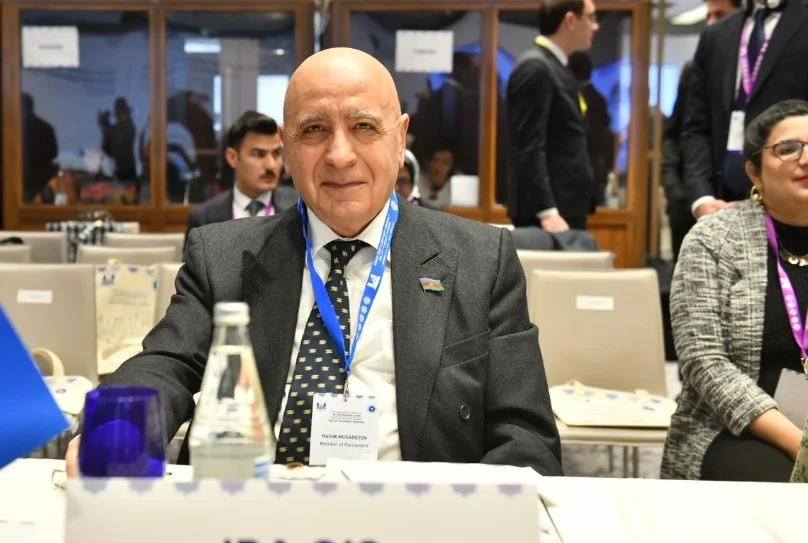
Azerbaijani lawmaker Rasim Musabekov has said that Russia’s era of dominance in the South Caucasus is coming to an end, arguing that Armenia’s post-election course and the continuing peace agenda with Azerbaijan show a major shift in the region.
Speaking on the YouTube channel Novosti Kavkaza, Musabekov said Moscow is most irritated not simply by Armenia’s declared European ambitions or by the possible peace agreement between Baku and Yerevan, but by the broader symbolism of what is happening.
According to him, Armenia, a country long seen as heavily dependent on Russia economically and militarily, has effectively challenged Moscow’s authority in front of the world.
“Russia will no longer be able to dominate the South Caucasus,” Musabekov said. “The era when the South Caucasus was viewed as Russia’s backyard, as a sphere of Russia’s exclusive influence, is over.”
Musabekov said Armenian Prime Minister Nikol Pashinyan appears ready for a tougher political game with Moscow after the parliamentary elections. He argued that Russia may have expected concessions from Yerevan, including a softer approach toward pro-Russian political forces and election-related investigations, but Pashinyan has so far refused to bend.
“Pashinyan is demonstrating that he does not intend to submit to Moscow’s blackmail,” Musabekov said.
The Azerbaijani MP also commented on Armenia’s new parliamentary balance. He said that although Pashinyan’s Civil Contract party does not formally have a constitutional majority, it may still be able to secure situational support from parts of the opposition. In his view, some opposition groups in Armenia are ideologically weak and internally fragmented, making them vulnerable to political realignment.
A major part of Musabekov’s remarks focused on the possible peace treaty between Azerbaijan and Armenia and the question of Armenia’s Constitution.
Baku has repeatedly said that Armenia’s Constitution still contains provisions and references that can be interpreted as territorial claims against Azerbaijan. Musabekov said Azerbaijan has its demands and Yerevan knows them well. However, he warned that constantly emphasizing constitutional change as a public precondition for peace could make the process more difficult.
“The less we push the issue publicly that there can be no peace treaty without constitutional change, the better,” he said.
Musabekov argued that if the issue is handled too loudly, it may create the impression inside Armenia that constitutional reform is being carried out under Azerbaijani pressure. That, he said, could hurt the very forces in Armenia that are trying to normalize relations with Azerbaijan.
He also rejected the argument that a peace treaty should not be signed before Armenia changes its Constitution because future revanchist forces could come to power and challenge the agreement. In Musabekov’s view, the absence of a peace treaty would give such forces even more room to revive territorial claims.
If a peace agreement is signed and ratified, he said, any future Armenian government that tries to abandon it would have to formally denounce an international treaty. That would make such forces look revisionist both domestically and internationally, while strengthening Azerbaijan’s legal and diplomatic position.
Musabekov also pointed to the recent meeting between Hikmat Hajiyev, assistant to the president of Azerbaijan, and Armen Grigoryan, secretary of Armenia’s Security Council, as a signal that Baku views the post-election situation in Armenia as workable.
He said Azerbaijan is satisfied that Pashinyan’s party remains in power after openly supporting the peace agenda, declaring the Karabakh issue closed, rejecting “miatsum,” and describing the political demand for the return of Karabakh Armenians as counterproductive for normalization.
Musabekov said this creates room for continued positive momentum between Baku and Yerevan.
At the same time, he said a peace deal between Azerbaijan and Armenia would remove one of Russia’s key instruments of influence in the region. Moscow will still have influence because of geography, history and existing ties, he said, but it will no longer be able to dominate the South Caucasus as before.
The Azerbaijani lawmaker also spoke about the growing role of the Turkic world, the Middle Corridor and regional transport links. He said Azerbaijan and Turkey remain the main drivers of integration among Turkic states, including through investment, military cooperation and infrastructure projects.
According to Musabekov, Azerbaijan and Turkey are increasingly acting as a closely coordinated political, military and economic bloc. He said this model is also becoming important for Central Asian states, especially as interest grows in the Trans-Caspian route and broader connectivity between Asia and Europe.
He added that Western countries, if they are serious about supporting the Middle Corridor, should not focus only on infrastructure through Armenia but also support modernization projects involving Nakhchivan.
Otherwise, Musabekov said, Europe and the United States may still use these routes in the future, but at a higher cost.
Musabekov’s remarks reflect a broader Azerbaijani reading of the current moment: Armenia’s elections did not close the peace track, Russia’s leverage is weakening, and the South Caucasus is entering a new phase in which Baku, Ankara and the Turkic world are gaining greater strategic weight.
AZE.US