AZE.US
Moscow’s silence after Armenia’s parliamentary elections has become a political signal of its own. While many foreign leaders have already congratulated Prime Minister Nikol Pashinyan on his victory, the Kremlin has yet to do so, fueling debate in Yerevan over what Russia is trying to achieve.
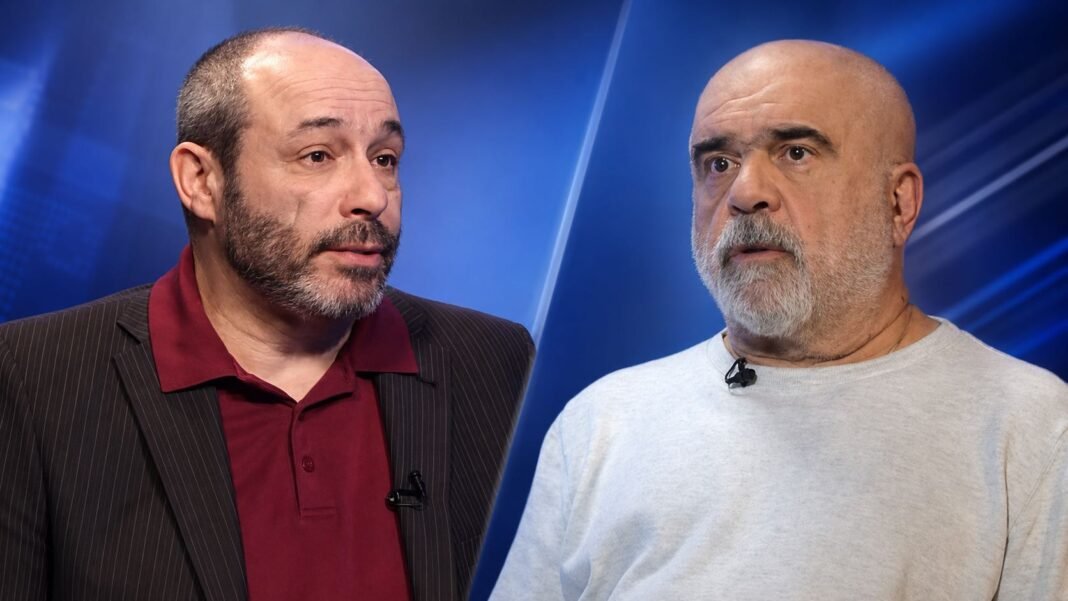
The issue was discussed by political analysts Alexander Iskandaryan and Arkady Dubnov on CivilNet, where both argued that the delay does not necessarily mean a final rupture between Moscow and Yerevan. Instead, it points to a tougher phase of bargaining between the two sides.
Dubnov said Russian President Vladimir Putin is still likely to congratulate Pashinyan, but Moscow appears to be waiting for all post-election procedures to be completed, including possible appeals by opposition forces to Armenia’s Constitutional Court. In his view, however, the legal explanation is only part of the story.
The delay allows Moscow to show irritation and remind Yerevan that Russia still sees itself as a key power in Armenia’s external political environment.
The discussion also linked the timing to broader regional issues, including transport and logistics projects in the South Caucasus. Dubnov noted that Russia’s participation in any future regional corridors or infrastructure projects would be difficult without recognition of Pashinyan as Armenia’s legitimate leader for another term.
Iskandaryan said the crisis in Armenia-Russia relations will continue, but both sides are expected to look for ways to manage it after the elections. He argued that the real agenda is not about slogans such as “Europe or Russia,” but about practical issues: transport links, railways, border openings, roads in southern Armenia, Russia’s possible role in regional routes and the future of Armenia’s nuclear power plant.
According to Iskandaryan, there is little reason to expect a quick return to the old language of friendship between Yerevan and Moscow. At the same time, he does not believe Armenia will fully break with Russia. The likely scenario is a difficult negotiation process, because the disagreements are not just emotional, but based on real conflicts of interest.
The analysts also discussed Pashinyan’s tough rhetoric toward opposition forces often described in Armenia as pro-Russian. After the election, the prime minister signaled that he intends to continue political pressure on his opponents.
Dubnov described this as part of Pashinyan’s political style, shaped by street politics and the 2018 revolution. He said the Armenian leader often acts sharply and shows little interest in compromise with rivals.
Iskandaryan offered a broader interpretation. He said Armenia’s election should not be reduced to a simple battle between Moscow on one side and Brussels or Washington on the other. In reality, Armenian political forces are fighting each other, while labels such as “pro-Russian” and “pro-European” are often used as tools in domestic political struggle.
He said Pashinyan’s campaign relied on several simple messages: the ruling party stands for peace while its opponents represent war, the government is democratic while rivals are oligarchic, and the authorities are pro-European while their opponents are pro-Russian.
This polarization, Iskandaryan argued, is a working political technology. That means Pashinyan is unlikely to abandon it simply because it irritates Moscow or deepens divisions inside Armenian society.
Another major issue is Russia’s trade pressure on Armenian businesses, including restrictions and complaints targeting agricultural products, brandy and other goods. Dubnov said Moscow is using against Armenia a version of the same sanctions logic it criticizes when applied by the West against Russia.
Iskandaryan argued that such pressure rarely produces the intended political result. In the short term, he said, outside pressure often consolidates society around the government instead of weakening it. He described Russia’s approach as a familiar, blunt instrument of influence rather than a subtle long-term policy.
The key question now is not only whether Putin will eventually congratulate Pashinyan. The more important issue is what Moscow will expect from Yerevan afterward.
Those expectations may involve Armenia’s nuclear power plant, transport corridors, the possible opening of the Turkish-Armenian border and Russia’s role in South Caucasus connectivity.
In practical terms, Armenia-Russia relations appear to be moving away from symbolic alliance language and toward colder, more transactional bargaining. Yerevan is trying to widen its room for maneuver, Moscow is trying to preserve leverage, and the South Caucasus is again becoming a place where Armenian domestic politics quickly turns into regional geopolitics.
AZE.US