AZE.US
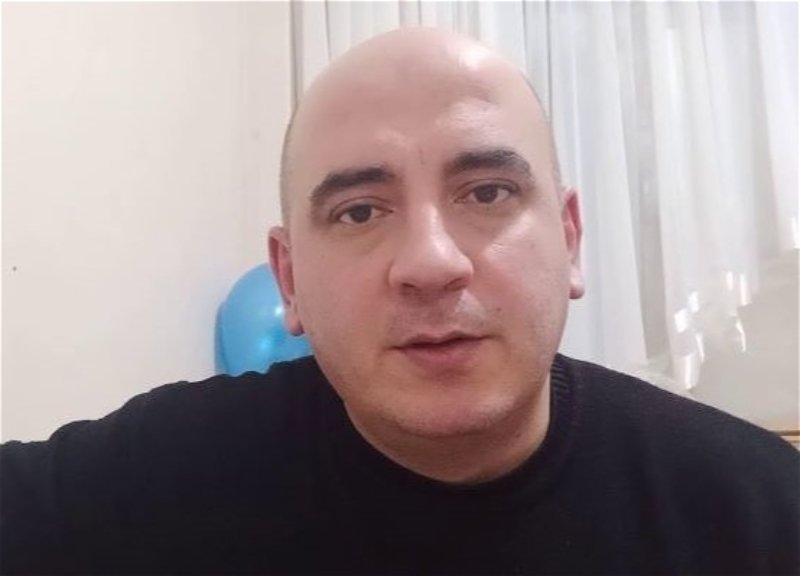
One year after the Washington Declaration, the political track of Armenian-Azerbaijani normalization may appear to have slowed, but significant changes are already taking place at the economic level, Armenian analyst Ishkhan Verdyan said.
Speaking on Vitaliy Barvinenko’s YouTube channel, Verdyan discussed the results of the past year, Armenia’s domestic political struggle, opposition to the peace process and the prospects for further dialogue with Baku and Ankara.
According to the analyst, the absence of major political announcements does not mean that normalization has stalled.
“If we look only at politics, public discourse and the media, it may seem that nothing is happening. There is no visible rapprochement, no major statements and no obvious new steps,” Verdyan said. “But if we look at the economy, we can see some very interesting developments.”
Azerbaijan’s Growing Economic Role
Verdyan argued that Azerbaijan has effectively become one of the suppliers of petroleum products to the Armenian market, helping the country avoid fuel shortages as Russia’s ability to meet regional demand has weakened.
“Azerbaijan is now a stable supplier of gasoline to Armenia, and Armenia is not experiencing a fuel crisis,” he said. “Previously, the country was largely dependent on Russia. Azerbaijan is now offering its fuel, and this is a direct economic step that cannot be underestimated.”
According to Verdyan, the trade is not limited to gasoline. He said Armenia has also received Azerbaijani bitumen and other materials used in road construction.
The analyst linked Armenia’s recent economic and infrastructure gains partly to the reduction in tensions with Azerbaijan. Armenian society, however, has yet to fully recognize that connection, he said.
“People understand that economic growth is connected to peace, but they do not yet associate that peace directly with Azerbaijan,” Verdyan said.
He argued that establishing stable relations with Baku would also accelerate normalization with Turkey, giving Armenia greater access to regional markets and alternative supply routes.
“Once Armenia restores good relations with Azerbaijan, relations with Turkey will also open,” he said. “Whatever becomes unavailable from Russia could then arrive quickly through Turkey, including European goods.”
Karabakh Rhetoric and Domestic Politics
A significant part of the discussion focused on political developments inside Armenia and the continued use of the Karabakh issue by opposition groups.
Verdyan said revanchist rhetoric is being used to preserve hostility toward Azerbaijan and obstruct efforts to redefine Armenia’s regional policy.
“This issue is constantly fueled by hostility - Armenian-Azerbaijani hostility for the sake of hostility itself,” he said.
The analyst alleged that parts of the Armenian opposition remain closely aligned with Moscow and that keeping the Karabakh issue alive allows external forces to retain influence over Armenia’s domestic politics.
At the same time, Verdyan acknowledged that Karabakh remains an emotionally charged and deeply sensitive subject for many Armenians. That, he said, explains why the shift away from revanchist narratives has been slow and politically difficult.
He also argued that Russia has historically benefited from unresolved conflicts across the South Caucasus and continues to use nationalist narratives to preserve leverage in the region.
Who Could Lead Talks With Baku?
Verdyan also discussed possible personnel changes within Prime Minister Nikol Pashinyan’s team. In his assessment, many members of Armenia’s governing establishment have not fully abandoned the political thinking that shaped the country’s previous Karabakh policy.
He identified Alen Simonyan as one of the few senior Armenian politicians who had begun speaking openly in favor of normalization with Azerbaijan.
“Simonyan started openly supporting the normalization of Armenian-Azerbaijani relations,” Verdyan said. “Pashinyan could bring him back as Armenia’s representative in dialogue with Azerbaijan.”
The analyst stressed that this was only a possible scenario. He suggested that Simonyan could take responsibility for talks with Baku while other Armenian officials continue negotiations with Turkey.
The Next Phase of the Peace Process
Assessing the first year since the Washington Declaration, Verdyan expressed cautious optimism.
A final peace treaty has yet to be signed, and implementation of the Trump Route for International Peace and Prosperity, or TRIPP, remains at an early stage. Nevertheless, Verdyan said the emergence of practical economic ties already demonstrates what normalization could bring to Armenia, Azerbaijan and the wider South Caucasus.
In his view, the main challenge is no longer proving that peace can produce economic benefits. It is persuading Armenian society and political institutions to recognize those benefits and move beyond the narratives that sustained decades of confrontation.
AZE.US