By AZE.US Editorial Team
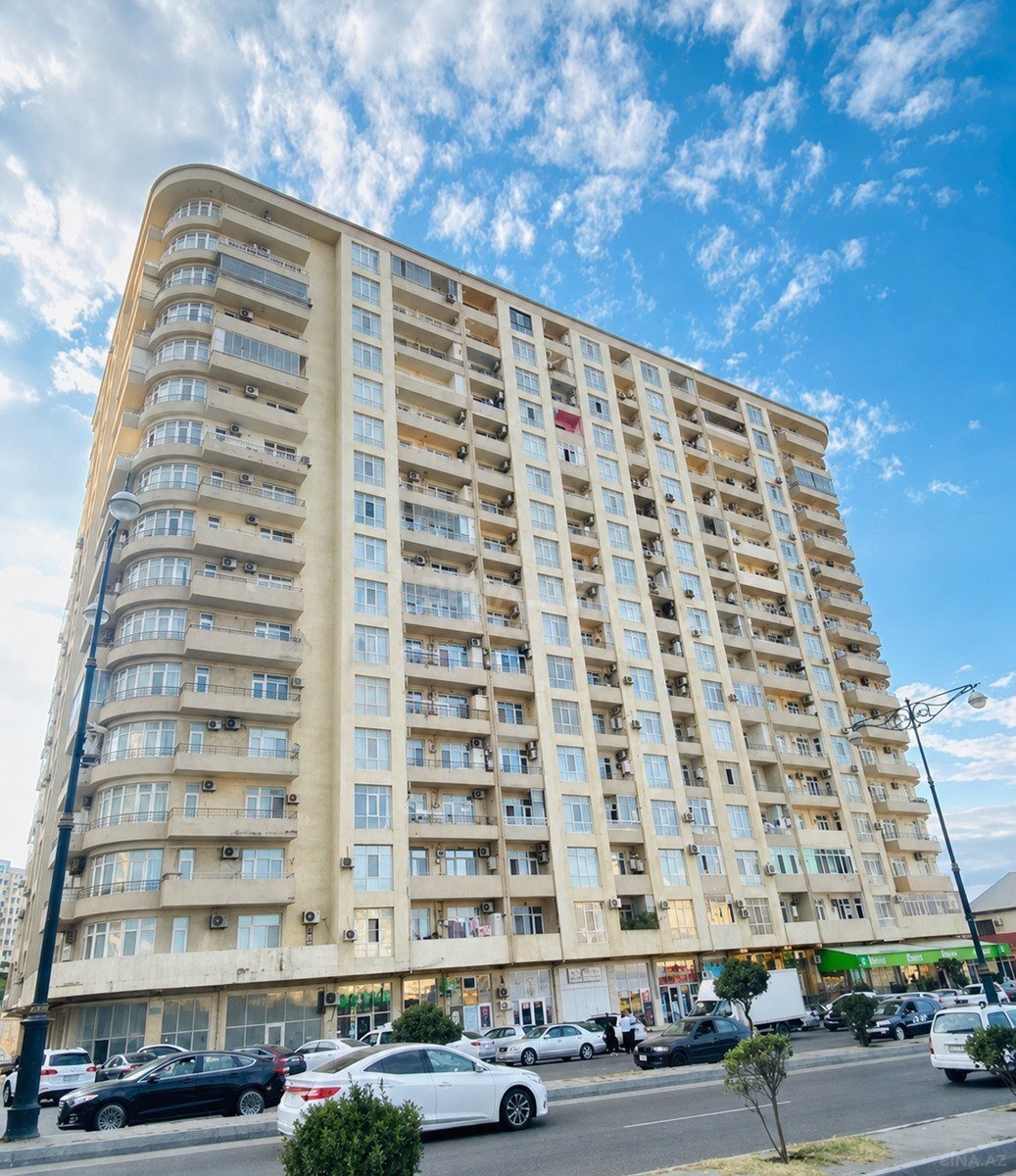
Baku has learned how to build high-rise apartment blocks. It still has not learned how to build complete neighborhoods.
A buyer is asked to pay 250,000 manats - about $147,000 - for a new apartment. In return, the buyer receives walls, windows, an elevator and perhaps a marble lobby with a security guard at the entrance.
But the neighborhood school is already overcrowded. There is no public kindergarten nearby. Parking is either unavailable or sold separately. The only road leading to the development turns into a traffic jam every morning.
The developer nevertheless calls this “comfortable living.”
What the buyer is actually purchasing is an attractively packaged urban-planning problem.
250,000 Manats Is No Longer a Luxury Price
And 250,000 manats is not the price of an elite penthouse.
In much of Baku’s new-build market, it has effectively become a starting point for an ordinary two-room apartment in a modern residential development. In a better location, with proper documents and completed renovations, the price can rise substantially higher.
This is therefore not a complaint about wealthy buyers demanding excessive comfort. It is about ordinary housing for which a family pays an enormous amount of money but may not receive even the most basic urban infrastructure.
According to Azerbaijan’s State Statistical Committee, the country’s average monthly nominal salary stood at 1,174.4 manats, or about $691, in January-June 2026.
A 250,000-manat apartment therefore costs the equivalent of approximately 213 average monthly salaries - nearly 18 years of gross earnings, assuming a person spends nothing on food, clothing, healthcare or supporting a family.
Housing prices are continuing to rise. In the second quarter of 2026, prices on the primary housing market increased another 2.6% compared with the previous quarter, according to the State Statistical Committee.
Yet as apartments become more expensive, it is increasingly unclear what buyers are actually paying for.
They are paying for an apartment, certainly.
They are not necessarily paying for a functioning neighborhood.
Private Prices, Public Costs
The developer earns money from every square meter sold.
But the additional cars enter streets that are already congested. Children from the new development are sent to existing schools. Thousands of new residents rely on public clinics, buses, water systems, sewers and public spaces that were never designed for such a large population.
Once the final apartment has been sold, the developer’s project is essentially complete.
For the city, the problems are only beginning.
New roads, intersections, bus routes, schools, kindergartens and utility capacity are required. The government eventually has to provide them with public money - funds that could otherwise have been spent on other neighborhoods and public needs.
It is a perfect business model: the profit is privatized while the costs are transferred to society.
A Thousand Apartments Are More Than a Thousand Doors
A large apartment building is not simply concrete and glass.
A development containing 1,000 apartments can bring several thousand new residents, hundreds of children and hundreds of additional vehicles into one area.
Those residents must attend school, receive medical care, travel to work, park their cars and have somewhere to walk.
Yet residential complexes in Baku are often designed as if their future inhabitants will never leave their apartments.
Advertising images show mature trees, children playing in a spacious courtyard and a single car traveling along an empty street. Once construction is complete, residents discover that the trees existed only in the computer rendering, the playground is squeezed between towers and the courtyard has become an improvised parking lot.
Azerbaijan’s state planning standards themselves provide for social and cultural facilities, garages, parking areas, greenery and recreational spaces in residential zones. Such facilities are explicitly considered when calculating permissible development density.
The problem is therefore not a lack of understanding about what a residential neighborhood requires.
The problem is that apartments generate immediate revenue, while schools, parks and wider access roads consume land and money.
Developers have every financial incentive to use nearly every available meter for another building, another floor or another apartment. Land reserved for trees, courtyards or public infrastructure is treated as lost income.
But it is not lost income.
It is the cost of building a livable city.
Parking in the Advertisement, Chaos in the Courtyard
The parking situation is particularly cynical.
A family buys an expensive apartment but discovers that there are not enough parking spaces - or that a space must be purchased separately for the price of another small property.
Cars then fill sidewalks, courtyards, building entrances and even emergency access routes.
The developer has made money from the apartments and tried to make additional money from every parking space. The city is left to regulate the resulting chaos, install signs, tow vehicles, reorganize traffic and face the justified anger of residents.
But where is a person supposed to leave a car if a 15-, 20- or 25-story residential complex was approved without matching the number of apartments to parking capacity and access to public transportation?
The authorities cannot approve another residential tower and then act surprised when another traffic jam appears.
The City Pays to Correct What It Allowed
Baku already has an official development plan through 2040. Its stated goals include creating a comfortable, modern and inclusive urban environment, improving transportation and expanding green and public spaces.
But a master plan cannot exist separately from individual construction permits.
If one document promises green corridors, convenient transportation and public spaces while nearly every available meter on a particular site is approved for commercial construction, the master plan does not win.
The next tower does.
The city cannot continue increasing neighborhood density and then spend public money expanding roads and building schools after the remaining land has already been occupied by residential and commercial buildings.
The government first permits the additional burden and then pays to mitigate it.
That is not urban development. It is the expensive correction of poor planning decisions.
Developers Must Pay for the Burden They Create
The entire approach to construction permits must change.
A company should receive permission for a large residential project only after authorities calculate how many new residents, schoolchildren and vehicles it will bring into the area.
If existing infrastructure cannot handle the additional demand, the developer must contribute to its expansion.
Requirements should include:
- Financing the construction or expansion of schools and kindergartens;
- Building access roads and safe pedestrian crossings;
- Providing sufficient parking capacity;
- Connecting the development to public transportation;
- Preserving genuine green space rather than greenery shown only in advertisements;
- Paying an infrastructure fee for every apartment or square meter built;
- Prohibiting the building from opening until these obligations have been fulfilled.
Infrastructure must not remain a promise in a glossy sales brochure.
Before apartment sales begin, the developer’s obligations should be publicly disclosed: the number of apartments, parking spaces, trees, playgrounds and available places in nearby schools.
A buyer should be able to see not only the kitchen plan, but also the plan for their future daily life.
For 250,000 Manats, Buyers Deserve a City
An apartment is not an isolated concrete box.
Its real value is determined not by a gold-colored facade or an English-language name, but by whether a child can safely walk to school, whether an ambulance can reach the entrance, whether residents have somewhere to walk and how long it takes to leave the courtyard each morning.
Families are paying enormous sums for housing and then paying again for developers’ failures - through lost time, daily stress, private schools, private kindergartens, taxis and endless traffic jams.
A developer cannot be allowed to sell only square meters while leaving the government responsible for building an entire city around them.
If a company earns hundreds of millions of manats from a large residential complex, it must also help finance the consequences that complex creates.
Anything less is not responsible housing development.
It is private profit backed by a public guarantee that someone else will eventually pay for the roads, schools and transportation.
AZE.US